


Technical Architecture and Software Solutions for the Industrial AI Market Platform Sector

The foundation of any successful deployment in the Industrial AI Market Platform lies in its underlying technical architecture, which must be both flexible and highly scalable to handle massive streams of sensor data. A modern industrial agentic platform typically consists of several layers: the perception layer, the reasoning engine, the memory module, and the action interface. The perception layer allows the agent to ingest data from various sources, such as IoT sensors, video feeds, or vibration monitors. The reasoning engine, often powered by a large language model optimized for technical data, acts as the central processor that interprets this information and decides on the best course of action. Memory is perhaps the most critical component for autonomy, as it allows the agent to store past interactions and learn from experience, creating a sense of continuity. Finally, the action interface enables the agent to interact with external tools, PLCs (Programmable Logic Controllers), and software environments to execute physical or digital tasks. Together, these components form a cohesive ecosystem that allows for true autonomy, enabling agents to operate across disparate industrial environments without constant human oversight.
Interoperability is a major focus for current platform developers, as autonomous agents must be able to work across different software environments to be truly useful. This has led to the development of standardized protocols and APIs that allow agents to seamlessly "talk" to one another and to legacy enterprise resource planning (ERP) systems. Platforms are now being designed with a "modular" philosophy, where specific capabilities—such as advanced mathematical reasoning or real-time thermal analysis—can be plugged in as needed. This modularity ensures that the platform can evolve alongside the rapidly changing AI landscape without requiring a complete overhaul. Furthermore, many platforms are incorporating "human-in-the-loop" features, allowing human supervisors to monitor agent actions, provide feedback, and intervene in complex or high-risk industrial situations. This hybrid approach ensures that while the agent is autonomous, it remains aligned with human intent and corporate safety policies. Security and observability are also being built into the core of these platforms, providing detailed logs and audit trails to ensure that every action taken by an industrial agent can be traced and analyzed for regulatory compliance.
The rise of edge computing is also reshaping the platform landscape, enabling autonomous agents to run locally on industrial devices rather than solely in the cloud. This is particularly important for applications where low latency and data privacy are paramount, such as in robotic assembly lines or high-speed sorting machines. By processing data at the edge, agents can react instantly to environmental changes without the delay of sending data to a remote server. This decentralized platform model also enhances security, as sensitive manufacturing data can be processed on-site without ever leaving the local network. Developers are increasingly optimizing AI models to run on smaller, more efficient hardware, making "Edge AI" a viable and growing segment of the autonomous agent market. This transition from centralized cloud platforms to a distributed network of intelligent agents represents a significant evolution in the way AI is deployed and managed. It allows for the creation of resilient, local intelligences that can function during network outages, providing a level of reliability essential for mission-critical operations in infrastructure, energy, and national defense sectors.
As platforms become more sophisticated, they are also incorporating advanced observability and debugging tools. Managing a fleet of autonomous industrial agents is inherently more complex than managing traditional software, as their behaviors can be non-deterministic. Platforms must provide detailed logs, visualization tools, and "explainability" modules that help developers understand why an agent made a specific decision on the production line. This transparency is crucial for maintaining trust and for troubleshooting issues in high-pressure production environments. Additionally, many platforms are now offering "agent orchestration" capabilities, which allow for the management of multiple agents working together on a single complex project. This coordination ensures that tasks are assigned to the most capable agent and that there is no duplication of effort. The continuous improvement of these management features is what will allow the autonomous agent platform to scale from experimental pilots to enterprise-wide infrastructure. As multi-agent systems become more common, the platforms will need to handle complex conflict resolution and resource allocation between different agents, ensuring that the collective intelligence remains efficient and aligned with goals.
Top Report :
China Applicant Tracking Systems Market
Europe Applicant Tracking Systems Market
Categories
Read More
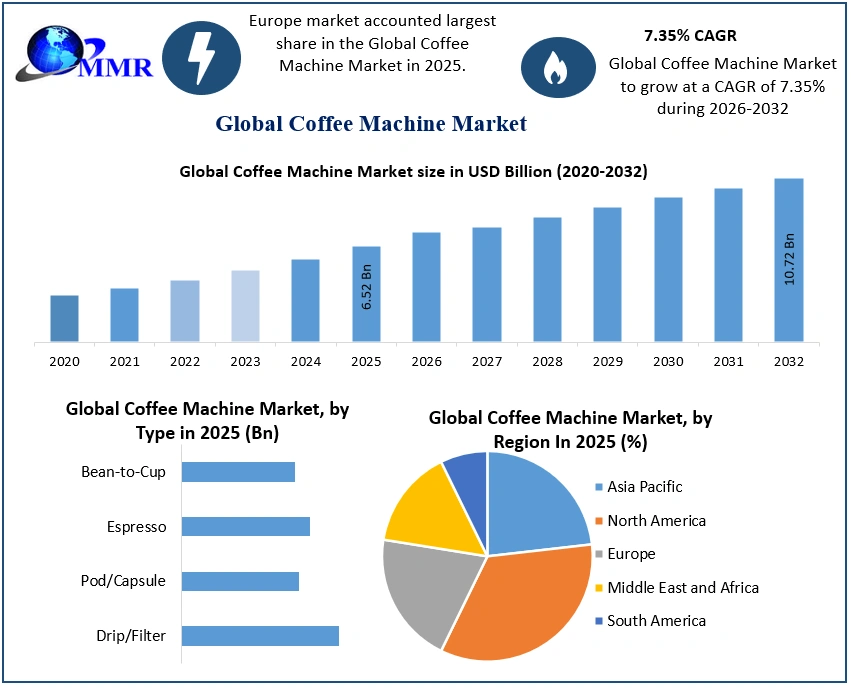
Coffee Machine Market to Reach USD 11.84 Billion by 2032 at 5.9% CAGR | Premiumization Shift, AI-Driven Commerce & Future of Consumer Goods Transformation The global Coffee Machine Market is entering a new era of premium consumer transformation as smart kitchen technologies, evolving coffee culture, e-commerce expansion, and connected lifestyle trends reshape the future of...
Digital marketing is evolving faster than ever, and businesses that fail to adapt risk losing visibility, traffic, and revenue. In 2026, successful SEO is no longer just about ranking keywords, it's about delivering value, building trust, and creating user-focused experiences across every digital platform. Modern SEO services combine AI-driven insights, content marketing, technical...

Market Overview The global medical grade silicone market is expected to grow from USD 1.56 billion in 2022 to USD 2.23 billion by 2028, registering a healthy CAGR of 6.17% during 2023–2028. Growing healthcare expenditure and increasing adoption of implantable and wearable medical products are strengthening demand for medical-grade silicone solutions. The material’s proven safety...

Автор с ником Дуда представил свежий разбор возможностей Гилберты — одного из самых мощных саппортов в игре. В обзоре подробно рассматривается уникальная механика её ультимейта, способного наносить критический урон и быстро снижать здоровье боссов практически до нуля. Материал содержит советы по оптимальной прокачке героя, выбору наиболее подходящего оружия и экипировки. Кроме того, в...
Efficient order management systems are becoming increasingly important for telecom providers seeking to modernize service delivery. These solutions oversee the full order lifecycle, reduce manual intervention, and accelerate provisioning across digital and cloud-based offerings. According to market data from The Insight Partners, the global telecom order management market size is projected...
