


Best Time to Trade Indices Forex: Finding High-Probability Market Hours

Best Time to Trade Indices Forex: Finding High-Probability Market Hours
Introduction
Timing can have a significant impact on the way index markets behave. Although traders can access many index instruments for extended hours, the market does not offer the same level of liquidity and volatility throughout the entire trading day. Certain periods attract substantially more participation because major financial markets are opening or operating simultaneously.
Understanding these periods can help traders avoid unnecessary entries and focus on sessions that match their strategies. However, good timing must be supported by effective risk management. Before placing a position, traders can use a Lot Size Calculator forex to calculate an appropriate trade size based on their risk and stop-loss distance.
What Determines the Best Time to Trade Indices?
There are several factors that influence whether a particular period is suitable for index trading.
The first is liquidity. When more participants are active, orders can generally be executed more efficiently.
The second is volatility. Traders using intraday strategies need enough price movement to create potential opportunities.
The third is market information. Economic reports, corporate announcements, and market openings can introduce new information that changes price expectations.
The ideal trading window occurs when these factors align with the requirements of a trader's strategy.
European Session: Where the Day Often Starts
European market hours are closely watched by traders who follow European indices. Activity can increase rapidly around the opening of major European exchanges.
The market may respond to overnight developments, movements in other global markets, economic reports, and changing investor sentiment.
This can make the early European session attractive for traders using breakout or momentum strategies. For example, price may establish an overnight range before making a significant move after the European market opens.
However, opening volatility can also create false breakouts. Traders should avoid entering solely because price has moved beyond a key level. Waiting for confirmation can reduce the risk of reacting to a temporary price spike.
U.S. Market Opening: A Major Volatility Window
The opening of the U.S. equity market is another important period for index traders. Major U.S. indices often experience increased activity as investors respond to fresh market information.
The first part of the session can produce strong momentum. Traders may see continuation of an existing trend or a complete reversal of the earlier market direction.
This environment can be suitable for experienced day traders, but it demands strict risk control. Fast price movement can make oversized positions particularly dangerous.
Before entering, traders should define their stop-loss and maximum acceptable account risk. A forex position size calculator can help translate those risk parameters into a more appropriate position size.
Why the European-U.S. Overlap Is Important
When European and U.S. markets are both active, overall participation can increase. The overlap can therefore create strong price movements and greater liquidity.
This period may appeal to traders who use:
-
Momentum trading
-
Breakout trading
-
Trend-following strategies
-
Intraday support and resistance
-
Short-term price action
However, increased volatility is a double-edged sword. While it can create larger opportunities, it can also cause sharp reversals and unexpected losses.
A professional trader focuses on whether the current price action fits the strategy rather than entering simply because volatility is high.
Economic News Can Override Normal Market Behavior
Trading sessions provide a useful framework, but scheduled economic news can change market conditions almost instantly.
Important events include inflation data, employment figures, central-bank decisions, interest-rate announcements, and major economic indicators.
Index traders should review the economic calendar before each trading session. If high-impact news is scheduled, traders may choose to reduce exposure or wait for the market to stabilize.
News trading can be profitable for specialized strategies, but it is generally unsuitable for traders who do not have a tested approach for sudden volatility.
Choosing the Best Time for Scalping
Scalpers generally look for short-term movements and high liquidity. The opening periods of major markets can therefore provide attractive conditions.
However, a scalper must be highly selective. More trades do not necessarily mean better results.
Transaction costs, execution speed, spread changes, and slippage become especially important when holding positions for only a few minutes.
A scalping strategy should therefore be tested during specific market windows before real capital is exposed.
Choosing the Best Time for Day Trading
Day traders have greater flexibility than scalpers. They can focus on the periods when their selected index historically produces the clearest setups.
Many traders prefer to analyze the market before the major session begins and then wait for a confirmed setup after the opening.
This approach can reduce impulsive trading and create a repeatable daily routine.
What About Swing Traders?
Swing traders generally do not need to identify a specific hour for every trade. Their analysis usually focuses on daily and weekly charts.
Nevertheless, market timing still matters around major economic events and market openings. A position opened shortly before a major announcement may face significantly different conditions than one opened during a normal trading period.
Swing traders should therefore understand the broader market calendar even when their strategy is not intraday.
Build a Trading Schedule Based on Data
One of the best ways to determine your personal trading time is to collect evidence.
Maintain a journal that records:
-
Instrument
-
Trading session
-
Entry time
-
Strategy
-
Market direction
-
Stop-loss
-
Target
-
Result
-
Market conditions
After a sufficient number of trades, analyze the results by session.
You may discover that your strategy works consistently during one period but produces weak results during another. This information can help you reduce low-quality trades and concentrate on your strongest market window.
Professional View: The Best Time Is Strategy-Dependent
Experienced traders understand that there is no universal best hour for every index trader.
The European opening may be ideal for one strategy, while the U.S. opening may provide better conditions for another. Some traders may prefer the session overlap, while others perform better during quieter periods.
The critical question is not simply, “When does the market move the most?” Instead, ask, “When does my strategy produce the clearest and most repeatable setups?”
That distinction can make market timing much more useful.
Conclusion
The best time to trade indices forex depends on liquidity, volatility, market openings, economic events, and the strategy being used. European and U.S. market openings and their overlap are important periods because they often generate increased participation and stronger price movement.
Nevertheless, active markets are not automatically profitable markets. Traders need a tested strategy, appropriate position sizing, clear entry and exit rules, and disciplined risk management.
By studying different sessions and maintaining detailed performance records, traders can identify the periods that best suit their individual approach. Combining this knowledge with consistent execution can make market timing a valuable component of a professional index trading plan.
Κατηγορίες
Διαβάζω περισσότερα
Every groundbreaking idea has the potential to transform an industry, but even the most promising invention can face unexpected legal and commercial challenges. Businesses that skip proper intellectual property research often discover costly obstacles only after investing significant time and money. This is why understanding an fto search report sample is far more than a routine step—it's...

Bluetooth Smart and Smart Ready technologies have become fundamental to modern wireless communication by enabling low-power, reliable connectivity across a broad range of connected devices. These technologies facilitate seamless data transfer, sensing, audio streaming, location services, and device control while minimizing energy consumption. Their integration into smartphones, wearables,...

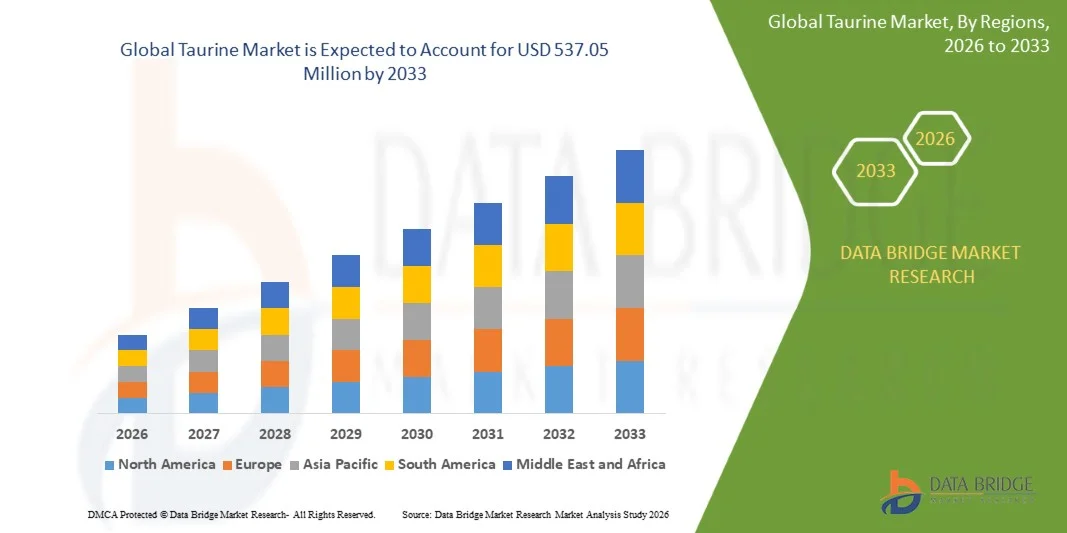
According to the latest report published by Data Bridge Market Research, the Taurine Market The global taurine market size was valued at USD 339.51 million in 2025 and is expected to reach USD 537.05 million by 2033, at a CAGR of 5.90% during the forecast period The market growth is largely fueled by the rising demand for energy drinks, functional beverages,...
A new growth forecast report titled Manuka Honey Market Share, Size, Trends, Industry Analysis Report, By Type (UMF 5+/MGO 83 mg/kg (ppm), UMF 10+/MGO 263 mg/kg (ppm), UMF 15+/MGO 514 mg/kg (ppm), UMF 20+/MGO 829 mg/kg (ppm)); By Nature; By Application; By Region; Segment Forecast, 2023 - 2032 introduced by Polaris Market Research represents conclusive data on the overall market. It...

The Oaxacan coastline has transformed from a sleepy surfing town into one of the most dynamic real estate development zones in North America. A unique blend of world-class waves, rich cultural heritage, and expanding infrastructure is drawing diverse international investors. Understanding these shifting market dynamics allows smart buyers to pinpoint high-growth opportunities before...
