


Choosing a Table Runner That Fits Your Table
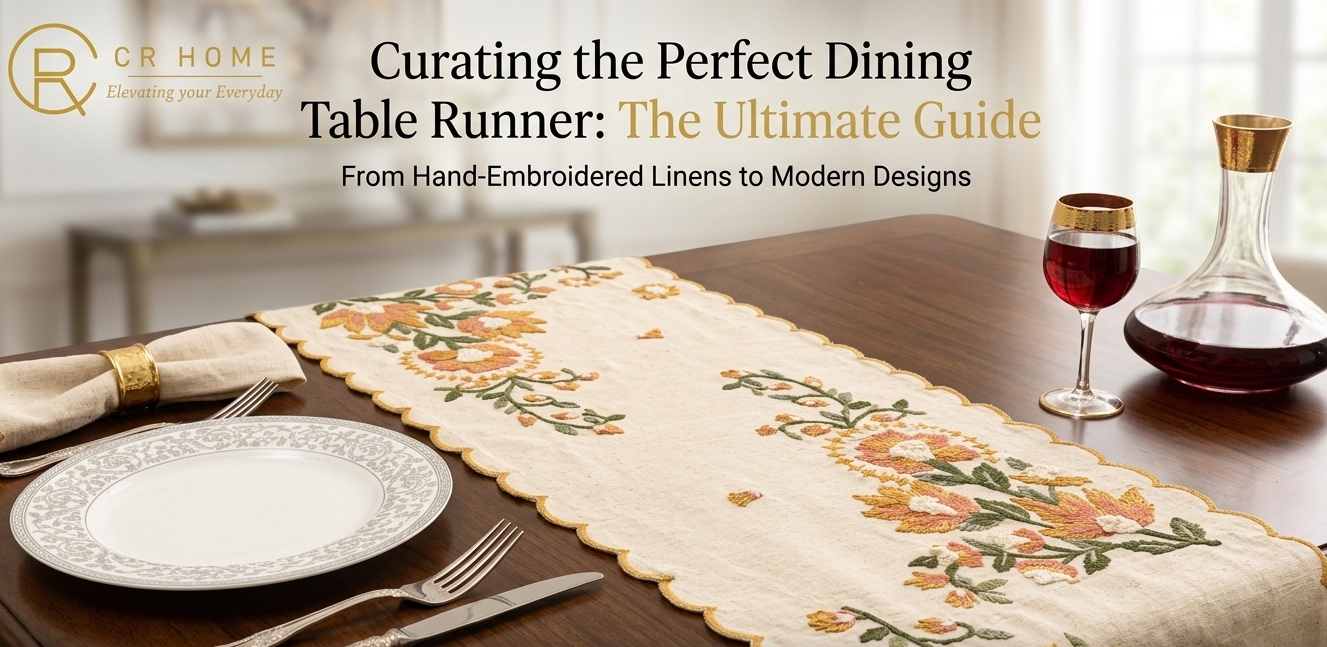
Anyone who has swapped a plain dining table for one with a well-chosen runner knows how much difference a single piece of fabric can make. The colours suddenly feel intentional, the cutlery looks arranged rather than scattered, and the whole table seems to have a purpose. This is one of the reasons a table runner has quietly become one of the most popular dining accessories in Indian homes.
A table runner works for both ordinary weekday dinners and larger festive gatherings. It doesn't demand a full décor overhaul, yet it changes how a table is perceived the moment guests sit down. Brands such as CR Home have built entire collections around this idea — that a dining space can look elegant without being complicated to maintain.
This article walks through what a table runner actually is, why it matters, and how to pick and style one for your own home.
What Is a Table Runner?
A table runner is a long, narrow strip of fabric placed lengthwise or sometimes widthwise down the centre of a dining table. Unlike a tablecloth, it doesn't cover the entire surface. It sits as an accent piece, leaving parts of the table visible on either side.
This difference matters more than it seems. A tablecloth changes the entire look of the table, while a runner adds a focal line without hiding the table's natural finish — whether that's wood, marble, or glass. For homeowners who like their furniture to stay visible, a runner offers decoration without concealment.
It also adds a sense of structure. Placed centrally, it draws the eye down the length of the table and gives the eating surface a clear visual anchor, especially useful for long dining tables that can otherwise look empty in the middle.
Why Use a Table Runner for Dining Table Décor?
There are practical and aesthetic reasons people choose to add a dining table runner to their setup.
- It creates a defined centre point, especially useful when placing serving dishes or a centrepiece.
- It introduces colour, pattern, or texture without repainting a wall or replacing furniture.
- It offers light protection to the middle section of the table from spills and heat.
- It makes everyday meals feel more put together, even on a regular weekday.
- It supports festive and special-occasion table settings, where colour coordination matters more.
None of these benefits require a large investment. A single well-chosen dining table runner can be reused across seasons simply by pairing it with different dinnerware or accessories.
How to Choose the Right Table Runner
Picking a runner isn't only about colour. A few practical factors decide whether it will actually work on your table.
1. Consider Your Table Size
The runner's length should generally extend a little beyond the table on both ends — usually by six to twelve inches — so it drapes naturally instead of looking cut short. Width depends on personal preference, but a narrower runner suits smaller tables, while wider ones work better on larger dining setups where there's more surface to fill.
2. Choose the Right Fabric
Cotton and linen runners suit casual, everyday use and are easy to wash. Silk, velvet, or jacquard weaves lean more formal and work well for festive table setting or dinner parties. If you host often, it helps to own more than one fabric type so you can switch between casual and formal looks as needed.
3. Match the Colour With Your Interior
Neutral tones like beige, ivory, or grey blend into most interiors and are a safe starting point. Bold colours such as maroon, mustard, or deep green work well for festive occasions and add warmth during Indian celebrations. Seasonal colours — pastels in summer, richer tones in winter — can also help a table feel aligned with the time of year.
4. Think About Your Dining Style
A casual family dinner calls for simple, low-maintenance fabrics, while a formal dinner party benefits from something with more texture or embroidery. Festive table styling often mixes both, using a richer runner with everyday dinnerware to keep things celebratory without being over the top. This is where having a few options on hand — the kind found in a curated table runner online store — makes it easier to switch between styles depending on the occasion.
How to Style a Dining Table Runner
Once you've picked a runner, styling it well brings out its full effect.
- Runner with placemats: Layering a runner over individual placemats adds depth and works particularly well for formal dinners.
- Runner with dinnerware: Choosing plates or bowls in a colour that contrasts gently with the runner keeps the table looking balanced rather than flat.
- Runner with candles: Placing candles along the runner's length draws attention to the centre of the table and works well for evening dinners.
- Runner with centrepieces: A small vase, bowl of fruit, or floral arrangement placed on the runner anchors the table visually.
- Minimal modern styling: A single-colour runner with plain dinnerware suits contemporary interiors that favour clean lines.
- Festive table styling: Mixing a patterned runner with brass or metallic accessories works well during Diwali, weddings, or other celebrations.
These combinations don't need to be expensive. Often it's the pairing, not the individual pieces, that makes the table look complete.
What Makes a Luxury Table Runner Different?
Not every runner is built the same way, and this becomes obvious the moment you compare a budget piece with a luxury table runner. The differences usually come down to a few specific details.
Fabric quality is the first indicator — a well-woven, densely finished fabric drapes better and lasts longer than a thin, loosely woven one. Finishing matters too; clean, even hems and properly stitched edges suggest the piece was made with attention rather than mass-produced in a rush. Stitching should be tight and consistent, without loose threads or uneven seams.
Design also plays a role. A luxury piece tends to have a more refined pattern or weave, rather than an overly busy print. Durability follows from all of these — better materials and construction mean the runner holds its shape and colour after repeated washing. Finally, the overall appearance — how it sits on the table, how the fabric catches light — is often the clearest sign of quality, even before you touch it.
Buying a Table Runner Online
Shopping for a table runner online has become the norm for most Indian households, simply because it's easier to compare options from home. A few things are worth checking before adding one to your cart.
Start with product dimensions, since a runner that's too short or too narrow won't sit properly. Check the fabric details listed on the product page, as this affects both look and care. Colour representation can vary across screens, so look at multiple product photographs, ideally including close-up shots of texture and stitching. Read the care instructions carefully, especially for delicate fabrics like silk or velvet.
It also helps to review the return information before purchasing, in case the piece doesn't match your expectations once it arrives. Customer reviews often reveal practical details that product descriptions miss, such as true-to-size accuracy or how a fabric holds up after washing. Brand credibility matters as well — an established brand is more likely to stand behind its product quality and sizing information.
For readers exploring options, CR Home's table runner collection offers a range of fabrics and designs suited to both everyday and festive dining, and is a reasonable starting point when comparing what's available in the premium segment.
Table Runner Ideas for Different Occasions
- Everyday dining: A simple cotton runner in a neutral shade keeps daily meals looking tidy without extra effort.
- Family dinners: A slightly textured runner paired with regular dinnerware adds warmth to a routine family meal.
- Festive occasions: Richer fabrics with traditional motifs suit Diwali, Navratri, or other festival meals.
- Dinner parties: A formal runner with placemats and candles elevates the setting for guests.
- Special celebrations: Metallic threadwork or embroidered runners work well for anniversaries, weddings, or milestone gatherings.
Rotating between two or three runners based on occasion is often more practical than owning just one.
Why Small Details Matter in Home Décor
It's easy to focus on large furniture pieces and overlook smaller accessories, but home décor is often defined by these details. A thoughtfully selected table runner can connect the colours of your dinnerware, the tone of your dining chairs, and even the overall mood of the room.
This is part of why brands like CR Home focus not just on individual products but on how pieces work together — a runner that complements a cushion cover or bedspread elsewhere in the home creates a sense of cohesion rather than a collection of unrelated items.
Final Thoughts
Choosing a table runner comes down to a handful of practical decisions — the right size for your table, a fabric suited to your lifestyle, a colour that fits your interior, and styling that matches the occasion. Quality matters too, since a well-made runner holds its shape and colour far longer than a poorly finished one.
For those ready to start looking, CR Home table runners offer a starting point that covers both everyday practicality and the kind of finishing detail that a genuinely premium piece should have. Whether you're dressing a table for a quiet weeknight dinner or a full festive spread, the right runner is a small change that tends to make a noticeably bigger difference than expected.
الأقسام
إقرأ المزيد
A new growth forecast report titled Live Commerce Platforms Market Share, Size, Trends, Industry Analysis Report, By Category (Consumer Electronics, Fashion & Apparel, Entertainment, Cosmetics & Personal Care, Furnishing, Others); By Region; Segment Forecast, 2024- 2032 introduced by Polaris Market Research represents conclusive data on the overall market. It majorly targets...

Benefits of Using Certification Exam Preparation Material Certification exams help people grow in their careers. They help you get better jobs. They also help you earn more money. Many students want to pass the PDI exam on the first attempt. This exam is offered by Salesforce. However, exam preparation can feel difficult. There are many books to read and many topics to cover. This is why using...

"Key Drivers Impacting Executive Summary IoT in Education Market Market Size and Share CAGR Value Data Bridge Market Research analyses that the IoT in education market, valued at USD 8.13 billion in 2022, will reach USD 35.70 billion by 2030, growing at a CAGR of 17.87% during the forecast period of 2023 to 2030 A few of the most important objectives of the IoT in Education Market...

Streetwear has officially outgrown its casual roots. What once started as a subculture born from skate parks and underground music scenes has transformed into the defining aesthetic of modern luxury. Today, dressing down is the ultimate style statement, but only if it’s done with intention, precision, and flawless quality. At ukrepresentclothing.com, we have spent years redefining what...

ARPY Renewables delivers complete Engineering, Procurement & Construction (EPC) services for residential, commercial, and industrial solar projects. From system design and quality equipment sourcing to installation, testing, and commissioning, our team ensures efficient project execution, reliable performance, and long-term energy savings.
