


How to Build a Strong O-1 Visa Case Before Hiring the Best O-1 Visa Lawyer
The O-1 visa is designed for individuals who can demonstrate extraordinary ability or extraordinary achievement in fields such as science, education, business, athletics, and the arts. While the opportunity can be highly valuable, preparing an O-1 petition is not simply a matter of collecting impressive documents and submitting them to an immigration attorney. A successful case requires strategy, organization, evidence evaluation, and a clear understanding of how individual achievements fit within the applicable O-1 criteria.
Many applicants make the mistake of hiring an attorney before understanding what evidence they actually have. That can create unnecessary back-and-forth, make document collection more complicated, and potentially increase the amount of professional time required to prepare the case.
A better approach is to arrive at the attorney consultation prepared.
That does not mean trying to replace professional legal advice. Instead, applicants can organize their achievements, identify potential evidence, understand where their case may be strong or weak, and prepare the documentation an attorney will eventually need to review.
A platform such as Your Proactive O1 Visa Case Builder can help applicants approach this preparation process in a more structured way by organizing, assessing, and working toward obtaining evidence related to relevant O-1 criteria.
Why O-1 Visa Preparation Should Begin Before the Attorney Consultation
An immigration attorney can provide legal strategy, evaluate eligibility, prepare petition materials, and guide the filing process. However, attorneys generally need substantial information from the applicant before they can properly assess a case.
That information may include employment history, awards, media coverage, publications, professional memberships, judging experience, original contributions, compensation records, leadership roles, recommendation letters, and other supporting evidence.
If all of this information is scattered across email accounts, cloud storage, old computers, social media profiles, and professional websites, the initial case assessment can become unnecessarily time-consuming.
Preparing beforehand solves part of this problem.
Instead of approaching an attorney with a vague statement such as, "I have a strong profile," an applicant can provide an organized collection of evidence and explain why each item may be relevant.
This gives the legal professional a much clearer starting point.
Understand What Makes an O-1 Case Different
One of the most important preparation steps is understanding that an O-1 case is not simply a résumé competition.
Having an impressive career does not automatically mean that every achievement will be useful as O-1 evidence. The strength of a petition depends on how the evidence supports the applicable regulatory requirements and how the overall case demonstrates the applicant's extraordinary ability or achievement.
For example, an applicant might have worked for a well-known company. That is valuable professional experience, but the applicant still needs to understand whether and how that experience supports a relevant criterion.
Similarly, winning an award can be meaningful, but the significance, eligibility requirements, reputation of the awarding organization, and context surrounding the award may matter.
The goal should therefore be to move from "What achievements do I have?" to "What evidence can demonstrate the significance of these achievements?"
That distinction can dramatically improve case preparation.
Create an O-1 Evidence Inventory
Before contacting an attorney, create a complete inventory of professional accomplishments.
Do not limit this inventory to achievements that immediately appear impressive. Include everything potentially relevant and allow the evidence assessment process to determine what deserves greater attention.
Consider organizing information under categories such as:
-
Awards and honors
-
Publications and research
-
Media coverage
-
Speaking engagements
-
Conference participation
-
Judging or reviewing work
-
Professional memberships
-
Original contributions
-
Leadership positions
-
Critical or essential roles
-
High compensation
-
Commercial or business success
-
Major projects
-
Patents or intellectual property
-
Industry recognition
-
Expert recommendations
-
Professional collaborations
For each achievement, record the date, organization involved, your role, the outcome, and available supporting documentation.
This creates an evidence map rather than simply a résumé.
Separate Achievements From Supporting Evidence
A common preparation mistake is treating an achievement and its proof as the same thing.
They are not.
Suppose an applicant received an industry award. The award itself is one piece of information. Evidence explaining the award's prestige, selection process, eligibility requirements, recipient pool, and industry recognition may provide additional context.
The same principle applies to media coverage.
Saying that a professional was featured in an article is different from demonstrating the publication's audience, relevance, circulation, authorship, and the nature of the coverage.
Therefore, for every major achievement, ask:
What proves that this happened?
Then ask:
What proves that this achievement is significant?
This two-step approach can reveal evidence gaps early.
Evaluate the Strength of Each Potential Criterion
Not every criterion deserves equal attention.
An applicant might technically have evidence in several categories but possess particularly strong documentation in only a few. Spending excessive effort trying to force weak evidence into every possible category may not be the most efficient strategy.
Instead, identify:
-
Strong evidence
-
Potentially usable evidence
-
Evidence requiring additional documentation
-
Weak or uncertain evidence
-
Missing evidence
This type of classification can help an applicant understand where additional preparation could have the greatest value.
For example, someone may have extensive media coverage but limited evidence of judging other professionals' work. Another applicant may have significant original contributions but little independent documentation showing their impact.
The objective is not to manufacture qualifications. It is to accurately understand the existing profile and determine where legitimate supporting evidence can be developed.
Build a Central Evidence Library
Document organization becomes increasingly important as a case grows.
Create a central location where relevant documents can be stored and categorized. Use clear file names and consistent folders so that an attorney can later locate materials quickly.
Potential folders could include awards, publications, media, memberships, judging, original contributions, employment, compensation, recommendation materials, and identity or professional records.
Avoid storing ten versions of the same document without explanation.
If a document has multiple versions, identify which one is final. If a document is not in English, record that translation may be required rather than assuming the original file will be sufficient.
Good organization can reduce confusion and make the attorney's review process more efficient.
Look for Independent Recognition
One of the most useful questions during O-1 preparation is whether your achievements are recognized beyond your immediate workplace.
Recognition from independent organizations, publications, industry professionals, conference organizers, researchers, clients, institutions, or other credible sources can provide important context.
This does not mean every third-party mention is automatically strong evidence.
Quality matters.
An independent source should ideally provide meaningful information about the applicant's work rather than merely repeating the applicant's own claims.
For this reason, applicants should preserve original publications, interviews, event pages, award announcements, professional profiles, organizational pages, and other credible records that independently document achievements.
Prepare a Professional Timeline
A chronological timeline can make a complicated professional history much easier to understand.
Start with education and early career milestones, then add major projects, promotions, awards, publications, media appearances, speaking engagements, leadership roles, and other notable accomplishments.
The timeline should answer a simple question:
How did this professional become recognized as an exceptional contributor in their field?
A coherent timeline can also reveal periods where evidence is missing.
For example, an applicant may remember receiving an award several years ago but have no remaining certificate or official announcement. Identifying that gap early gives the applicant more time to locate supporting documentation.
Identify Evidence Gaps Before They Become Problems
Strong preparation is not only about finding good evidence. It is also about identifying missing evidence.
Suppose an applicant claims that their work has had a significant impact but has very little independent documentation demonstrating that impact.
That is an evidence gap.
Perhaps an applicant has been invited to review work but does not have records confirming those invitations.
Another evidence gap.
Perhaps a professional received substantial media attention but cannot demonstrate that the publications are relevant or recognized.
Again, the issue is not necessarily the achievement itself. The problem is documentation.
Recognizing these weaknesses before hiring an attorney allows applicants to ask better questions and potentially collect legitimate supporting materials where appropriate.
Prepare for the Role of Recommendation Letters
Recommendation letters can play an important role in presenting an O-1 petition, but applicants should understand what makes a recommendation persuasive.
A useful letter should generally do more than say that someone is talented or hardworking.
It should provide meaningful professional context, explain the recommender's qualifications, describe the applicant's work, discuss specific accomplishments, and explain why those accomplishments matter within the field.
Applicants can make this process easier by preparing a factual summary of major achievements, project outcomes, publications, awards, or contributions that recommenders can independently evaluate and discuss in their own words.
The objective should be authenticity and specificity rather than generic praise.
Understand the Difference Between Preparation and Legal Advice
Preparing an O-1 case independently does not mean an applicant should make legal conclusions without professional guidance.
Immigration law involves specific eligibility requirements, procedural considerations, evidence standards, and case-specific factors. A preparation platform can help organize information and identify potential areas of evidence, but a qualified immigration attorney should evaluate the legal strategy for the individual petition.
This distinction is especially important when an applicant has an unusual professional history, complex immigration circumstances, or evidence that does not fit neatly into common categories.
Preparation should make the legal consultation better—not replace it.
How a Case-Building Platform Can Improve the Process
A structured O-1 case-building platform can be useful because applicants often struggle with one fundamental problem: they do not know where to start.
Best O1 Visa Lawyer searches and consultations can become more productive when the applicant already understands their evidence portfolio and has organized relevant documentation.
A platform focused on case preparation can help users think systematically about evidence rather than collecting documents randomly. HireLaurel, for example, is positioned as a complete O-1 visa case builder that helps applicants organize, assess, and work toward attaining evidence across relevant criteria.
The practical benefit is preparation.
When applicants arrive at the attorney stage with clearer documentation, the attorney can spend less time figuring out what the applicant has and more time evaluating the legal strategy and petition structure.
That may also help limit unnecessary professional review time and reduce avoidable administrative friction.
Ask Better Questions During the Attorney Consultation
Once the evidence inventory is prepared, the attorney consultation can become much more valuable.
Instead of asking only, "Do I qualify?" consider preparing questions such as:
-
Which evidence appears strongest?
-
Which potential criteria need additional documentation?
-
Are there important evidence gaps?
-
Which achievements need stronger independent proof?
-
What type of recommendation letters would be appropriate?
-
Which documents require translation or clarification?
-
What additional evidence should be collected before filing?
-
What risks or weaknesses should be addressed?
-
How should the overall petition narrative be structured?
These questions demonstrate preparation and can help create a more focused discussion.
Why Early Preparation Can Save Time
The O-1 petition process can involve a substantial amount of documentation.
Without preparation, applicants may repeatedly send documents to their attorney, search for old evidence after requests are made, or spend considerable time explaining basic career history.
A prepared evidence library reduces these problems.
It also gives applicants more control over their own information.
Instead of depending entirely on memory, they can maintain a structured record of achievements and supporting documents throughout the preparation process.
This can be particularly useful for professionals with long careers, multiple employers, international projects, extensive publications, or achievements spread across several organizations.
Think of Your Case as a Story Supported by Evidence
A strong O-1 petition should not feel like a random collection of certificates, screenshots, links, and letters.
There should be a logical connection between the applicant's professional history and the evidence presented.
The evidence should help answer several fundamental questions:
What has this person accomplished?
Why are those accomplishments important?
How have independent people or organizations recognized the work?
What demonstrates that the applicant stands out in their field?
How does the evidence collectively support the petition?
Thinking about these questions early can help applicants organize information more effectively and communicate their professional journey more clearly.
Final Thoughts
Building an O-1 visa case should begin well before the final petition is drafted.
The strongest preparation starts with understanding your professional history, creating a complete evidence inventory, organizing supporting documentation, identifying potential criteria, recognizing evidence gaps, and preparing thoughtful questions for an immigration attorney.
Most importantly, applicants should avoid assuming that a large résumé automatically translates into a strong O-1 case. The quality, relevance, context, and organization of evidence matter.
Using a structured preparation approach can make the process more manageable. A tool such as Best O1 Visa Attorney can help applicants organize and assess their evidence before moving into the attorney-led stage of case preparation.
The ultimate goal is simple: arrive at the legal consultation prepared, informed, and organized.
When your evidence is already mapped out and your professional achievements are clearly documented, an attorney has a much better foundation from which to evaluate your case and develop an appropriate legal strategy. Preparation does not guarantee approval, but it can make the entire process more efficient and give you a clearer understanding of what your O-1 petition needs before you move forward.
Categorias
Leia mais
Latest Insights on Executive Summary Flavored Water Market Share and Size This quality Flavored Water report is structured with full commitment and transparency in research. This market research report offers CAGR value fluctuation during the forecast period of for the market. This market report provides statistics on the current state of the industry as a valuable source of...

In the evolving landscape of digital marketing, the relationship between a central company directory website and social media platforms has moved beyond simple link sharing. It is now a symbiotic intelligence loop that feeds search engine algorithms and AI Overviews with high-trust signals. For UK SMEs, navigating this space requires more than just "being online"; it requires a...

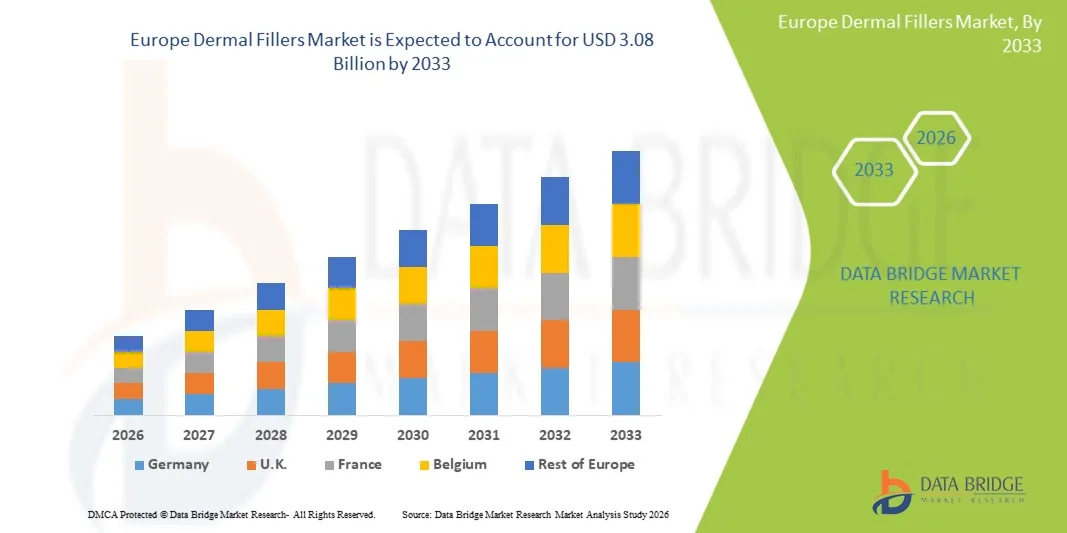
According to the latest report published by Data Bridge Market Research, the Europe Dermal Fillers Market The Europe Dermal Fillers Market size was valued at USD 1.44 billion in 2025 and is expected to reach USD 3.08 billion by 2033, at a CAGR of 10.00% during the forecast period The market growth is largely fueled by the increasing demand...
Football is more than just a sport—it’s a passion that brings millions of fans together. The thrill of watching live matches, cheering for your favorite team, and experiencing every goal in real-time is unmatched. However, not everyone has access to expensive subscriptions or paid streaming services. That’s where xoilac comes in, offering a smooth, ad-free, and...
According to the latest analysis by Fact.MR, the global Cryogenic Vial Racks Market Growth is gaining substantial momentum as biobanking, regenerative medicine, and biological sample preservation activities continue to expand worldwide. Growing investments in cell and gene therapy research, precision medicine programs, and laboratory automation are accelerating demand for...