


How Artificial Intelligence Is Building a Smarter and More Connected Healthcare System

Healthcare organizations are increasingly exploring technology that can improve patient experiences while helping professionals manage growing operational demands. AI for healthcare is becoming an important part of this transformation, with applications ranging from administrative automation and medical imaging support to patient communication, predictive analytics, and remote monitoring. Rather than replacing healthcare professionals, intelligent technology can assist them by processing information, identifying patterns, and automating suitable repetitive tasks.
The growing interest in artificial intelligence is also changing how healthcare organizations approach digital transformation. Hospitals, clinics, diagnostic centers, pharmacies, insurers, and health-tech companies can use intelligent systems to address different operational challenges. However, successful implementation requires more than adding an AI feature to an existing application. Data quality, security, privacy, clinical oversight, interoperability, and user experience all need to be considered from the beginning.
Why Artificial Intelligence Is Becoming Important in Healthcare
Healthcare generates enormous volumes of information every day. Patient records, diagnostic reports, medical images, appointment information, prescriptions, laboratory results, and communication histories all contribute to a patient's care journey.
Processing this information manually can be time-consuming.
Intelligent systems can help organize and analyze data much faster. They can identify patterns, summarize information, classify documents, automate administrative workflows, and provide relevant information to authorized users.
The goal is not to automate healthcare professionals out of the process. Instead, AI can act as an assistive layer that helps clinicians and administrative teams spend less time on repetitive activities and more time on tasks requiring professional judgment.
AI Can Improve Patient Scheduling
Appointment management is one of the simplest areas where automation can provide practical value.
Patients often need to call clinics to book, reschedule, or cancel appointments. During busy periods, this can place significant pressure on reception teams.
An intelligent scheduling system can allow patients to identify suitable appointment slots through a digital interface.
Depending on the healthcare organization's workflow, the system may support:
- Appointment booking
- Rescheduling
- Cancellation requests
- Doctor selection
- Department selection
- Appointment reminders
- Follow-up scheduling
- Virtual consultation bookings
AI can also help understand natural-language requests.
For example, a patient might say that they need a follow-up appointment with a particular specialist next week. A conversational system can interpret the request and guide the patient through available options.
Human staff can remain involved when the request falls outside predefined workflows.
Intelligent Patient Support Can Improve Accessibility
Patients may have questions at different stages of their healthcare journey.
They may want to know how to prepare for an appointment, where a clinic is located, whether a particular service is available, or how to access administrative documents.
Conversational AI can provide answers to suitable routine questions using information approved by the healthcare organization.
This can reduce waiting times and allow patients to access basic information without contacting staff for every question.
However, healthcare systems should clearly distinguish administrative assistance from clinical guidance. Questions involving diagnosis, treatment, medication changes, emergencies, or other sensitive medical decisions should be directed to qualified professionals.
AI-Assisted Medical Imaging
Medical imaging is another area where artificial intelligence is receiving significant attention.
Computer vision models can analyze medical images and identify patterns that may require closer examination by trained professionals.
Depending on the clinical application, AI may assist with images such as X-rays, CT scans, MRIs, or other diagnostic formats.
The system can highlight potentially relevant areas or provide an additional analytical perspective.
This does not mean an AI model should independently determine a diagnosis. Clinical professionals need to interpret findings within the patient's broader medical context.
AI can therefore serve as an assistive tool that supports medical professionals rather than replacing their expertise.
Predictive Analytics Can Support Proactive Care
Traditional healthcare often focuses on responding to problems after they occur.
Predictive analytics can help organizations identify patterns that may indicate an increased risk of certain outcomes.
Models can analyze appropriate historical and real-time information to identify trends.
Potential applications include:
- Patient readmission risk
- Appointment no-show prediction
- Hospital resource planning
- Patient deterioration alerts
- Operational demand forecasting
- Population health analysis
For example, an organization could use predictive analytics to identify patients who may benefit from additional follow-up based on approved clinical criteria.
Such systems need careful validation because inaccurate predictions can affect clinical decisions.
AI Can Support Remote Patient Monitoring
Connected devices and wearable technologies are creating new sources of healthcare information.
Depending on the use case, devices can collect measurements and transmit them to healthcare platforms.
AI can analyze these data streams and identify unusual patterns that may warrant attention.
For example, a monitoring system could detect a significant change in a patient's recorded measurements and notify an authorized healthcare professional.
This can support continuous monitoring between appointments.
However, healthcare organizations need clear protocols defining what constitutes an actionable alert and who is responsible for responding.
Automated alerts should not create unnecessary alarm or replace emergency services.
Personalized Healthcare Experiences
Patients have different needs, preferences, medical histories, and communication requirements.
Intelligent systems can help personalize digital experiences based on appropriate information.
For example, a healthcare application might organize relevant appointment reminders, educational resources, or administrative information based on a patient's current care journey.
Personalization can reduce information overload and make digital healthcare platforms easier to navigate.
Privacy should remain central to this process. Organizations should collect and use only appropriate information and provide users with suitable controls over their data.
AI Can Reduce Administrative Work
Healthcare professionals and administrative employees spend substantial amounts of time on repetitive tasks.
These may include:
- Data entry
- Document classification
- Appointment confirmations
- Insurance-related paperwork
- Patient registration
- Billing inquiries
- Record organization
- Routine communication
Intelligent automation can assist with many of these workflows.
For example, an AI system can extract relevant information from a submitted document and organize it into appropriate fields.
This can reduce manual data entry and allow employees to spend more time on tasks requiring human interaction.
AI Voice Agents Can Support Healthcare Communication
Voice interaction can be particularly useful when patients prefer speaking rather than typing.
An AI voice agent can listen to a caller, understand the purpose of the request, retrieve approved information, and respond conversationally.
Talkoo.ai is an example of an AI voice-agent platform that supports natural conversations, business knowledge, workflow automation, call routing, and human handoff.
In healthcare, a suitably configured voice agent could assist with administrative tasks such as appointment scheduling, clinic information, appointment reminders, service inquiries, or basic navigation.
For sensitive medical questions, the system should route the caller to qualified professionals.
The voice workflow should also use appropriate authentication before providing patient-specific information.
AI Can Improve Healthcare Documentation
Documentation is an essential part of healthcare, but creating and organizing records can be time-consuming.
AI-powered systems can assist professionals by transcribing conversations, summarizing information, organizing notes, and extracting relevant details.
For example, an intelligent documentation tool can convert spoken information into structured text that a professional can review and edit.
The professional should remain responsible for verifying the accuracy of the final record.
This human-review approach can help reduce documentation workload without allowing automated systems to introduce unchecked errors into patient records.
Healthcare AI Can Support Drug Discovery and Research
Artificial intelligence is also being explored beyond direct patient services.
Researchers can use machine learning to analyze large biological and pharmaceutical datasets, identify potential relationships, and support the exploration of new drug candidates.
AI can help researchers process information faster and identify patterns that may require further investigation.
However, discovering a potential relationship does not mean a treatment is clinically proven.
Scientific validation, laboratory testing, clinical trials, regulatory review, and professional evaluation remain essential.
AI Can Help Healthcare Organizations Manage Resources
Hospitals and clinics need to manage resources efficiently.
This can include staff schedules, beds, operating rooms, diagnostic equipment, supplies, and appointment capacity.
Predictive systems can analyze historical demand and identify potential periods of increased activity.
For example, a hospital could use forecasting tools to estimate expected patient volumes and plan resources accordingly.
Better resource planning can improve operational efficiency while helping organizations respond to changing demand.
AI Can Assist With Insurance and Claims Workflows
Healthcare organizations often interact with insurance providers and claims systems.
Document processing and classification can help organize claims-related information and identify missing details.
AI can extract relevant fields from documents and route them to appropriate workflows.
It can also help identify unusual patterns that may require additional review.
Because insurance decisions can have financial consequences for patients and providers, automated systems should operate with appropriate validation and human oversight.
What AI Solutions in Healthcare Should Prioritize
Organizations exploring AI solutions in healthcare should begin with a clearly defined problem.
Instead of asking, "Where can we add AI?" decision-makers should ask:
Which healthcare workflow is creating the greatest operational or patient-experience challenge?
The answer could involve appointment scheduling, documentation, patient communication, imaging, resource planning, or another process.
Once the problem is identified, the organization can evaluate whether AI is the appropriate solution.
This approach can prevent unnecessary technology investments and make it easier to measure results.
Data Quality Determines AI Performance
AI models depend heavily on the quality of their underlying information.
Healthcare data can be fragmented across different systems, departments, and formats.
Records may contain missing fields, duplicate entries, inconsistent terminology, or outdated information.
Organizations should therefore establish strong data governance before implementing advanced AI systems.
Important considerations include:
- Data accuracy
- Standardization
- Data integration
- Access permissions
- Data lineage
- Encryption
- Retention policies
- Quality monitoring
Better data foundations can improve the reliability of intelligent applications.
Security and Privacy Must Remain Central
Healthcare information is highly sensitive.
An intelligent healthcare platform may process patient records, personal information, medical images, communication histories, and other protected data.
Security should therefore be built into the architecture.
Important measures may include:
- Strong authentication
- Role-based access
- Encryption
- Secure APIs
- Audit logging
- Data monitoring
- Vulnerability testing
- Backup and recovery
- Privacy controls
Organizations should also identify the healthcare privacy and regulatory requirements applicable to their location and use case.
AI systems should only access the information required to perform their intended function.
Responsible AI Requires Human Oversight
AI can make mistakes.
A model may misinterpret an image, misunderstand a patient's question, produce an inaccurate summary, or generate an inappropriate recommendation.
This is why healthcare AI requires human oversight.
Organizations should establish procedures for:
- Reviewing AI outputs
- Escalating uncertain cases
- Monitoring model performance
- Testing for bias
- Documenting model behavior
- Updating models
- Investigating errors
The higher the potential impact of an AI-assisted decision, the more important appropriate human review becomes.
Choosing an AI Development Partner
Healthcare organizations evaluating healthcare AI solutions should look beyond general software development experience.
The development partner should understand AI engineering, data architecture, cybersecurity, cloud infrastructure, APIs, healthcare workflows, conversational systems, and system integration.
Before selecting a provider, organizations can ask:
- Have you worked on healthcare-related AI projects?
- How will patient information be protected?
- How will AI outputs be validated?
- How will human review be incorporated?
- How will the system integrate with existing platforms?
- How will model performance be monitored?
- How will the solution scale?
- What happens when the system is uncertain?
These questions can help organizations evaluate whether a provider is prepared for the specific demands of healthcare technology.
How 75way Technologies Can Support Healthcare AI Projects
Healthcare organizations exploring intelligent digital transformation can evaluate 75way Technologies as a potential technology partner.
Its capabilities can be considered across areas such as AI application development, automation, conversational systems, analytics, integrations, and custom digital platforms.
The appropriate solution depends on each organization's needs. A hospital may prioritize administrative automation and patient communication, while a diagnostic provider may focus more on image analysis and workflow optimization.
The technology strategy should therefore be built around the actual problem, available data, security requirements, and expected outcomes.
The Future of Artificial Intelligence in Healthcare
The future of healthcare AI is likely to involve increasingly connected systems.
Applications may combine predictive analytics, conversational interfaces, remote monitoring, intelligent documentation, computer vision, personalized communication, and workflow automation.
Wearable devices may provide additional information between appointments, while AI systems can help organize and interpret large volumes of data.
Generative AI may also assist healthcare professionals with information retrieval, documentation, and administrative tasks.
Despite these advances, human expertise will remain central to healthcare.
Doctors, nurses, therapists, pharmacists, technicians, and administrative professionals bring context, empathy, judgment, and accountability that technology cannot completely reproduce.
The most useful systems will therefore combine artificial intelligence with human decision-making.
A Practical Approach to AI Adoption
Healthcare organizations do not need to transform every process simultaneously.
A phased strategy can reduce implementation risk.
Organizations can begin by selecting one specific use case, defining measurable objectives, testing the system in a controlled environment, and evaluating its results.
Useful measurements may include:
- Processing time
- Administrative workload
- User satisfaction
- Accuracy
- Response time
- Operational costs
- Escalation rates
- System adoption
Successful use cases can then be expanded gradually.
This approach allows organizations to develop internal expertise while identifying potential risks before deploying AI more broadly.
Conclusion
Artificial intelligence is creating opportunities across healthcare by supporting patient communication, administrative automation, predictive analytics, medical imaging, remote monitoring, documentation, resource planning, and other workflows.
The technology can help organizations process information more efficiently while making certain services easier for patients to access. Conversational and voice-based systems can provide assistance around the clock for appropriate administrative tasks, while machine learning can support professionals with data-driven insights.
However, successful healthcare AI is not simply about implementing sophisticated technology.
Strong data governance, privacy, cybersecurity, clinical oversight, accessibility, interoperability, and responsible AI practices are equally important.
Organizations exploring AI solutions for healthcare should begin with genuine patient or operational challenges and determine where intelligent technology can provide measurable value.
When implemented thoughtfully, AI can become a valuable support system for healthcare professionals and organizations, helping them reduce repetitive work, improve access to information, and create more connected experiences while keeping human expertise at the center of care.
Κατηγορίες
Διαβάζω περισσότερα
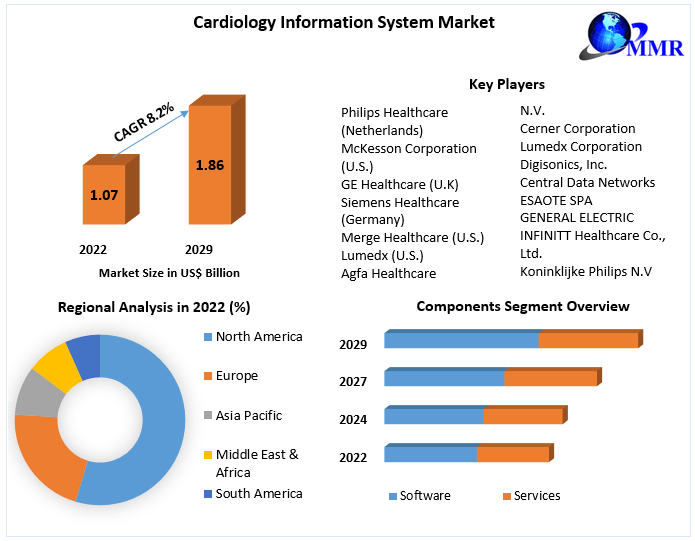
Global Cardiology Information System Market Poised for Significant Growth as Digital Healthcare and AI-Powered Cardiac Diagnostics Transform Patient Care The Global Cardiology Information System (CIS) Market is witnessing substantial growth as healthcare providers increasingly adopt digital solutions to improve cardiovascular disease management, diagnostic accuracy, clinical...
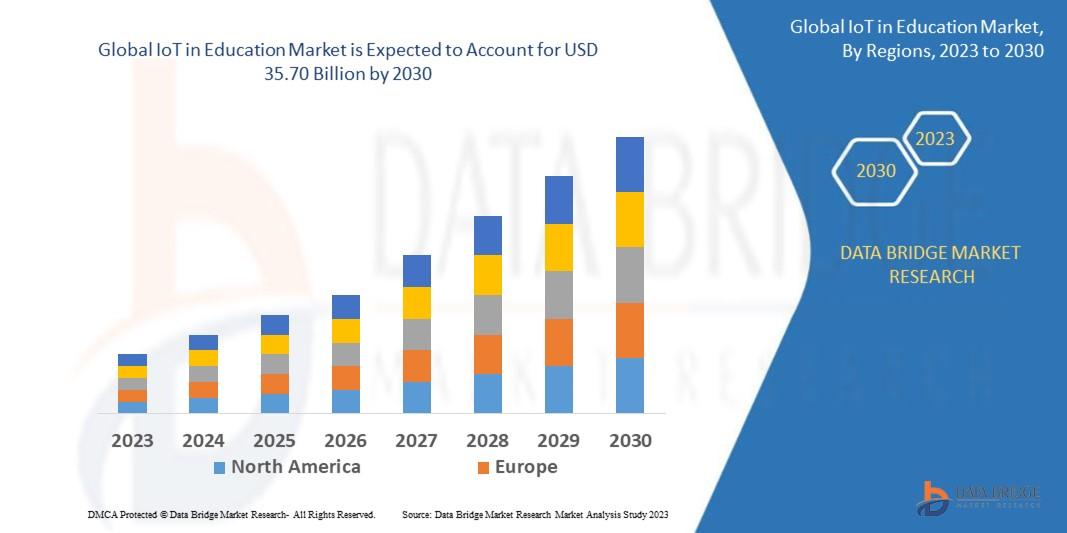
"Market Trends Shaping Executive Summary IoT in Education Market Size and Share CAGR Value Data Bridge Market Research analyses that the IoT in education market, valued at USD 8.13 billion in 2022, will reach USD 35.70 billion by 2030, growing at a CAGR of 17.87% during the forecast period of 2023 to 2030. This IoT in Education Market report covers a myriad of aspects of the...
According to a new report from Intel Market Research, the global Sulfur Hexafluoride (SF6) Market was valued at USD 152 million in 2025 and is projected to decline to USD 150 million by 2032, exhibiting a CAGR of -0.2% during the forecast period. The market contraction is primarily driven by stringent environmental regulations targeting SF6's classification as an extremely potent greenhouse gas...

Imagine tapping into a market where 4.3 million Indians, 35% of the UAE’s population, call home, as per the Embassy of India in Abu Dhabi (2024 data). That’s Kerala folks in real estate, Tamil Nadu hustlers in fintech, and Punjabis powering tourism, spread across Dubai, Abu Dhabi, and the Northern Emirates. About 10% are families, making emotional connections key. From Gurugram, PR...

1. Finding the Right Ladies Hostel in Trichy Mathi’s Nest Ladies Hostel Choosing a suitable hostel is one of the most important decisions for Working Women’s Hostel in Trichy and students moving to a new city. A good hostel is not simply a place to stay; it becomes a second home where comfort, safety, and convenience matter every day. Trichy is a growing educational and...
