From Integration Bottleneck to Growth Engine: API Management for Insurance in the Digital Age
If you ask most U.S. insurance leaders what’s slowing down digital transformation, two answers consistently rise to the top: integration complexity and poor data flow. At the heart of both challenges sits API Management for Insurance—the often underestimated capability that now determines how fast insurers can innovate, partner, and compete.
APIs are no longer background plumbing. They are the operating system of modern insurance. Yet many carriers still struggle, not because they lack APIs, but because their API ecosystem isn’t designed for today’s real-time, data-driven insurance landscape.
Why APIs Now Define Insurance Performance
In the past, APIs were built late in projects to “connect systems.” Today, APIs directly shape business capability. Every major interaction—customer, agent, partner, or AI-driven—relies on APIs performing securely, reliably, and at scale.
Consider everyday insurance moments in the U.S. market:
-
An independent agent pulling instant quotes from multiple carriers
-
A policyholder checking claim status on a mobile app after a storm
-
A telematics provider streaming driving behavior data in real time
-
A reinsurer requesting up-to-date exposure data during catastrophe season
-
An AI model analyzing claims for fraud or severity
None of these experiences work without well-managed APIs. When APIs are slow, brittle, or insecure, business slows with them.
The Problem Isn’t APIs—It’s API Strategy
Most insurance carriers already have hundreds, sometimes thousands, of APIs. The real issue is fragmentation. APIs built by different teams, at different times, using different standards rarely work together smoothly. Without proper API Management for Insurance, organizations face:
-
Inconsistent data definitions across systems
-
Security gaps that increase regulatory risk
-
Performance issues during peak demand events
-
Long onboarding cycles for new partners and insurtechs
This is where API management moves from an IT concern to a business imperative.
APIs as Products, Not Projects
Leading insurers are shifting their mindset: APIs are products, not deliverables. This means APIs are designed with consumers in mind—agents, partners, internal teams, and AI services—not just backend systems.
Product-oriented APIs have:
-
Clear documentation and versioning
-
Consistent data models across lines of business
-
Defined performance and reliability standards
-
Built-in security, throttling, and monitoring
When APIs are treated as products, insurers onboard partners faster, reduce integration costs, and scale digital initiatives without constant rework.
REST, Events, and the Rise of Real-Time Insurance
Traditional REST APIs still power many insurance workflows, especially quoting, policy servicing, and claims inquiries. However, modern insurance increasingly depends on event-driven architectures.
Event-driven APIs allow insurers to react instantly when something happens—an accident, a payment, a policy change. This is critical for use cases like usage-based insurance, real-time underwriting, and AI-driven claims automation.
A strong API Management for Insurance strategy supports both REST and event-based patterns, ensuring flexibility as business models evolve.
Security and Compliance Are Non-Negotiable
In the U.S., insurers operate under strict regulatory and data privacy requirements. API gateways play a critical role by enforcing authentication, authorization, encryption, and audit logging at scale.
Well-managed APIs reduce risk by:
-
Centralizing security controls
-
Ensuring consistent compliance enforcement
-
Protecting sensitive customer and claims data
-
Supporting zero-trust architectures
Without centralized API management, security becomes fragmented—and regulators notice.
APIs and AI: The Next Acceleration Curve
AI is rapidly transforming insurance, from underwriting to claims to fraud detection. But AI models are only as good as the data they receive. APIs are the bridge between core insurance systems and AI services.
Insurers with mature API management can plug AI into workflows faster, experiment safely, and operationalize successful models at scale. Those without it struggle to move beyond pilots.
The Bottom Line
API Management for Insurance is no longer optional. It is the foundation for speed, scalability, security, and innovation. Insurers that invest in APIs as strategic assets—not afterthoughts—will move faster, integrate cleaner, and compete more effectively in an increasingly digital insurance market.
Categorias
Leia Mais
Polaris Market Research has published a new report titled Blockchain in Healthcare Market Size, Share, Trends, Industry Analysis Report: By Application, Network Type (Private, Public, and Others), End Use, and Region (North America, Europe, Asia Pacific, Latin America, and the Middle East & Africa) – Market Forecast, 2026–2034 that delivers up-to-date analysis with analyses of...

Online gaming has changed into a huge part of activity today, and many individuals try to find tools which are easy, fast, and safe. One name that often seems in discussions is Dewalive. This program has acquired interest since it supplies a easy knowledge for participants of all ages and talent levels. Whether somebody wants to play position games, investigate live casino areas, or just...

Microsoft has publicly responded to the recent emergence of a crack that bypasses Windows 7 activation, emphasizing the importance of legitimate software use. The company advised users against downloading Windows 7 from unofficial sources, warning that piracy could lead to serious security threats such as viruses, malware, and data loss, and even identity theft. Interestingly, despite...

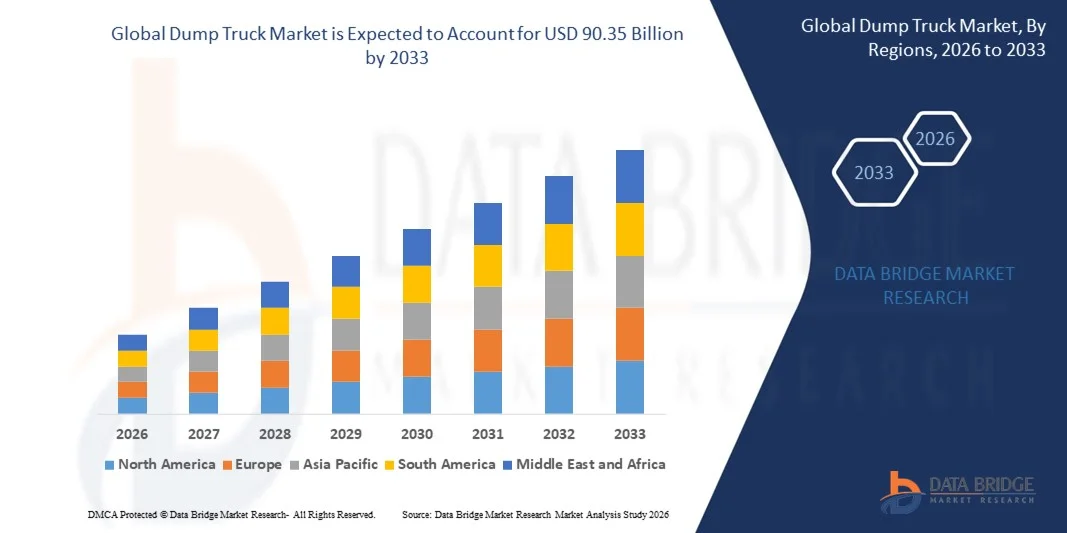
Dump Truck Market: According to the latest report published by Data Bridge Market Research, the Dump Truck Market The global dump truck market size was valued at USD 56.26 billion in 2025 and is expected to reach USD 90.35 billion by 2033, at a CAGR of 6.10% during the forecast period All the data and information included in the global Dump Truck...
A modern Artificial Intelligence In Security Market Solution is a sophisticated, multi-layered system designed to automate the entire security lifecycle, from detection to response. It is not a single algorithm but an integrated platform that brings together data, analytics, and orchestration to create an intelligent and adaptive defense. The foundation of any complete solution is the...