Chamfer Tool Explained: Types, Angles, and CNC Uses
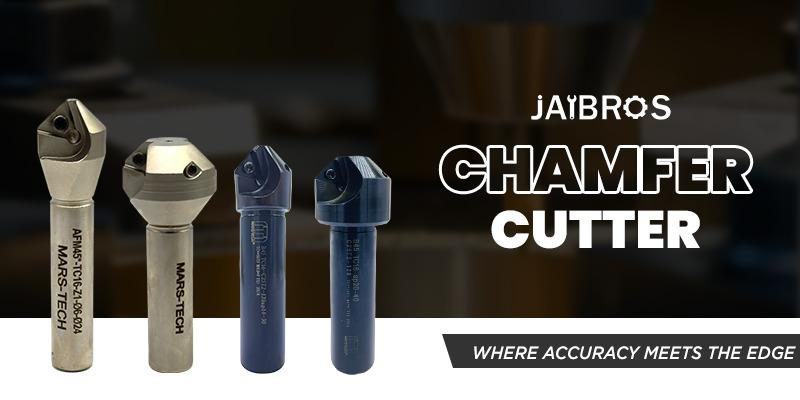
Learn what a chamfer tool is, its types, angles, and how it’s used in CNC machining to create clean edges and improve part quality.
Types of Chamfer Tools and Their Uses in CNC Machining
In precision machining, edging finishing is just as important as achieving tight tolerances. Sharp edges left after drilling, milling, or turning can affect assembly, safety, and part performance. This is where a chamfer tool becomes essential. Chamfering helps create smooth, beveled edges that improve functionality, appearance, and reliability in CNC-machined components.
What Is Chamfering in Machining?
Chamfering is the process of removing sharp edges by creating a small angled surface between two faces of a workpiece. This angled edge prevents damage during handling, improves assembly alignment, and reduces stress concentration at corners.
In CNC machining, chamfering is often integrated directly into the machining cycle, ensuring consistency across multiple parts. A chamfer tool is specifically designed to perform this operation accurately and repeatedly, even in high-volume production.
Why Chamfering Matters in CNC Machining
Chamfering serves both functional and practical purposes. From a functional standpoint, chamfered edges guide mating parts into place, especially in press-fit or bolted assemblies. From a practical perspective, they make components safer to handle and visually cleaner.
CNC machines rely on automation and repeatability. Performing chamfering manually introduces variation and increases labor time. With proper tooling and programming, chamfering becomes a controlled and repeatable process that enhances overall machining efficiency.
Types of Chamfer Tools Used in CNC Machining
Different machining applications require different chamfering solutions. Understanding the types available helps machinists select the right approach for each job.
Standard Chamfering Tools
These are commonly used for external edges and flat surfaces. They are ideal for deburring and edge finishing after milling or drilling operations.
Back Chamfer Tools
A back chamfer tool is designed for machining edges on the reverse side of a hole or internal feature. These tools are particularly useful when standard tools cannot access hidden edges.
Combination Tools
Some tools combine drilling and chamfering functions, allowing multiple operations in a single cycle. This reduces tool changes and improves cycle time efficiency.
Choosing the right chamfer tool depends on accessibility, part geometry, and the desired chamfer size.
Common Chamfer Angles and Their Applications
Chamfer angles are selected based on design requirements, strength considerations, and assembly needs.
45-Degree Chamfer
The chamfer tool 45 degree configuration is the most widely used in CNC machining. It offers a balanced edge that is strong enough for structural integrity while still aiding assembly and deburring.
Other Angles
In some applications, different angles such as 30 or 60 degrees may be specified to meet design or functional requirements. These are often used in specialized components where edge geometry plays a critical role.
Selecting the correct angle ensures proper edge strength and compliance with engineering drawings.
CNC Applications of Chamfering Tools
Chamfering tools are used across a wide range of CNC operations and industries.
Milling Operations
Chamfering during milling helps clean up edges after profiling or pocketing, improving both appearance and accuracy.
Drilling and Hole Finishing
Chamfers at hole openings help guide fasteners and reduce burr formation.
Internal and Reverse Edges
For complex components, a back chamfer tool for VMC allows machinists to chamfer internal edges without repositioning the workpiece, saving time and improving accuracy.
In each of these cases, a chamfer tool contributes to higher quality and more consistent machining results.
Benefits of Using the Right Chamfering Approach
Using the correct chamfering strategy offers several advantages:
-
Improved part assembly and alignment
-
Reduced risk of edge-related failures
-
Enhanced operator and end-user safety
-
Better surface finish and visual quality
-
Lower rework and scrap rates
By incorporating chamfering into the CNC process, manufacturers improve both productivity and part reliability.
Tool Selection and Machining Considerations
When selecting a chamfering solution, machinists must consider material type, cutting speed, feed rate, and tool accessibility. Harder materials may require slower speeds and more robust tool designs, while softer materials benefit from sharper cutting edges.
Proper programming and tool path planning ensure that chamfers are applied consistently without excessive tool wear. Over time, selecting the right chamfer tool helps optimise tool life and machining efficiency.
Chamfering and Quality Standards
Many engineering drawings specify chamfer dimensions as part of quality and compliance standards. Ignoring these details can lead to part rejection or functional issues.
Chamfering ensures that components meet dimensional and safety requirements, particularly in industries such as automotive, aerospace, and industrial machinery manufacturing. Consistent edge finishing reflects a high standard of workmanship and attention to detail.
Conclusion
Chamfering is a critical step in precision CNC machining, contributing to part safety, durability, and ease of assembly. By understanding tool types, angle selection, and CNC applications, machinists can achieve better results and more efficient production.
When used correctly, a chamfer tool becomes an essential part of the machining process rather than a simple finishing accessory. For manufacturers aiming for accuracy and consistency, proper chamfering is a key element of quality machining.
FAQs
1. What is the main purpose of chamfering in CNC machining?
Chamfering removes sharp edges, improves assembly, reduces stress concentration, and enhances part safety.
2. Why is a 45-degree chamfer commonly used?
A 45-degree chamfer provides a good balance between edge strength and ease of assembly.
3. When should a back chamfer tool be used?
It is used for chamfering internal or reverse edges that standard tools cannot reach.
4. Can chamfering be automated in CNC machining?
Yes, chamfering can be programmed into CNC cycles for consistent and repeatable results.
5. Does chamfering increase machining time significantly?
When planned correctly, chamfering adds minimal time and often reduces rework and inspection issues.
Categorie
Leggi tutto
The global business landscape is witnessing a massive shift toward automation, with the sales sector emerging as a primary beneficiary. According to a comprehensive research study by The Insight Partners, the global AI Sales Assistant Software Market is projected to experience substantial expansion over the next decade. The market size is expected to reach an impressive US$ 69.04 billion by...

According to the latest report published by Data Bridge Market Research, the Psoriatic Arthritis (PsA) Market Global psoriatic arthritis (PsA) market size was valued at USD 14.74 billion in 2024 and is projected to reach USD 30.25 billion by 2032, with a CAGR of 9.40% during the forecast period of 2025 to 2032. The Psoriatic Arthritis (PsA) Market report not only benefits to save...

Dubai has established itself as a global logistics hub, connecting the Middle East, Asia, Europe, and Africa. Its advanced infrastructure, world-class ports, and strong transportation network have made road transport companies in Dubai vital for businesses looking to move goods efficiently. Whether it's Full Truckload (FTL), Less-than-Truckload (LTL), or container haulage, professional road...

Need Ford Key Replacement Birmingham? Learn how to replace lost or damaged Ford keys, save money, and choose a trusted mobile locksmith with confidence. Ford Key Replacement Birmingham: Complete Guide to Fast and Reliable Key Services Losing Your Ford Key Does Not Have to Ruin Your Day If you need Ford Key Replacement Birmingham you can get back on the road faster than you may think....

INTRODUCTION A BIS Certificate is one of the most important quality certifications for products sold in India. It confirms that a product follows Indian safety and quality standards set by the Bureau of Indian Standards (BIS). Whether you are a manufacturer, importer, or business owner, obtaining a BIS certification can improve customer trust and help you legally sell products in the Indian...