


How to Stop Snoring Immediately? Find Out From Here
Snoring is a common issue that affects both the person experiencing it and those around them. It disrupts sleep, affects energy levels, and can even indicate underlying health conditions. Many people look for fast, actionable solutions to reduce snoring as soon as it starts. While long-term improvement may require lifestyle changes, several techniques can help reduce or stop snoring immediately. Understanding how to stop snoring immediately and applying targeted strategies can offer quick relief and support more restful sleep.
Understanding Why Snoring Happens
Snoring occurs when airflow through the nose or throat becomes partially blocked during sleep. This obstruction causes surrounding tissues to vibrate, producing the familiar sound. Factors such as nasal congestion, alcohol consumption, sleep position, or throat muscle relaxation can intensify these vibrations. For anyone looking to understand how to stop snoring immediately, it is important to identify which of these causes is most relevant, as the fastest corrective measure often depends on the specific trigger.
Immediate Techniques to Reduce Snoring
Several quick interventions can reduce or eliminate snoring episodes in real time. These methods focus on adjusting airflow, opening breathing passages, and reducing throat vibration.
Change Your Sleep Position
Sleeping on the back is one of the most common reasons snoring intensifies. In this position, the tongue and soft tissues fall backward, narrowing the airway. Shifting to the side can instantly improve airflow. If someone frequently rolls onto their back during sleep, placing a pillow behind the back or using a body pillow can help maintain a side-sleeping position.
Elevate the Head
Raising the head of the bed or using a thicker pillow can reduce snoring by keeping the airway more open. Elevation prevents throat tissues from collapsing and supports smoother breathing. Even a slight upward angle can reduce vibration and ease airflow immediately.
Clear Nasal Passages
When snoring is caused by nasal congestion, clearing the nose is one of the quickest solutions. Methods include:
-
Using saline nasal spray
-
Taking a warm shower to loosen mucus
-
Applying a warm towel over the nose
-
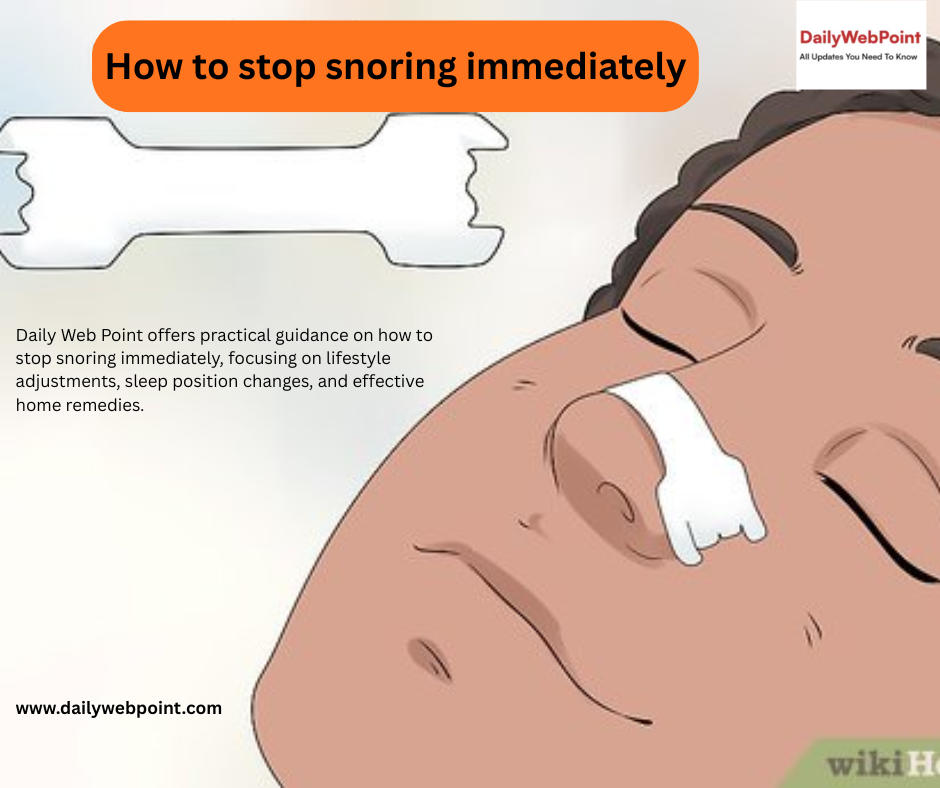
Using nasal strips to widen the nostrils
These approaches help improve airflow instantly and are especially useful during allergies or colds.
Avoid Alcohol Before Bed
Alcohol relaxes throat muscles, increasing the likelihood of airway obstruction. If someone has consumed alcohol, snoring often becomes louder or more frequent. While the long-term solution is to reduce evening alcohol intake, drinking water and adjusting sleep position can help stop snoring episodes more quickly.
Use a Humidifier
Dry air irritates the tissues in the nose and throat, leading to vibrations that cause snoring. Turning on a humidifier adds moisture to the air, reducing irritation and creating smoother airflow. This method works well when snoring worsens during winter or in dry environments.
Breathing and Oral Exercises
Although these exercises are more effective long term, certain techniques can offer immediate relief by tightening throat muscles and improving airflow.
-
Practicing slow, deep nasal breathing helps open the airway.
-
Pursing the lips and exhaling gradually can reduce throat tension.
-
Brief tongue exercises strengthen muscles that collapse during sleep.
These exercises, even when performed for a few minutes before bedtime, can decrease snoring intensity.
When to Seek Medical Advice
If snoring persists despite trying immediate remedies, it may indicate issues such as sleep apnea, chronic nasal obstruction, or enlarged tissues. Persistent snoring accompanied by choking sounds, pauses in breathing, morning headaches, or excessive daytime fatigue should be evaluated by a healthcare professional.
Conclusion
Understanding how to stop snoring immediately involves identifying the underlying cause and applying targeted strategies that improve airway flow. Adjusting sleep position, elevating the head, clearing nasal passages, and using humidifiers are some of the quickest methods to reduce snoring. While these solutions provide fast relief, long-term improvement often requires lifestyle adjustments and sometimes medical intervention. With the right combination of immediate techniques and preventive habits, individuals can significantly improve nighttime breathing and overall sleep quality.
Κατηγορίες
Διαβάζω περισσότερα
Comprehensive Outlook on Executive Summary Laurence Moon Biedl Syndrome Market Size and Share The laurence moon biedl syndrome market is expected to gain growth at a potential rate of 3.0% in the forecast period of 2021 to 2028. The increase in the investment in research and development is the factor responsible for the market growth. A competitive era calls for businesses to be...

The Alpha Lipoic Acid Market is experiencing significant growth, primarily driven by the increasing global prevalence of chronic diseases such as diabetes and the rising consumer focus on preventive healthcare and nutritional supplements. Alpha Lipoic Acid (ALA), a potent antioxidant, is increasingly recognized for its therapeutic applications in treating diabetic neuropathy,...

You can get effective anxiety treatment online that combines licensed therapy, medication management when needed, and flexible scheduling so care fits your life. Online treatment often matches in-person outcomes for many people and gives faster access, more convenience, and options that suit your budget and needs. This post will explain what online anxiety care looks like, how clinicians...

Scarring alopecia, also known as cicatricial alopecia, is a type of hair loss where follicles are permanently damaged due to scarring from burns, trauma, infections, or medical conditions. Treating scarring alopecia requires specialized hair transplant techniques to restore hair density in affected areas. Hair Transplant in Riyadh (زراعة الشعر في الرياض) clinics now offer advanced solutions...

Monolithic Microwave Integrated Circuits (MMICs) are highly integrated semiconductor devices designed to operate at microwave frequencies. These circuits combine multiple active and passive components on a single semiconductor substrate, delivering superior performance, compact size, and enhanced reliability. MMIC technology is widely used in telecommunications, aerospace, defense, satellite...
