How Carbide Drill Bits Improve Accuracy and Tool Life
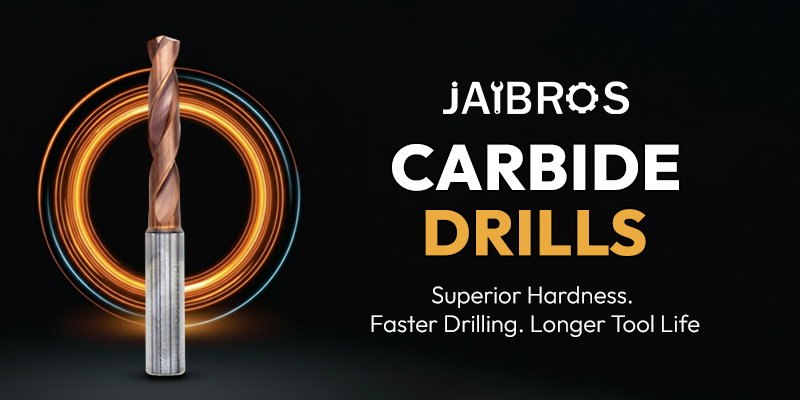
Learn how carbide drill bits enhance drilling accuracy and extend tool life in metal and hard material machining. Benefits, uses, and tips explained.
Improving Drilling Accuracy and Durability with Carbide Tools
Precision drilling plays a critical role in modern manufacturing, especially when working with metal, steel, and hard materials. Even a small deviation in hole size or alignment can affect assembly quality, product performance, and overall production cost. To overcome these challenges, manufacturers increasingly rely on carbide drill bits for their superior accuracy, strength, and durability. These tools are engineered to handle demanding applications while maintaining consistent performance over long production cycles.
The Importance of Accuracy in Metal Drilling
Accurate drilling ensures proper fitment, reduced rework, and smooth downstream operations such as tapping or fastening. In metalworking, tool deflection, vibration, and heat buildup are common causes of inaccurate holes. Traditional tools may struggle to maintain straightness when drilling harder materials or deeper holes.
Carbide tooling offers higher rigidity, which significantly reduces bending during operation. This rigidity allows the cutting edges to stay aligned with the drilling axis, producing precise and repeatable results. As a result, machinists can achieve tighter tolerances even in challenging materials using carbide drill bits.
Material Composition and Its Role in Tool Life
Carbide tools are made from tungsten carbide combined with a binder material, usually cobalt. This composition provides exceptional hardness and wear resistance compared to high-speed steel. Because of this, the cutting edges remain sharp for a longer time, even when exposed to high temperatures and continuous cutting forces.
Longer tool life means fewer tool changes, reduced machine downtime, and consistent hole quality across multiple components. In high-volume production environments, this reliability makes carbide drill bits a cost-effective solution despite their higher initial price.
Reduced Heat and Improved Cutting Stability
Heat is one of the biggest enemies of drilling tools. Excessive heat can soften cutting edges, cause premature wear, and negatively affect hole accuracy. Carbide tools are capable of operating at higher cutting speeds while maintaining structural stability.
Their ability to dissipate heat efficiently reduces thermal expansion and prevents edge deformation. This stability ensures smooth cutting action, better surface finish, and improved dimensional accuracy. These factors collectively contribute to the extended service life of carbide drill bits in demanding machining conditions.
Accuracy Benefits in Different Drill Sizes
Selecting the right size and length is essential for maintaining precision. For example, a 7mm carbide drill bit is commonly used in applications that require accurate medium-diameter holes in metal components. Its rigidity allows it to cut cleanly without wandering, even when drilling tough alloys.
In deep-hole applications, a 7mm long drill bit helps maintain straightness over extended depths. Proper flute design ensures effective chip evacuation, reducing friction and minimizing tool stress. When evaluating options, buyers often compare the 7mm drill bit price with expected tool life and performance, as higher-quality tools deliver better long-term value.
Consistent Performance in Hard Materials
Hard materials such as stainless steel, cast iron, and hardened alloys place extreme stress on drilling tools. A standard carbide drill bit is designed to withstand these conditions while maintaining consistent cutting geometry.
This consistency results in uniform hole dimensions, reduced burr formation, and improved surface quality. Over time, this reliability helps manufacturers maintain production standards without frequent tool replacement, directly contributing to operational efficiency.
Proper Usage for Maximum Tool Life
Even the best tools require correct usage to achieve optimal performance. Using appropriate cutting speeds, feed rates, and coolant is essential to prevent chipping or thermal damage. Carbide tools perform best when matched with machine capabilities that support stable, vibration-free operation.
Regular inspection and proper storage further extend tool life. When used correctly, carbide drill bits deliver predictable results across a wide range of drilling applications.
Long-Term Cost and Productivity Benefits
Although carbide tools have a higher upfront cost, their longer lifespan and improved accuracy reduce overall machining expenses. Fewer tool changes mean less downtime, while consistent hole quality reduces scrap and rework.
For manufacturers focused on productivity and precision, investing in carbide drill bits leads to better process control and long-term savings.
Conclusion
Accuracy and tool life are two critical factors in metal drilling, and carbide-based tools excel in both areas. Their superior rigidity, heat resistance, and wear characteristics enable them to produce precise holes and provide extended service life, even in hard materials. By selecting the right size, using proper cutting parameters, and maintaining tools correctly, manufacturers can fully benefit from carbide drill bits in precision machining and industrial drilling operations.
Frequently Asked Questions (FAQs)
1. How do carbide drill bits improve drilling accuracy?
Their high rigidity reduces deflection and vibration, allowing for straighter holes and tighter tolerances.
2. Are carbide drill bits suitable for CNC machines?
Yes, they are ideal for CNC machining due to their stability at high speeds and consistent cutting performance.
3. Is a 7mm carbide drill bit good for metal drilling?
A 7mm size is commonly used for precision drilling in steel and other metals where accuracy is critical.
4. Why do carbide drill bits last longer than HSS tools?
Their harder material composition resists wear and heat, keeping cutting edges sharp for a longer time.
5. How can I maximize the life of carbide drill bits?
Use correct speeds and feeds, apply suitable coolant, and avoid excessive vibration during drilling.
Catégories
Lire la suite
Single-use Bioprocessing Industry Insights: Straits Research recently introduced the latest update on the Single-use Bioprocessing Market that provides an extensive outlook of the market, analyzing key growth opportunities, challenges, risk factors, and emerging trends across diverse geographic regions. The report offers a definitive and meticulous analysis of the Single-use...

Photonic Integrated Circuits (PIC) Market Accelerates as High-Speed Data Communication and AI Infrastructure Drive Demand The Global Photonic Integrated Circuits (PIC) Market is experiencing significant growth as demand for high-speed data transmission, cloud computing, artificial intelligence (AI), 5G networks, and advanced optical communication systems continues to increase worldwide....

Bathroom remodeling in Alexandria, VA is one of the most effective ways to improve home comfort, functionality, and property value. Many homes in the area are older, meaning bathrooms often have outdated layouts, limited storage, and aging plumbing systems that no longer meet modern expectations. Argo Contractors provides bathroom remodeling in Alexandria, VA with a focus on custom design,...

Types of Cheese Word Search: A Fun and Educational Guide to the World's Most Beloved Dairy Delight If you've ever sat down with a types of cheese word search puzzle, you already know how surprisingly addictive it can be. What starts as a simple scan of letters quickly turns into a delicious mental journey through the vast, flavorful world of cheese. Whether you're a teacher looking for a...

Market Overview: According to IMARC Group's latest research publication, "Railway Cyber Security Market: Global Industry Trends, Share, Size, Growth, Opportunity and Forecast 2025-2033", The global railway cyber security market size reached USD 8.0 Billion in 2024. Looking forward, IMARC Group expects the market to reach USD 16.0 Billion by 2033, exhibiting a...