Platform as a Service Industry Evolves Toward Internal Developer Platforms And AI
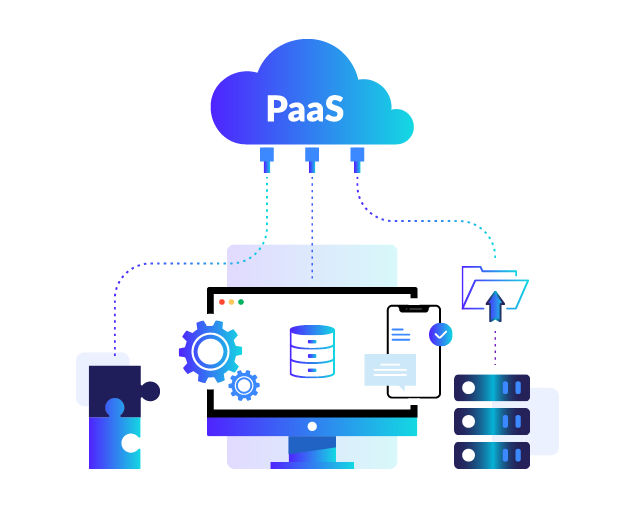
The Platform as a Service Industry is evolving as organizations demand faster software delivery and more standardized cloud operations. The industry includes hyperscale cloud providers, enterprise software vendors, container platform companies, and managed service providers. Its growth reflects the increasing complexity of application stacks: microservices, APIs, data services, and event-driven architectures require managed components that teams can consume reliably. PaaS reduces operational toil by providing managed runtimes, databases, messaging, and deployment tooling. It also supports DevOps by enabling continuous delivery and standardized environments. The industry is moving beyond basic application hosting into comprehensive ecosystems that include observability, security controls, and integration services. As enterprises modernize legacy applications and build new digital products, PaaS becomes a central foundation. However, with greater reliance comes greater scrutiny of reliability, security, and cost transparency, pushing the industry toward more mature operational practices and governance features.
A key industry shift is the rise of internal developer platforms (IDPs). Many enterprises build a curated layer on top of vendor PaaS offerings, providing “golden paths” and templates that standardize networking, security, and monitoring. This reduces cognitive load for developers and accelerates onboarding. PaaS providers support this trend with developer portals, APIs, policy-as-code, and infrastructure-as-code tooling. Managed Kubernetes and serverless services remain industry growth pillars, offering portability and scaling benefits. The industry also expands into data and integration services, providing managed databases, caches, streaming, and API management. These services reduce operational risk and enable rapid iteration. However, vendor lock-in is an ongoing industry issue. Customers often want the benefits of managed services without losing portability. The industry responds with open-source compatibility, standards support, and hybrid deployment options. Managed service providers help customers implement and operate PaaS, filling skills gaps and accelerating adoption in complex enterprise environments.
Security and compliance are defining industry requirements. PaaS platforms must support identity integration, encryption, secrets management, and audit logging. Shared responsibility models require customers to configure services correctly, so the industry invests in posture management, guardrails, and automated compliance checks. Supply chain security is also growing in importance, with organizations requiring signed artifacts, vulnerability scanning, and secure CI/CD pipelines. Reliability expectations are rising as PaaS hosts critical applications. The industry responds with multi-region capabilities, improved SLAs, and better observability tooling. Cost governance is another focus, because consumption-based pricing can surprise customers. Providers add cost analytics, budgets, and optimization guidance. AI enablement is becoming a major industry frontier. PaaS platforms add managed AI services, MLOps tooling, and vector databases, enabling organizations to build GenAI applications quickly. This expansion increases the need for model governance, data privacy controls, and cost management for compute-intensive workloads.
The industry’s future will likely be shaped by composable platforms, automation, and AI-driven operations. PaaS will increasingly provide integrated pipelines that build, test, secure, deploy, and monitor applications with minimal manual intervention. Low-code capabilities and reusable templates will broaden adoption beyond traditional developer teams. Hybrid and edge PaaS offerings may expand as organizations run workloads closer to devices and plants while maintaining centralized governance. Industry consolidation may continue as large vendors acquire niche platform and observability companies to broaden portfolios. Customers will demand interoperability and portability, creating opportunities for open standards and multi-cloud governance layers. Ultimately, PaaS industry leadership will be defined by the ability to deliver developer productivity at enterprise scale: reliable services, strong security defaults, predictable costs, and clear operational support. Organizations adopting PaaS will benefit most when they treat it as critical infrastructure and invest in platform engineering, ensuring rapid delivery without sacrificing compliance and resilience.
Top Trending Reports:
Kategoriler
Read More
What Is Prostatitis? Prostatitis is an inflammation of the prostate gland — a small walnut-shaped organ in men that produces seminal fluid. This condition can cause pain, urinary problems, and sexual dysfunction, affecting men of all ages, though it’s most common between ages 30 and 50. Prostatitis isn’t a single disease but a group of conditions with different causes and...

The Web3 ecosystem has evolved at an unprecedented pace, with NFTs transforming from a niche collectible trend into a foundational layer of digital ownership, commerce, and next-generation brand engagement. As the technology matures, businesses are increasingly turning toward White Label NFT Marketplace Development to enter the market faster, reduce overhead costs, and launch platforms...

In the peak of a Delhi summer, your luxury car isn’t just a vehicle—it’s a survival pod. Whether you are navigating the traffic at Dhaula Kuan or cruising down the Noida Expressway, the 45° C heat makes a functional AC non-negotiable. Yet, owners of BMWs, Audis, and Mercedes often find their premium cooling systems struggling or failing entirely just when they need them...

Every child loves the excitement of solving a puzzle. It starts with curiosity, grows into confidence, and ends with a smile of accomplishment. But what if a simple puzzle could become something even more meaningful? That is exactly what MDF Puzzle Boards for Children offer. They combine creativity, learning, and hands-on fun in one engaging activity. Instead of simply putting pieces together,...

An ACL injury is one of the most common—and frustrating—knee problems, especially for athletes and active individuals. The anterior cruciate ligament (ACL) plays a key role in stabilizing your knee during movements like running, jumping, and pivoting. When it’s injured, even basic activities can feel unstable and painful. A knee brace ACL injuries is...