Understanding Turning Insert Grades and Coatings
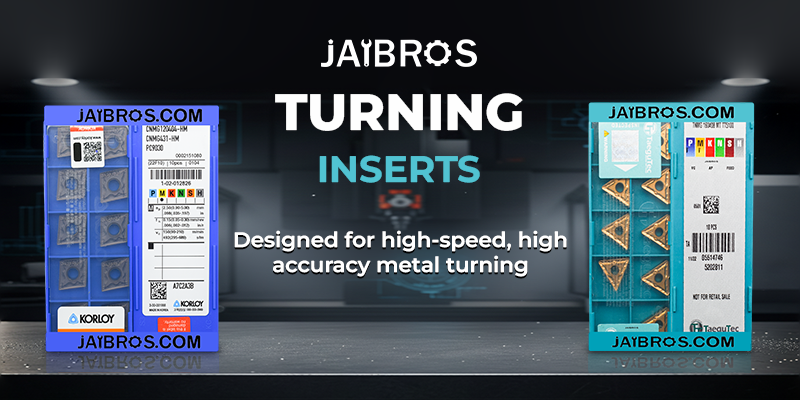
Learn how turning insert grades and coatings affect tool life, surface finish, and performance in CNC turning applications.
Turning Insert Grades and Coatings Explained
In modern machining, precision, productivity, and tool life depend heavily on the cutting components used in CNC operations. Among these components, insert selection plays a critical role in achieving consistent results across different materials and cutting conditions. Manufacturers today rely on advanced insert technology to handle high speeds, tough alloys, and demanding surface finish requirements. To make the right choice, it is important to understand how insert grades and coatings influence performance in real-world machining environments.
What Are Turning Inserts?
Turning inserts are replaceable cutting edges used in lathe and CNC turning operations. They are mounted on tool holders and designed to remove material efficiently while maintaining dimensional accuracy. Unlike solid tools, inserts can be indexed or replaced when worn, reducing downtime and tooling costs.
These inserts are widely used in CNC machining because they offer flexibility, consistent performance, and compatibility with a wide range of materials. From mild steel to hardened alloys, insert-based tooling solutions support diverse manufacturing needs.
Understanding Insert Grades
Insert grades refer to the material composition and mechanical properties of an insert. The grade determines how the insert performs under heat, pressure, and cutting forces.
1. Carbide Grades
Carbide is the most commonly used material for inserts. It offers an excellent balance of hardness and toughness, making it suitable for a wide range of applications. Carbide-based cnc turning inserts are ideal for high-speed machining and long production runs.
2. Cermet Grades
Cermet inserts combine ceramic and metallic materials. They are known for producing superior surface finishes and are often used in finishing operations where dimensional accuracy is critical.
3. Ceramic Grades
Ceramic inserts are designed for extreme heat resistance and are commonly used in high-speed machining of cast iron and hardened steels. However, they are less impact-resistant compared to carbide.
4. CBN and PCD Grades
Cubic Boron Nitride (CBN) and Polycrystalline Diamond (PCD) inserts are used for very hard or abrasive materials. These premium grades are ideal for specialized applications where tool life and precision are top priorities.
Understanding different grades helps machinists match the insert to the material and cutting conditions.
Role of Insert Coatings in Machining
Coatings enhance insert performance by reducing friction, controlling heat, and improving wear resistance. Modern coatings significantly extend tool life and improve machining stability.
Common Insert Coatings
Titanium Nitride (TiN): Improves wear resistance and reduces friction
Titanium Carbonitride (TiCN): Offers higher hardness and edge strength
Aluminum Oxide (Al₂O₃): Provides excellent thermal insulation
Multi-layer Coatings: Combine multiple benefits for demanding operations
Coated inserts are widely used in insert CNC turning applications where high cutting speeds and long tool life are required.
Matching Insert Grades and Coatings to Materials
Selecting the right combination of grade and coating is essential for machining efficiency. Softer materials like aluminum benefit from sharp, low-friction inserts, while harder materials require tougher grades with heat-resistant coatings.
For steel machining, carbide inserts with multi-layer coatings are commonly preferred. In stainless steel applications, tougher grades help resist edge chipping and built-up edge formation. Understanding material behavior allows machinists to choose from various CNC insert types with confidence.
Importance of Insert Geometry and Chip Control
While grade and coating are important, insert geometry also affects cutting performance. Rake angle, nose radius, and chip breaker design all influence how material is removed.
Different types of inserts are designed for roughing, finishing, or semi-finishing operations. Proper chip control improves safety, surface finish, and tool life, especially during high-speed turning.
Benefits of Choosing the Right Turning Inserts
Using the correct turning inserts improves productivity, reduces tool change frequency, and ensures consistent part quality. The right selection minimizes vibration, enhances surface finish, and lowers overall machining costs.
Manufacturers who invest time in understanding grades and coatings often experience fewer machining issues and longer tool life across production cycles.
Common Mistakes in Insert Selection
One common mistake is selecting inserts based solely on price rather than application requirements. Another is using a single insert type for multiple materials, which often leads to poor performance and premature wear.
Ignoring coating compatibility with cutting speed and coolant conditions can also reduce effectiveness. A balanced approach ensures optimal results.
Future Trends in Insert Technology
Advancements in coating technology and material science continue to improve insert performance. New nano-coatings and optimized substrate designs are helping manufacturers machine harder materials at higher speeds with greater accuracy.
As CNC machines become more advanced, insert technology will play an even more critical role in achieving precision and efficiency.
Conclusion
Understanding insert grades and coatings is essential for successful CNC machining. The right combination improves cutting performance, tool life, and surface quality while reducing downtime and production costs. By carefully evaluating material type, cutting conditions, and application requirements, machinists can select turning inserts that deliver consistent and reliable results.
For manufacturers and machining professionals seeking high-quality tooling solutions, Jaibros offers a wide range of precision-engineered inserts and tooling products designed to meet modern machining demands. With a focus on quality, performance, and reliability, Jaibros supports efficient and accurate CNC operations across industries.
Frequently Asked Questions (FAQs)
1. Why are insert grades important in machining?
Insert grades determine hardness, toughness, and heat resistance, directly affecting tool life and performance.
2. What is the role of coatings on inserts?
Coatings reduce friction, improve wear resistance, and help manage heat during cutting.
3. Can one insert be used for all materials?
No, different materials require specific grades and coatings for best results.
4. How do I choose the right insert for finishing operations?
Finishing operations typically require sharper edges and smoother coatings for better surface quality.
5. Are coated inserts always better than uncoated ones?
Coated inserts usually offer longer tool life, but uncoated inserts can be suitable for specific low-speed or soft-material applications.
Categorii
Citeste mai mult
"Latest Insights on Executive Summary Interferons Market Share and Size CAGR Value Data Bridge Market Research analyses a growth rate in the global interferons market in the forecast period 2022-2029. The expected CAGR of global interferons market is tend to be around 4% in the mentioned forecast period. Interferons Market report presents the best market opportunities available and...

In the rapidly evolving landscape of modern digital marketing, business leaders and emerging corporate brands face the ongoing challenge of breaking through online saturation to secure clear industry authority. Achieving sustainable market presence requires a structured approach to public communication, where deploying a professional affordable PR distribution platform...

It often happens at the worst possible moment. You're leaving for work in Flushing, rushing to catch a flight from LaGuardia, or simply returning home to Bayside after a long day when you discover it: your garage door won't open. Maybe it's making a terrible grinding noise, is stuck halfway, or has a spring dangling ominously from the ceiling. In these situations, panic sets in. Your garage...

The global Isoamyl Acetate Market was valued at USD 387.77 million in 2024 and is projected to reach USD 605.05 million by 2032, expanding at a CAGR of 4.99% during the forecast period from 2025 to 2032. The market growth is driven by increasing demand across food and beverage, cosmetics, textile, and pharmaceutical applications, fueled by its versatile properties as a flavoring,...

Selecting a trustworthy platform is essential for safe and efficient trading in the UAE. This guide examines key factors such as security, regulatory compliance, transaction fees, and user experience to help decision-stage users make informed choices. By exploring the best crypto exchange in UAE, investors gain insight into reliable options that minimize risks and provide liquidity. The guide...