


From Data Silos to Intelligent Insights: How Azure Data Integration Powers the Modern Microsoft Fabric Ecosystem
Introduction
Disconnected systems don’t just slow operations; they silently erode business intelligence and AI readiness. As enterprises accelerate cloud modernization, the real differentiator lies in how seamlessly data flows across different platforms and applications. Azure Data Integration, now deeply embedded within Microsoft Fabric Data Factory, is redefining how organizations connect and transform enterprise data at scale.
The Strategic Role of Azure Data Integration in Microsoft Fabric’s Unified Analytics Platform
Today’s enterprises operate across dozens of platforms. This includes ERP, CRM, cloud applications, IoT systems, and legacy databases. While data volumes continue to grow, true business value remains locked in silos.
This is precisely where Azure Data Integration plays a transformational role within the Microsoft Fabric ecosystem.
With Microsoft Fabric Data Factory, Microsoft has embedded powerful ingestion, transformation, and orchestration capabilities directly into its unified analytics platform. Instead of relying on fragmented ETL tools and disconnected data lakes, organizations can now manage the entire data lifecycle inside Fabric.
What Microsoft Fabric Data Integration Enables
-
Seamless connectivity on cloud and on-premise systems using Azure data integration services
-
Scalable Microsoft Fabric ETL pipelines for structured and unstructured data
-
Real-time and batch data movement into OneLake and Lakehouse environments
-
Centralized orchestration and monitoring for complex workflows
Why Integration Has Become a Boardroom Priority
For leadership teams, integration is no longer a backend IT function. It directly impacts:
-
Speed of decision-making
-
AI and advanced analytics readiness
-
Operational efficiency
-
Compliance and governance maturity
By bringing Azure’s proven integration capabilities into Fabric, Microsoft removes any kind of architectural complexity and also accelerates insights.
Inside Microsoft Fabric Data Factory — The Engine Behind Modern Data Integration
At the heart of Microsoft Fabric Data Integration lies an evolved version of Azure Data Factory. It’s now fully embedded into the Fabric platform. But this isn’t just a rebranding. It’s a shift toward a unified, lakehouse-first integration experience designed for analytics, AI, and real-time intelligence.
Microsoft Fabric Data Factory brings together ingestion, transformation, orchestration, and monitoring into one streamlined environment. It removes the traditional handoffs between ETL tools and BI platforms.
Key Capabilities That Power Enterprise-Scale Integration
Extensive Connectivity
Fabric Data Factory renders hundreds of native connectors across:
-
Microsoft Dynamics 365
-
Azure services
-
SaaS platforms
-
On-premise databases
-
Cloud applications
This enables enterprises to move data smoothly across hybrid and multi-cloud environments.
Intelligent ETL & Transformation
With built-in Microsoft Fabric ETL capabilities, organizations can:
-
Clean and standardize data
-
Apply business rules
-
Transform structured and semi-structured datasets
-
Load analytics-ready data directly into OneLake
Unified Orchestration
Complex workflows like dependencies, triggers, and scheduling are managed centrally. This gives full visibility to data movement and performance.
Real-Time + Batch Integration
Fabric supports both streaming ingestion for operational insights and batch pipelines for large-scale analytics.
Why This Architecture Changes the Game
Traditional ETL pipelines push data into separate warehouses and lakes. This often creates duplication and governance challenges.
With Fabric:
-
Data flows directly into a unified storage layer (OneLake)
-
Analytics tools consume the same governed datasets
-
AI models train on consistent and trusted data
This significantly reduces:
-
Data latency
-
Engineering overhead
-
Cost of maintaining multiple integration stacks
Table: Core Functions of Microsoft Fabric Data Factory
|
Capability |
Business Impact |
|
Native connectors |
Faster system integration |
|
Built-in ETL |
Cleaner analytics-ready data |
|
Central orchestration |
Improved pipeline reliability |
|
Real-time ingestion |
Immediate insights |
|
Fabric-native storage |
Simplified architecture |
Azure Data Factory vs Microsoft Fabric is becoming a major comparison point for enterprises evaluating modern data integration platforms. While Azure Data Factory provides powerful ETL and data movement capabilities, Microsoft Fabric goes further by combining integration, lakehouse storage, real‑time analytics, governance, and AI into a single unified ecosystem.
Organizations that previously relied on Azure Data Factory can now leverage Microsoft Fabric Data Factory to reduce architectural complexity, eliminate disconnected pipelines, and accelerate analytics. In essence, ADF focuses on data orchestration, whereas Fabric delivers an end‑to‑end analytics and AI-ready environment built for the future of enterprise intelligence.
Connecting and Transforming Data in Microsoft Fabric Lakehouse Using Azure Data Integration
With Azure Data Integration embedded into Microsoft Fabric Data Factory, enterprises can quickly move and transform data directly into Fabric’s Lakehouse environment. This process is highly secure and designed for large-scale Microsoft Fabric ETL workloads.
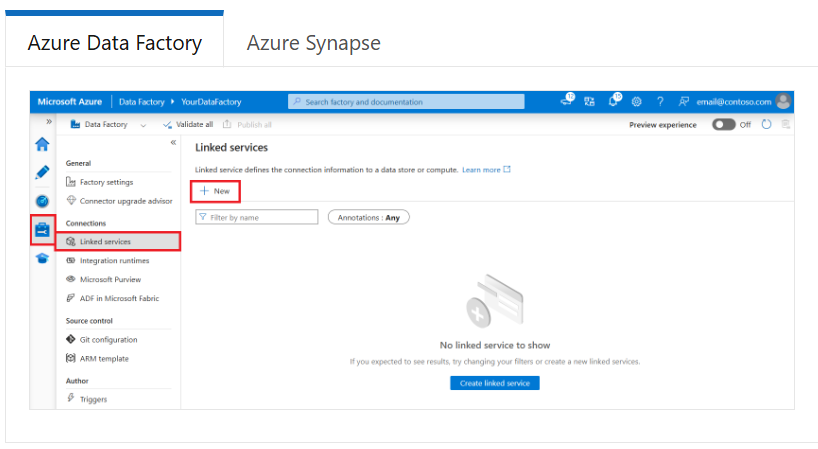
Step 1: Create a Fabric Lakehouse Linked Service
Navigate to Manage → Linked Services in Azure Data Factory or Synapse and select New.
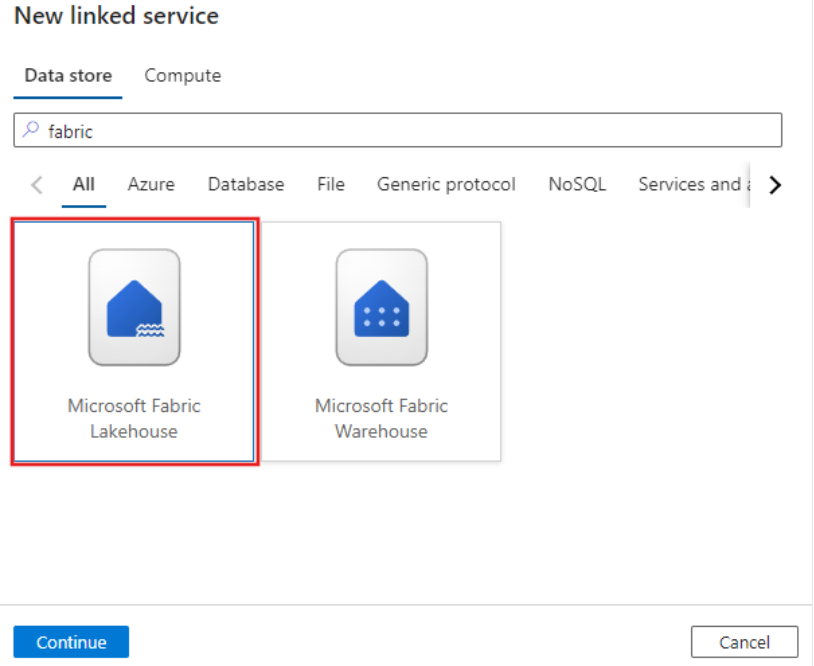
Step 2: Select Microsoft Fabric Lakehouse Connector
In the connector search bar, type Microsoft Fabric Lakehouse and select the connector from the list.
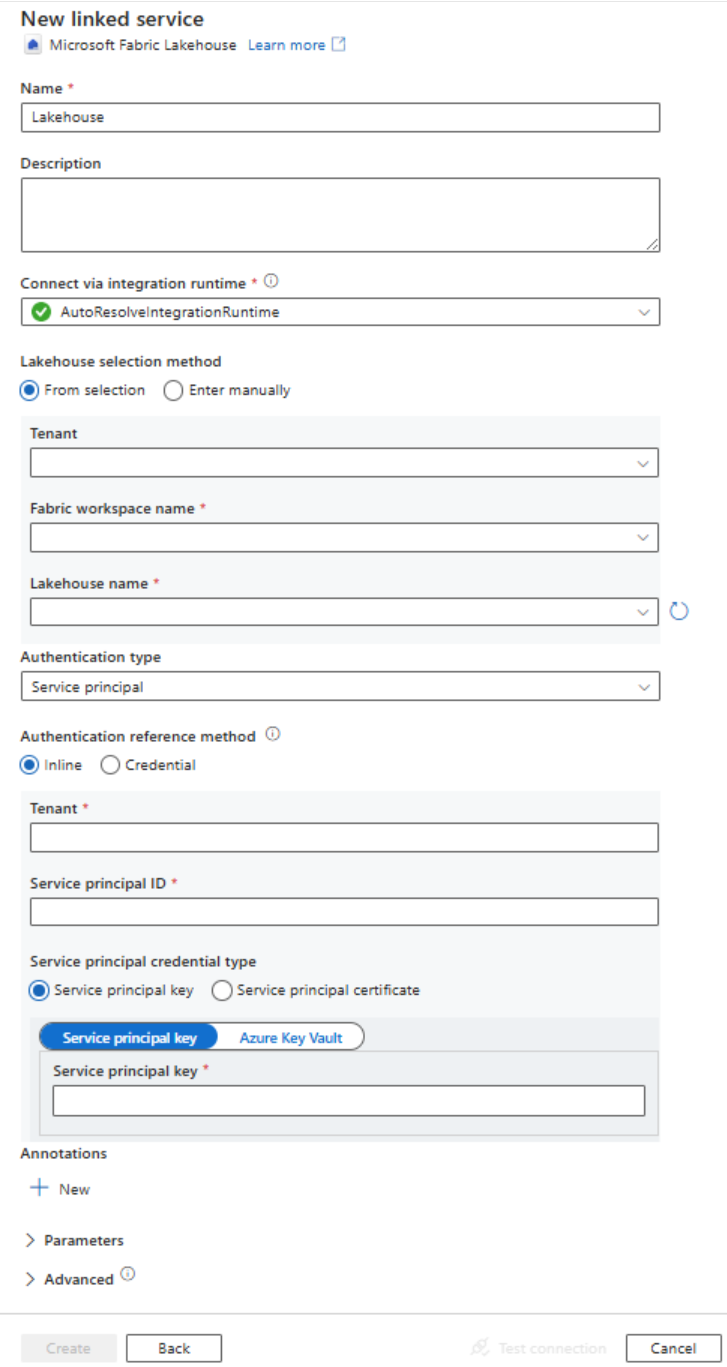
Step 3: Copy and Transform Data
Configure the service details and test the connection. Then, create the new linked service.
Step 4: Copy and Transform Data into Fabric Lakehouse
Use pipelines to ingest data, apply Microsoft Fabric ETL transformations, and load curated datasets directly into the Lakehouse.
Turning Integrated Data into Intelligence with Microsoft Fabric Data Analytics
Once data is seamlessly connected and transformed through Microsoft Fabric Data Integration, the real value begins with advanced analytics and AI-driven insights.
Microsoft Fabric data analytics unifies lakehouse storage, real-time analytics, Power BI, and machine learning. This empowers enterprises to analyze data without moving it across platforms.
How Enterprises Leverage Fabric for Analytics
Real-Time Operational Dashboards
Monitor supply chains, financial performance, customer behavior, and system health as data flows in.
AI & Predictive Insights
Train machine learning models directly on curated Fabric datasets for forecasting and anomaly detection.
Highly Recommended: Fabric + Azure OpenAI for Enterprise Analytics
Unified Business Intelligence
Power BI within Fabric delivers self-service analytics on governed data.
Faster Time-to-Insight
No data duplication. No complex pipelines. Just immediate analytics readiness.
Microsoft Fabric data analytics help businesses derive actionable intelligence from integrated and governed datasets without managing multiple analytics tools.
Don’t Miss This: Real-Time Monitoring With Power BI
Real-World Use Cases of Azure Data Integration in Microsoft Fabric
Enterprises across industries are using Azure Data Integration within Microsoft Fabric to modernize analytics and enable AI-driven decision-making.
Manufacturing & Supply Chain
-
Integrating ERP, IoT, and logistics data into Fabric Lakehouse
-
Real-time production monitoring and demand forecasting
Finance & Operations
-
Automating financial data ingestion from multiple systems
-
Faster close cycles and real-time profitability reporting
eCommerce & Customer Analytics
-
Combining CRM, website, and transaction data
-
Personalized insights and predictive customer behavior
Healthcare & Non-Profit
-
Unified reporting across clinical, donor, and operational systems
-
Improved compliance and transparency
Conclusion: Building a Connected, Analytics-Driven Enterprise with Microsoft Fabric
Data integration today isn’t simply about transferring data from one system to another. It’s about bringing everything together in a way that makes information reliable and accessible to drive smarter decisions. When businesses connect their data through Azure Data Integration and activate it within Microsoft Fabric, they create a single, trusted source that fuels analytics and high-end automation.
With Microsoft Fabric Data Factory handling seamless ingestion and transformation, and Microsoft Fabric data analytics delivering real-time insights, businesses can finally move beyond complexity. The result is faster reporting and a stronger data foundation that grows with the enterprise.
DynaTech is an AI-first Microsoft Solutions Company that delivers the best-in-class strategy and implementation along with ongoing optimization to businesses all across the globe.
You Can’t Miss This: Why Enterprises Are Standardizing on Fabric in 2026
Modernize your enterprise data integration with Microsoft Fabric!
Connect with DynaTech today! Build secure and analytics-ready data ecosystems powered by Azure Data Integration and Microsoft Fabric.
Categories
Read More
Introduction The Himalayas are full of treks that inspire adventure lovers, but few are as thrilling and scenic as the Bali Pass Trek. Connecting the Har Ki Dun valley with the Yamunotri valley, this high-altitude trek reaches nearly 16,200 feet, offering views of peaks like Swargarohini, Bandarpoonch, and Black Peak. For first-time trekkers who are physically fit and eager for a challenge,...

The global Saudi Arabia fire protection system market, valued at USD 641.79 million in 2024, is projected to grow at a CAGR of 6.5% from 2025 to 2034, reflecting a steady rise in compliance investments, infrastructure modernization initiatives, and tightening regulatory oversight across international markets. As the market becomes more interconnected through cross-border supply chains and...

Preparing for the next tax season doesn’t have to be stressful or confusing. With changing CRA regulations, evolving tax credits, and increasing documentation requirements, proactive tax planning has become more important than ever. This is where Personal Tax Accountants in Brampton play a crucial role—helping individuals stay organized, compliant, and financially efficient well...

Healthcare is evolving to meet the changing needs of patients, and one of the most important advancements is the focus on personalized care. Instead of offering the same treatment to everyone, modern healthcare recognizes that each person has unique medical needs, health goals, and lifestyle factors. Syx Point Medical embraces this philosophy by providing patient-centered healthcare services...

Overwatch’s Steam debut never told the whole story: it drew plenty of players, but moving the game from Battle.net to a public Steam store page exposed it to visible user reviews and a lot of vocal criticism, while many PC players continued using Battle.net instead of Steam. When Marvel Rivals arrived on Steam in 2024 it quickly outpaced Overwatch’s Steam concurrent numbers —...
