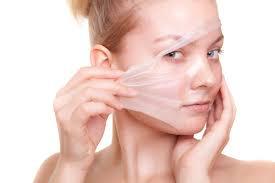
Botox Training & Certification Course
Botox Medical Training provides you with our FREE Botox Certification Training Manual. Please contact us for your hands-on Botox training along with our FREE Botox Training APP
What is BOTOX® Cosmetic?
BOTOX® Cosmetic is a purified protein complex derived from the bacterium Clostridium botulinum that smoothes the muscles by blocking nerve impulses. BOTOX® Cosmetic blocks the release of acetylcholine at the neuromuscular junction thereby preventing the contraction of muscles.
A common mistake is that BOTOX® Cosmetic is used to fill in wrinkles. BOTOX® works on dynamic wrinkles and not static wrinkles like a dermal filler. Also, BOTOX® affects the neuromuscular junction and not the sensory nerves, so you will not numb a patient’s face.
Contraindication
BOTOX® Cosmetic is contraindicated in the presence of infection at the proposed injection site(s), individuals with known hypersensitivity to any ingredient in the formulation, pregnancy (category C – safety for use during pregnancy has not been established), or breastfeeding.
Patients with neuromuscular disorders such as ALS, myasthenia gravis, or Lambert-Eaton syndrome may be at increased risk of serious adverse events. Underlying generalized weakness can be exacerbated, and local weakness at injection sites can occur more than otherwise expected.
It should be noted that the lethal dose for BOTOX® Cosmetic is 3000 units. This is 30 vials of Botox® Cosmetic in one day injected into a 70kg individual. Typically, you will inject 20 units to 100 units in one day.
Reconstitution and Handling
BOTOX® Cosmetic comes in a vacuum-sealed vial in a powder form at 100 units per vial. Although the manufacturer, Allergan, recommends using non-preserved 0.9% Sodium Chloride, we recommend using preserved 0.9% Sodium Chloride. Preserved (Bacteriostatic) 0.9% Sodium Chloride will increase the activity of the BOTOX® Cosmetic protein for up to 6 weeks when stored at 4°C (As recommended by Consensus Recommendations on the Use of Botulinum Toxin Type A in Facial Aesthetics; Plast Reconstr Surg. 2004 Nov;114(6 Suppl):1S-22S).
Inject 2.5cc of Preserved 0.9% into BOTOX® Cosmetic vial to make the following concentrations in your reconstituted vial of BOTOX® Cosmetic:
100 units per 2.5cc
20 units per 0.5cc
4 units per 0.1cc
This is probably the toughest concept for many to grasp. However, once you become familiar with it, it will become second nature to you.
Patient Consultation
Before you inject, get a thorough history from your patient and assess for contraindications. Your patient should sign the informed consent and take “before” photos.
Type 1: ‘Early Wrinkles’
Patient age: 20s to 30s, with minimal wrinkles
BOTOX® is typically all you’ll use.
Type 2: ‘Wrinkles in Motion’
Patient age: 30s to 40s, starts developing smile lines
In addition to BOTOX® you may consider using dermal fillers depending on the location
Type 3: ‘Wrinkles at Rest’
Patient age: 50s & older, Wrinkles even at rest
In addition to BOTOX® you will need to use dermal fillers depending on the location
Type 4: ‘Only Wrinkles’
Patient age: 60s or 70s,
BOTOX® & dermal fillers alone will not completely eliminate all the wrinkles. These patients will benefit from a facelift or a laser resurfacing procedure.
Glabella (Frown Lines) Botox Certification
Muscles Involved
The glabellar complex has two main muscles that you will inject: procerus and corrugator. The procerus originates from the nasal bone and attaches to the medial forehead & skin of the brow. The action of the procerus draws the medial brow down inferiorly. The corrugator originates from the medial superciliary arch and inserts into the skin of the medial forehead. The action of the corrugator draws the brow medially and inferiorly.

Injection Technique
Glabellar injections are deep intramuscular injections. You should insert your needle perpendicular to the skin. The depth should be deep near the periosteum. The frontalis muscle overlaps the glabellar complex superficially. Therefore, a superficial injection can affect the frontalis muscle and cause the patient’s eyebrow to feel heavy. However, an injection that is too deep will cause the needle to hit the periosteum.
Landmarks:
Medial corrugator injection = 1 cm above the bony orbital rim and vertical to the medial canthus
20 units is the standard FDA approved injection for the Glabellar lines as found in the BOTOX® Cosmetic package insert.
Please note that patient with strong glabellar muscles may require 1-2 additional units per injection site.
Clinical Research
A double blind study, 405 patients were injected with BOTOX® Cosmetic and evaluated by investigator and self reported by the subject for efficacy.
| Day | Investigator’s Assessment of Efficacy |
| 7 | 74% |
| 30 | 80% |
| 60 | 70% |
| 90 | 48% |
| 120 | 25% |
| Day | Subject’s Assessment of Efficacy |
| 7 | 82% |
| 30 | 89% |
| 60 | 82% |
| 90 | 63% |
| 120 | 1% |
Results of the studies show that the severity of glabellar lines was reduced for up to 90 days in the BOTOX® Cosmetic Cosmetic group.
Complication
According to Allergan, Botox® Cosmetic was used on 405 patients and the complication rates are as follows:
- Facial pain (1%)
- Facial paresis (1%)
- Eyelid ptosis (3%)
- Muscular Weakness (1%)
For comprehensive, personalized onsite Botox Training with free after training support and a training satisfaction guarantee, call us at (212)470-8059 or email@BotoxMedicalTraining.com.
Check out our FREE AI-Powered Botox Training App for iPhone or Android.
Frontalis (Horizontal Forehead Lines) Botox Training
Muscle involved
The frontalis muscle is a single muscle group that varies in size and shape. It may be narrow or broad, tall or short, and v-shaped or rectangle-shaped. You cannot just rely on the wrinkle pattern on the skin to know the shape of the muscle. You must use your fingers to feel the location and strength of the frontalis muscle.

Injection Technique
All injections are intramuscular. However, since the skin is thin and there is no other major structure on the forehead, you can angle your needle at a 45-degree angle like a subcutaneous injection. All injections should be at least 2 cm apart. The lower 3 – 4 cm of the frontalis muscle plays a large role in elevating the eyebrow; therefore, injections here should be avoided. The medial portion of the frontalis may be fibrous and lack muscle fibers.
Clinical Research
Two multicenter clinical studies show that compared to placebo, BOTOX® Cosmetic demonstrated statistically favorable results.

Complication
According to Allergan, Botox® Cosmetic was used on 665 patients and the complication rates are as follows:
- Headache (9%)
- Eyelid ptosis (2%)
- Brow ptosis (2%)
- Skin tightness (2%)
For comprehensive, personalized onsite Botox Training with free after training support and a training satisfaction guarantee, call us at (212)470-8059 or email@BotoxMedicalTraining.com.
Check out our FREE AI-Powered Botox Training App for iPhone or Android.
Orbicularis Oculi (Crow’s Feet) Botox Certification
Muscles Involved
The orbicularis oculi is a purse-string like a single circumferential muscle. It originates from the medial palpebral ligament and inserts into the lateral palpebral raphe, corrugator, frontalis, and depressor supercili. The action is to pull the skin of the forehead, temple, and cheek towards the medial angle of the orbit.

Injection Technique
All injections are intramuscular. However, since the skin is thin and there is no other major structure in this area, you can angle your needle at a 45-degree angle like a subcutaneous injection. All injections should be at least 2 cm apart in a curving semi-circle like pattern. You must inject at least 1 cm outside of the bony rim to avoid injecting into the lateral rectus muscle.
Clinical Research

Complication
According to Allergan, Botox® Cosmetic was used on 526 patients and the complication rates are as follows:
- Eyelid edema (1%)
For comprehensive, personalized onsite Botox Training with free after training support and a training satisfaction guarantee, call us at (212)470-8059 or email@BotoxMedicalTraining.com.
Check out our FREE AI-Powered Botox Training App for iPhone or Android.
Botox Certification & Botox Training Course
For more information contact us at email@BotoxMedicalTraining.com or call us at (646)580-8801
Statement of Responsibility
Botox Medical Training recognizes that many of the techniques and recommendations are for procedures that are considered off-label use. Our recommendations are based on many textbooks, published articles, seminars, and practical knowledge and experience. The authors have attempted to maintain up to date knowledge and information in this training manual with the current standard of care. However, due to the continuing flow of new research and information relating to the drugs being used in this course, we recommend that you check with the manufacturer for any changes in the package inserts, warnings, and precautions. All information and tools presented within this site are intended for educational purposes. We do not guarantee that the information will be completely accurate and up to date; therefore the authors will not be held responsible for any errors, omissions, or inaccuracies published. Application of the knowledge is ultimately the responsibility of the practitioner.
Categorie
Leggi tutto
The global automotive robotics market is on the verge of a massive transformation, driven by automation, electric vehicle production, and the integration of artificial intelligence in manufacturing. Market research indicates that the sector, valued at approximately USD 15.7 billion in 2025, is projected to reach USD 65.6 billion by 2033, growing at a CAGR of 6.8%. This impressive...

Introduction Recovery Room Manufacturers provide comprehensive solutions that help hospitals establish efficient and fully functional post-operative care units. Recovery rooms play a vital role in monitoring patients after surgery, anesthesia, and medical procedures, making proper infrastructure and equipment essential. End-to-end manufacturing services cover every stage of the...
hey my name is Inaya. The lights of Dubai are dazzling, but I cherish these quiet moments when we are alone, body against body, our hearts pounding. I am Soumya, your enchanting Indian haven. I don't appear suddenly; I create a unique atmosphere. Soft music, dim lighting, my body draped in silk… I approach you like a dream. Sophisticated, cultured, and intensely sensual, I know how...
According to the latest report published by Data Bridge Market Research, the Janus Kinases (JAKs) Inhibitor Drugs Market Data Bridge Market Research analyses that the Janus kinases (JAKs) inhibitor drugs market, which is USD 2.45 billion in 2022, is expected to reach USD 5.11 billion by 2030, at a CAGR of 9.6% during the forecast period 2023 to 2030. This Janus Kinases (JAKs)...

Looking for glowing and rejuvenated skin in Pakistan? Chemical Peels in Islamabad are becoming one of the most sought-after cosmetic procedures. They offer effective solutions for dull skin, acne scars, pigmentation, and fine lines. Unlike invasive procedures, chemical peels are safe, quick, and deliver noticeable results. Many dermatologists in Islamabad now recommend these treatments for...