


Resistance Spot Welding: Precision, Efficiency, and Industrial Applications
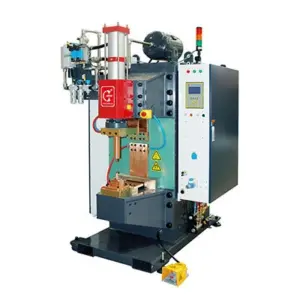
Resistance spot welding (RSW) remains one of the most widely used welding methods in industrial manufacturing, offering precise, high-speed metal joining for a range of applications. From automotive body assembly to appliance production, RSW delivers consistent quality, reliability, and cost-effective automation. At Heron Welder, we specialize in advanced resistance welding machines and automated production solutions designed to help manufacturers optimize performance, quality, and throughput.
What is Resistance Spot Welding?
Resistance spot welding is a fusion welding process in which two or more metal sheets are joined by applying pressure and passing a high electrical current through the contact point. The combination of heat generated by electrical resistance and mechanical pressure melts the metal locally, forming a solid weld spot upon cooling.
Key components of an RSW system include:
-
Electrodes: Typically copper, these conduct electrical current and apply pressure to the workpiece.
-
Transformer and Gun Assembly: Supplies and directs the high current precisely to the weld location.
-
Control System: Regulates current, pressure, and timing to ensure consistent weld quality.
The simplicity of this method, combined with precise electrical and mechanical control, makes RSW ideal for repetitive, high-volume production environments.
How Resistance Spot Welding Works
The RSW process can be summarized in three main steps:
-
Clamping: Electrodes grip the metal sheets to ensure proper electrical contact and prevent movement.
-
Current Flow: A high-amperage current passes through the electrodes. Electrical resistance at the metal interface generates localized heat.
-
Fusion and Cooling: The metal melts at the interface, forming a nugget. When current stops, the electrodes maintain pressure while the weld solidifies.
The resulting weld, often referred to as a “spot”, is small yet extremely strong, suitable for thin and medium-gauge sheet metals.
Advantages of Resistance Spot Welding
Resistance spot welding offers several benefits over traditional welding methods:
-
Speed and Efficiency: Ideal for high-volume production lines such as automotive manufacturing.
-
Minimal Distortion: Localized heat reduces warping and protects surrounding metal.
-
Automation Friendly: Perfectly integrates with robotic welding systems for consistency and safety.
-
Low Consumables: Electrodes last for thousands of welds, lowering operational costs.
Applications of Resistance Spot Welding
RSW is widely applied in industries where sheet metal joining is crucial. Key applications include:
-
Automotive Manufacturing: Body panels, chassis components, and structural assemblies.
-
Electrical Appliances: Stainless steel and aluminum assemblies in home appliances.
-
Aerospace Components: Lightweight sheet metal joining where precision and strength are essential.
-
Industrial Equipment: Sheet metal enclosures, frames, and brackets.
At Heron Welder, we provide a full range of spot welding solutions from manual machines to fully automated production lines optimized for each industry’s specific requirements.
Types of Resistance Welding Machines
Heron Welder designs a diverse portfolio of resistance welding machines tailored for different applications:
1. Standard Spot Welding Machines
-
Suitable for high-volume, repetitive tasks.
-
Equipped with adjustable electrodes, current, and pressure control.
2. Capacitor Discharge Spot Welders
-
Ideal for thin materials like battery tabs and electronic components.
-
Provides precise heat with minimal distortion.
3. MFDC Spot Welding Machines
-
Medium-Frequency Direct Current (MFDC) offers energy-efficient welding.
-
Excellent for automation and robotic integration.
4. Customized Automated Systems
-
Tailored lines integrating multiple welding, riveting, and metal-joining operations.
-
Optimized for maximum production throughput and consistent quality.
Best Practices for High-Quality Spot Welds
To achieve strong and reliable spot welds, manufacturers should follow these guidelines:
-
Proper Electrode Maintenance: Ensure clean, properly shaped electrodes to reduce resistance inconsistencies.
-
Correct Welding Parameters: Current, time, and electrode pressure must match material type and thickness.
-
Workpiece Preparation: Clean surfaces free of oil, paint, or oxides improve weld quality.
-
Automation Integration: Use robotic arms and monitoring systems for consistent placement and pressure control.
Heron Welder supports customers with technical training and machine calibration to ensure optimal weld performance across production lines.
Resistance Spot Welding vs. Other Welding Methods
| Feature | Resistance Spot Welding | MIG Welding | TIG Welding |
|---|---|---|---|
| Speed | Very fast, suitable for automation | Moderate | Slower |
| Material Thickness | Thin to medium sheets | Thin to thick | Thin to medium |
| Distortion | Minimal | Moderate | Low |
| Automation | Highly compatible | Moderate | Difficult |
| Consumables | Low | Moderate | High |
This comparison highlights why RSW is preferred for high-volume industrial applications, particularly in automotive and appliance production.
FAQs About Resistance Spot Welding
1. Can resistance spot welding join dissimilar metals?
Yes, with careful parameter control, RSW can join metals like steel and aluminum, though joint strength may vary.
2. How thick can materials be for spot welding?
RSW is ideal for thin to medium-gauge sheets, typically between 0.3 mm and 6 mm.
3. What maintenance is required for electrodes?
Electrodes should be regularly cleaned and reshaped to prevent inconsistent welds and reduce wear.
4. Is resistance spot welding energy efficient?
Yes, especially MFDC systems, which consume significantly less power than traditional AC welders.
5. Can RSW be automated for large production lines?
Absolutely. Robotic integration allows high-volume, repeatable welding with minimal human intervention.
Partnering with Heron for Resistance Spot Welding Solutions
At Heron Welder, we combine decades of engineering expertise with advanced technology to deliver customized resistance spot welding solutions. Whether you need standalone machines, robotic cells, or fully integrated production lines, our systems are designed to maximize efficiency, ensure weld quality, and reduce operational costs.
Our engineers work closely with manufacturing teams and OEMs to assess requirements, select the ideal equipment, and provide ongoing support ensuring every weld meets industry standards and your production goals.
Ready to elevate your manufacturing process? Contact Heron Welder today to request a quote or consult with our experts for tailored resistance spot welding and automated metal-joining solutions.
Catégories
Lire la suite
According to a new report from Intel Market Research, the global 3D Printed Meat Market was valued at USD 482 million in 2024 and is projected to reach USD 7.82 billion by 2034, growing at a robust CAGR of 50.1% during the forecast period. The market growth is driven by increasing consumer demand for sustainable protein sources, ethical concerns regarding traditional livestock farming, and...

Introduction to Container and ContainerHub In today’s globalized and technology-driven world, the container has become one of the most Used reefer container price important building blocks of modern trade, logistics, and digital infrastructure. Whether it is used for shipping goods across oceans or deploying applications in cloud computing, the concept of a container represents...

The complexity of workforce management has reached a tipping point. Between hybrid work models, shifting tax compliance in India, and the demand for instant employee self-service, the era of using separate systems for "People" and "Payments" is over. An integrated HRMS with payroll is no longer a luxury for large enterprises—it is a survival tool for businesses of all sizes. The Cost of...

The latest business intelligence report released by Polaris Market Research on Connected Thermostat Market Size, Share, Trends, Industry Analysis Report By Technology (Wi-Fi Enabled, Bluetooth Thermostats), By Distribution Channel, By Application, By End Use, By Region – Market Forecast, 2025–2034. It covers the in-depth knowledge of the Connected Thermostat Market...
According to the latest report published by Data Bridge Market Research, the Europe Synthetic and Biodegradable Marine Lubricants Market Europe synthetic and biodegradable marine lubricants market is expected to gain significant growth in the forecast period of 2023 to 2030. Data Bridge Market Research analyses that the market is growing with a CAGR of 6.3% in the...