Solid Carbide Chamfer Tool vs Insert Type Chamfer Tool
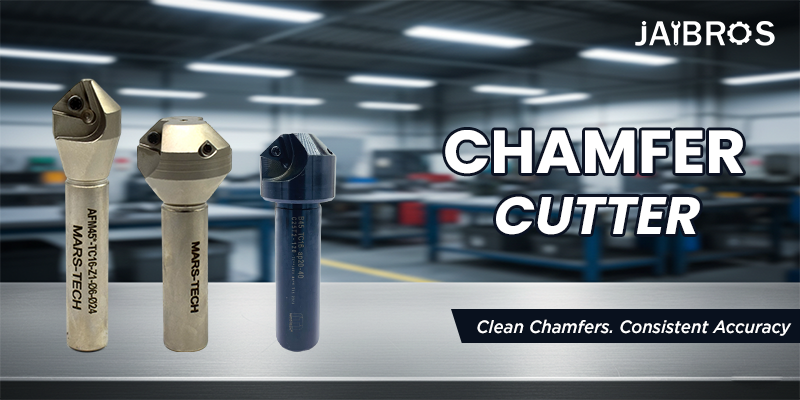
Compare a solid carbide Chamfer Tool and insert type chamfer tool. Learn the differences, benefits, costs, and best uses for CNC machining applications.
Solid Carbide Chamfer Tool vs Insert Type Chamfer Tool Comparison
In CNC machining, precision edge finishing plays a critical role in both performance and aesthetics. Whether you are manufacturing automotive components, aerospace parts, or industrial machinery, properly finished edges improve durability, safety, and assembly fit. Among the most widely used tools for this task are solid carbide and insert-type chamfering cutters.
Choosing the right Chamfer Tool can directly impact productivity, surface finish, and overall machining cost. While both solid carbide and insert type options are designed to create angled edges, they differ significantly in structure, performance, and application suitability. In this detailed comparison, we will explore their differences, advantages, disadvantages, and ideal use cases.
Understanding Chamfering in CNC Machining
Chamfering is the process of cutting a beveled edge at a specific angle along the corner of a workpiece. This is not only done to remove sharp edges but also to enhance part assembly, reduce stress concentration, and improve appearance.
Angles such as the 30-degree chamfer tool and 15-degree chamfer tool are commonly used depending on engineering drawings and design requirements. For internal or hard-to-reach areas, a back chamfer tool is used to create bevels behind holes or internal surfaces.
In vertical machining centers, a back chamfer tool for VMC allows machinists to perform precise chamfering without repositioning the workpiece, improving productivity and maintaining alignment accuracy.
Performance Comparison
1. Precision and Accuracy
Solid carbide tools provide better dimensional control and surface finish due to their rigidity. They are especially effective when using a 15-degree chamfer tool for delicate components.
Insert type cutters may produce slightly less refined finishes compared to solid carbide, but they are highly effective for general machining operations.
2. Tool Life
Carbide material offers excellent wear resistance, meaning a solid carbide cutter can last longer under optimal cutting conditions. However, when it wears out, the entire tool must be replaced.
With insert type cutters, only the insert is replaced, making them more economical in long-term production.
3. Cost Efficiency
Solid carbide tools usually have a higher upfront cost. Insert type cutters may have a higher initial holder cost but lower replacement expenses over time.
4. Versatility
Insert type cutters allow you to change inserts for different angles such as 30-degree chamfer tool configurations without replacing the entire body.
Application-Specific Comparison
Aerospace and Medical Industries
These industries demand extremely tight tolerances. Solid carbide tools are preferred because they provide superior finish and vibration resistance.
Automotive and Heavy Engineering
Insert type cutters are commonly used due to high production volumes and cost efficiency.
Internal Hole Chamfering
For backside operations, a back chamfer tool is required. In advanced setups, a back chamfer tool for VMC ensures accurate machining inside bores without additional setups.
Advantages of Solid Carbide Chamfering Cutters
-
Superior rigidity and precision
-
Excellent surface finish
-
Ideal for high-speed operations
-
Reduced vibration
-
Suitable for smaller tools and fine detailing
Because of these benefits, many precision manufacturers prefer a solid carbide Chamfer Tool for intricate parts.
Advantages of Insert Type Chamfering Cutters
-
Lower long-term tooling cost
-
Easy insert replacement
-
Reduced downtime
-
Suitable for heavy-duty cutting
-
Flexible angle configurations
For mass production units, insert type cutters often deliver better economic value.
Limitations ofEach Type
Solid Carbide:
-
Entire tool replacement required after wear
-
Higher upfront cost
-
Not always economical for large-scale rough work
Insert Type:
-
Slightly less rigid
-
Surface finish may vary depending on insert quality
-
Requires proper insert seating to avoid vibration
How to Choose the Right Option
When selecting between solid carbide and insert type cutters, consider:
-
Production volume
-
Required surface finish
-
Budget constraints
-
Machine capability
-
Material type (steel, aluminum, cast iron, etc.)
If your operation requires extreme precision and fine detailing, solid carbide is the better choice. If your focus is high production with manageable tooling cost, insert type cutters may be more suitable.
CNC Programming Considerations
Regardless of the type, proper feed rate, spindle speed, and depth of cut must be optimised. For example:
A 30-degree chamfer tool may require different feed settings compared to a 15-degree chamfer tool.
Backside operations need careful programming to ensure alignment.
Toolpath strategy affects finish quality and tool life.
Advanced CNC machines allow automated chamfering cycles, reducing manual finishing operations and improving consistency.
Productivity and ROI
Investing in the right Chamfer Tool directly influences productivity. While solid carbide options may offer better precision, insert type cutters can reduce overall tooling costs in long-term production.
Manufacturers should evaluate total cost of ownership rather than just initial price. Downtime, tool change frequency, and finish quality all contribute to return on investment.
Conclusion
Both solid carbide and insert type chamfering cutters serve important roles in CNC machining. Solid carbide tools offer unmatched precision, rigidity, and finish quality, making them ideal for high-accuracy industries. Insert type cutters provide cost efficiency, flexibility, and easy maintenance, making them suitable for high-volume production.
Selecting the right tool depends on your machining goals, budget, and industry standards.
About Jaibros:
Jaibros is a trusted supplier of high-performance CNC cutting tools and industrial solutions. The company offers durable chamfering cutters, including angle-specific and backside machining tools designed for modern manufacturing environments. With a focus on precision, quality, and reliability, Jaibros supports industries looking for efficient and consistent machining performance.
FAQs
1. What is the difference between solid carbide and insert type chamfering cutters?
Solid carbide cutters are made from a single piece of carbide, while insert type cutters have replaceable cutting inserts mounted on a holder.
2. Which option is better for high-precision work?
Solid carbide cutters are generally better for high-precision and fine surface finish applications.
3. Are insert type cutters more economical?
Yes, insert type cutters reduce long-term costs because only the inserts need replacement instead of the entire tool.
4. When should I use a back chamfer tool?
A back chamfer tool is used for machining chamfers on the backside of holes or internal surfaces.
5. Can I use different angle inserts in insert type cutters?
Yes, many insert type cutters allow angle flexibility, including configurations similar to 30-degree chamfer tool and 15-degree chamfer tool setups.
Categorie
Leggi tutto
The latest report titled “Global 3D Printing Plastic Market Share and Ranking, Overall Sales and Demand Forecast 2026–2033” comes from Exactitude Consultancy, a top-notch global market research firm. This comprehensive study dives deep into the global 3D Printing Plastic market, offering valuable insights into market size, share, demand trends, and the current state of the...

https://anandtraders1119.wixsite.com/engaging-insights-bl/post/plan-your-perfect-vacation-with-customized-travel-itineraries-dial-1-866-855-0041
Evoluzione del Mercato delle Scommesse OnlineIl settore dei migliori siti scommesse continua a evolversi nel 2026 grazie a tecnologie digitali sempre siti scommesse italiani più avanzate. Le piattaforme offrono servizi rapidi, intuitivi e accessibili da qualsiasi dispositivo. Gli utenti cercano esperienze fluide, con quote aggiornate e strumenti moderni per migliorare la navigazione e la...

Exploring Brisbane Escorts and Popular Regional Escort Searches Across Australia Australia’s major cities and regional hubs continue seeing growing demand for local companionship services. As more people travel for business, holidays, events, and work opportunities, city-based and suburb-specific searches have become increasingly common. This is why searches for Brisbane Escorts,...

A fresh creative partnership emerges as Netflix commissions a new eight-episode drama. The project, currently untitled, will be produced by the UK's New Pictures, under the leadership of Charlie Pattinson, Elaine Pyke, and Willow Grylls. Hania Elkington and Simon Duric are the series creators and writers, bringing the original concept to life. Farren Blackburn joins as an executive producer...