From User Journeys to Production Reality: Turning Observability Data into Self-Updating End-to-End Tests

End-to-end testing was created to answer a simple question:
Can a real user complete a real task in our system?
For years, teams tried to answer that question by scripting flows in staging environments. They wrote step-by-step journeys like login → search → checkout → payment → confirmation. The idea was logical — simulate the user and verify the outcome.
But modern systems are no longer predictable enough for scripted reality.
Microservices deploy independently. APIs change without UI updates. Retries happen silently. Third-party systems behave differently every hour. And most importantly — users never behave the way test writers expect.
So the biggest shift happening in testing today is this:
We are moving from writing end-to-end tests to learning end-to-end tests from real behavior.
The Problem: E2E Tests Age Faster Than Code
Every team eventually notices the same pattern.
The test suite grows, confidence decreases.
At first, end-to-end testing feel powerful. They validate the whole system. Releases feel safe. Bugs drop.
Then reality starts diverging.
A button label changes and ten tests fail.
A backend optimization breaks authentication timing.
A harmless UI redesign blocks half the pipeline.
A payment provider delay causes random failures.
Soon the team stops trusting failures.
Red pipelines become background noise.
The issue is not poor test writing.
The issue is assumption-based testing.
Traditional E2E tests assume:
-
users follow defined paths
-
systems respond deterministically
-
environments match production
-
workflows remain stable
None of these are true in distributed software.
The real world is messy, concurrent, delayed, cached, retried, and partially broken. Scripted tests represent how the system should behave. Production represents how it actually behaves.
And the gap grows every week.
From Script-Driven Testing to Behavior-Driven Validation
Traditional workflow:
Write → Run → Fix → Repeat
Modern workflow:
Observe → Capture → Replay → Validate
Instead of inventing user journeys, we record them.
Instead of predicting failures, we detect deviations.
Instead of maintaining scripts, we maintain correctness rules.
The goal of testing changes from simulating reality to verifying reality.
This is a major mindset shift.
We stop asking:
Did our predefined scenario pass?
We start asking:
Did the system behave differently from real usage?
That single change removes the biggest weakness in E2E testing — imagination.
Observability Is Already Recording Your Test Cases
Every production system already stores test scenarios.
They just don’t look like test cases yet.
Your observability stack contains:
-
request traces
-
API call chains
-
retries and fallbacks
-
authentication flows
-
error recovery paths
-
concurrency behavior
Each trace represents a real user journey.
For example, a checkout process rarely looks like:
login → cart → pay → success
It actually looks like:
login → token refresh → cart → inventory check → retry → payment timeout → retry → success → webhook confirmation → status polling
No human writes this as a test.
Yet this is the exact flow your system must support.
When we derive E2E tests from telemetry, we validate the system against reality instead of expectations.
Turning Production Traffic Into Test Scenarios
A modern E2E validation workflow works like this:
1. Capture Interactions
Record API calls and service dependencies from real traffic.
2. Extract Flows
Group related requests into meaningful journeys such as login, search, purchase, upload, or subscription renewal.
3. Sanitize Data
Remove personal and sensitive information while preserving behavior patterns.
4. Replay Safely
Execute flows in a controlled environment or isolated runtime.
5. Detect Behavioral Drift
Compare responses, state transitions, and side effects instead of static UI outputs.
This approach changes what a “failure” means.
A test no longer fails because a selector changed.
It fails because system behavior changed.
And that is what we actually care about.
Bugs Traditional E2E Tests Rarely Catch
Scripted flows validate happy paths.
Real traffic validates survival paths.
Here are failure types commonly invisible to classic E2E suites:
Race Conditions
Two services update the same resource simultaneously.
Partial Failures
One dependency fails but system recovery logic behaves incorrectly.
Retry Storms
Backoff logic causes cascading performance degradation.
Timeout Logic Errors
Requests succeed but after client abandonment.
Third-Party Inconsistencies
External APIs return valid yet unexpected responses.
Cache Invalidation Issues
Data is technically correct but outdated for certain flows.
These are production bugs, not functional bugs — and they cause the most expensive outages.
Real-traffic-based E2E exposes them because it replays the conditions that create them.
Continuous Validation Instead of Scheduled Testing
Most teams still run E2E tests at fixed times:
nightly pipelines
pre-release validation
manual QA cycles
But distributed systems change continuously.
Testing at intervals leaves blind spots between deployments.
When tests are derived from behavior, validation becomes continuous.
Every deployment is compared against real usage patterns.
Every change is evaluated against real user journeys.
We no longer ask:
Did tests run?
We ask:
Did behavior change?
This transforms testing from an event into a property of the system.
Self-Maintaining Test Suites
The largest hidden cost in E2E testing is maintenance.
Selectors break
flows evolve
edge cases expand
coverage decays
Teams spend more time fixing tests than preventing bugs.
A behavior-derived suite works differently.
When real workflows evolve, the suite evolves automatically because the source of truth is usage, not documentation.
Instead of updating scripts, teams update validation rules:
status consistency
data integrity
side-effect correctness
state transitions
The suite stops being a fragile checklist and becomes a living contract with production behavior.
What the Future of End-to-End Testing Looks Like
The purpose of E2E testing is not automation.
It is confidence.
Historically we tried to gain confidence by recreating reality in staging environments.
Now we gain confidence by validating against reality itself.
The future E2E system will:
learn flows instead of scripting them
validate behavior instead of UI steps
run continuously instead of periodically
maintain itself instead of being maintained
Testing moves from a QA activity to a system characteristic.
Conclusion
End-to-end testing began as an attempt to imitate users.
Modern systems made imitation unreliable.
The next evolution is simple but profound:
Stop guessing how the system is used. Start verifying how it is actually used.
When E2E tests come from real behavior, they stop being brittle documentation and become an always-on safety net.
They scale with complexity instead of collapsing under it.
In a distributed world, correctness is no longer defined by passing predefined scenarios.
Correctness is defined by preserving real user experience.
And the most reliable test case will always be the one written by reality itself.
Kategoriler
Read More
High Density Polyethylene Bottles Market Size, Share and Growth Report (2025–2034) The High Density Polyethylene Bottles Market is witnessing steady growth as industries increasingly adopt durable, lightweight, and chemically resistant packaging solutions. High density polyethylene (HDPE) bottles are widely used across food and beverage, pharmaceuticals, personal care, and household...

According to the latest report published by Data Bridge Market Research, the Hematology Oncology Market The global hematology oncology market size was valued at USD 10.98 billion in 2025 and is expected to reach USD 20.02 billion by 2033, at a CAGR of 7.80% during the forecast period The wide ranging Hematology Oncology Market report provides an overview...

Key Drivers Impacting Executive Summary Moulded Fibre Pulp Packaging Market Size and Share CAGR Value Data Bridge Market Research analyses that the moulded fibre pulp packaging market was valued at USD 8255.50 million in 2021 and is expected to reach USD 11740.15 million by 2029, registering a CAGR of 4.50% during the forecast period of 2022 to 2029. The Moulded Fibre Pulp Packaging...
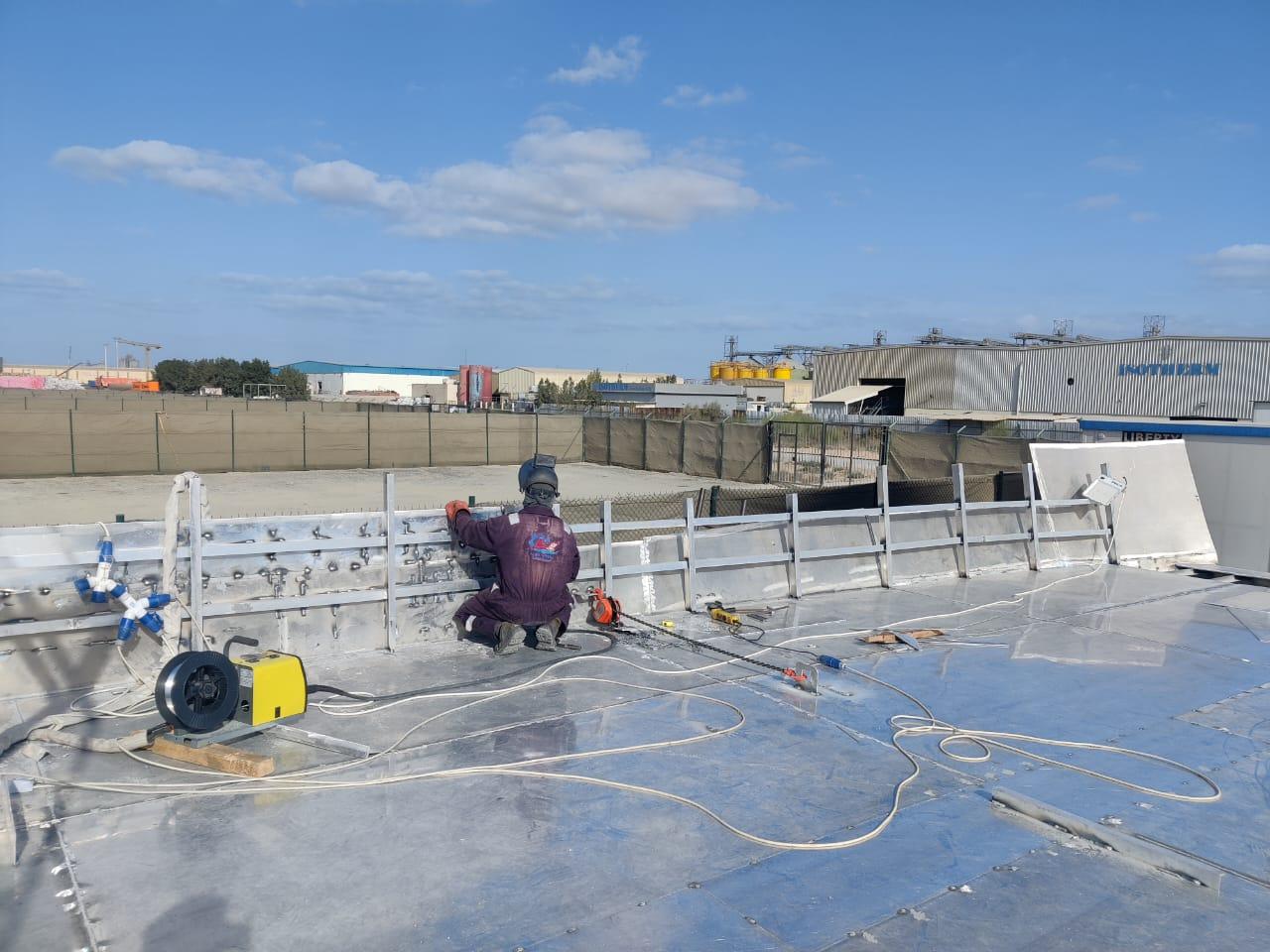
The maritime industry is evolving rapidly as global trade, passenger transportation, and offshore operations continue to expand. Modern vessel operators are looking for solutions that offer better performance, lower operating costs, and improved sustainability. As a result, aluminium boats manufacturers have become increasingly important in the marine sector. Their ability to produce...
Energy Harvesting System Market: Advancing Self-Powered Electronics and Intelligent IoT Networks The Global Energy Harvesting System Market is experiencing robust expansion as industries accelerate the adoption of low-power electronics, wireless sensing technologies, smart infrastructure, and autonomous IoT ecosystems. Energy harvesting systems convert ambient energy sources—including...