Shift-Left Reliability: Running Smoke Tests Before Your First Commit
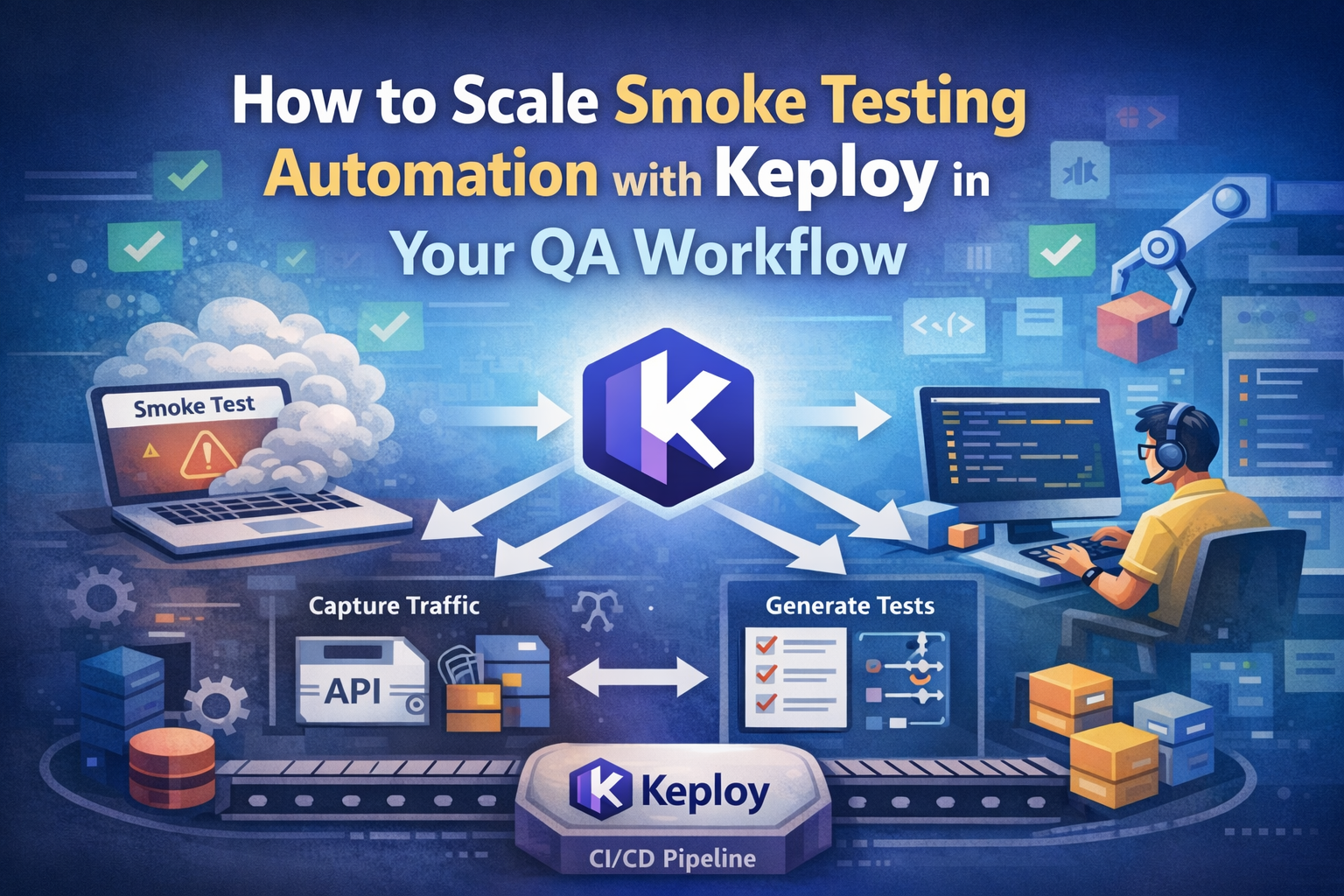
Most teams believe they practice shift-left testing because their CI pipeline runs unit tests and smoke tests on every pull request. Yet broken builds still happen daily. Developers push code, the pipeline fails, someone fixes it, pushes again, and the cycle repeats. Hours disappear — not because testing is missing, but because testing happens too late.
The real shift-left moment is not in CI.
It is before the commit.
This article explains how running lightweight smoke checks locally — using real application behavior instead of manually written scripts — prevents unstable builds, shortens feedback loops, and eliminates the “works on my machine” problem.
CI Smoke Tests Are Already Too Late
Most pipelines look like this:
Developer writes code → pushes → CI runs → smoke test fails → developer investigates → pushes again.
Even if the failure is detected quickly, the cost is already high:
-
CI queue wait time
-
Environment setup time
-
Context switching
-
Multiple commit noise
-
Delayed reviews
-
Blocked teammates
The problem is not slow CI.
The problem is that CI is acting as the developer’s local validator.
Smoke testing are meant to confirm that the application starts and core flows work. But when they run only after code leaves the developer’s machine, they become a debugging mechanism instead of a safety net.
A broken commit should never reach CI in the first place.
The Developer Machine Is the First Test Environment
Shift-left reliability means validating behavior at the moment code is written.
Right after implementing a change, a developer should be able to instantly confirm:
-
The service boots correctly
-
Dependencies respond
-
Critical endpoints behave as expected
-
Data contracts remain valid
-
No unintended side effects occurred
Traditionally this required writing test cases manually. Because of that effort, developers relied on CI to catch issues instead.
But modern workflows remove that burden.
Instead of writing smoke tests, developers can replay real application interactions captured from actual usage. This transforms local validation into a near-instant feedback loop.
Now the workflow becomes:
Write code → run local smoke replay → verify behavior → commit once
The difference is dramatic: CI validates, it no longer discovers.
Instant Validation Using Recorded API Traffic
The fastest way to verify correctness is to compare behavior against reality.
Real application usage already contains perfect test scenarios:
authentication flows, data reads, updates, edge cases, and error responses. Capturing these interactions allows developers to reuse them as validation checks.
A recorded interaction effectively becomes a behavioral contract:
If the application responds differently, something changed.
This approach offers three key advantages:
1. No Test Writing
Developers do not write assertions. The expected behavior already exists in the captured response.
2. Full-Flow Validation
Instead of checking a single function, the entire execution path is validated — routing, middleware, database calls, and integrations.
3. Immediate Feedback
The validation runs locally in seconds rather than waiting for CI minutes later.
This makes smoke testing practical at the development stage instead of the integration stage.
Preventing the “Works on My Machine” Problem
One of the most expensive engineering phrases is:
“It works locally.”
This usually happens because developers validate logic, not behavior.
Unit tests confirm functions.
Manual checks confirm UI screens.
But system behavior depends on:
-
environment configuration
-
database schema
-
network calls
-
serialization formats
-
authentication flows
-
service contracts
Traditional smoke tests catch these — but only in shared environments. By then the issue affects multiple developers and blocks delivery.
Running behavior-based smoke checks locally ensures the developer machine behaves the same way the integrated system will behave.
Instead of debugging environment differences in CI, developers detect them instantly while the context is fresh.
Faster Feedback Loops Change Developer Behavior
When feedback takes minutes, developers batch commits.
When feedback takes seconds, developers iterate safely.
Local smoke validation encourages:
-
smaller commits
-
confident refactoring
-
safer dependency upgrades
-
faster reviews
-
cleaner commit history
The team stops reacting to failures and starts preventing them.
Over time, pipeline stability improves not because CI changed — but because developers send it correct code the first time.
Automated Test Generation Removes Maintenance Overhead
One reason teams rely on CI smoke tests is maintenance cost.
Manually written smoke tests constantly break when APIs evolve.
Endpoints change.
Fields rename.
Responses expand.
Engineers either update tests repeatedly or disable them temporarily, reducing reliability.
Automatically generated behavioral tests solve this.
By capturing real interactions and replaying them during development:
-
Tests stay aligned with actual usage
-
No assertion rewriting is required
-
Validation updates naturally as the application evolves
This turns smoke testing into a passive safety layer rather than an active maintenance task.
Tools designed around traffic-based validation, such as Keploy, enable developers to generate and run these checks locally without writing scripts. The tests come from reality, so they remain relevant.
From Reactive Testing to Preventive Reliability
Traditional workflow:
CI finds problems → developers fix them
Shift-left workflow:
Developers prevent problems → CI confirms stability
This changes the role of testing in the team:
| Stage | Old Role | New Role |
|---|---|---|
| Local | Compile & manual run | Behavioral validation |
| CI | Debugging failures | Confidence verification |
| Staging | Discovery | Confirmation |
| Production | Monitoring | Assurance |
The earlier correctness is validated, the cheaper it becomes.
The Practical Outcome
Teams that run smoke checks before committing typically observe:
-
fewer broken builds
-
faster pull request approvals
-
reduced CI runtime waste
-
lower context switching
-
more stable releases
Not because they added more tests — but because they moved validation to the moment where fixes are cheapest.
Reliability is not achieved by increasing test quantity.
It is achieved by moving correctness detection earlier in the workflow.
Final Thoughts
Shift-left testing is often misunderstood as running more checks in CI.
In reality, true shift-left happens on the developer’s machine.
Smoke tests should not be a gate that rejects bad commits.
They should be a guide that prevents bad commits from being created.
By replaying real behavior locally and validating changes before the first push, teams transform testing from a bottleneck into a development accelerator.
The best build is not the one that passes CI.
It is the one that never had a chance to fail.
Κατηγορίες
Διαβάζω περισσότερα
In today’s mobile-first world, users prefer accessing platforms through apps for faster and more convenient experiences. Fairplay has adapted to this trend by offering a dedicated mobile solution that allows users to enjoy gaming and sports features anytime, anywhere. If you are new to the platform, understanding how to download and install the Fairplay App is...

A new growth forecast report titled Endoscopy Visualization Systems Market Size, Share, Trends, & Industry Analysis Report By Product, By Resolution Type (4K and FHD), By End User, and By Region – Market Forecast, 2025–2034 introduced by Polaris Market Research represents conclusive data on the overall market. It majorly targets to provide a detailed analysis of growth...

" According to the latest report published by Data Bridge Market Research, the Silicone Emulsions Market The global silicone emulsions market size was valued at USD 6.02 billion in 2025and is expected to reach USD 10.38 billion by 2033, at a CAGR of 7.05% during the forecast period Market definition mentioned in this Silicone Emulsions Market document covers...

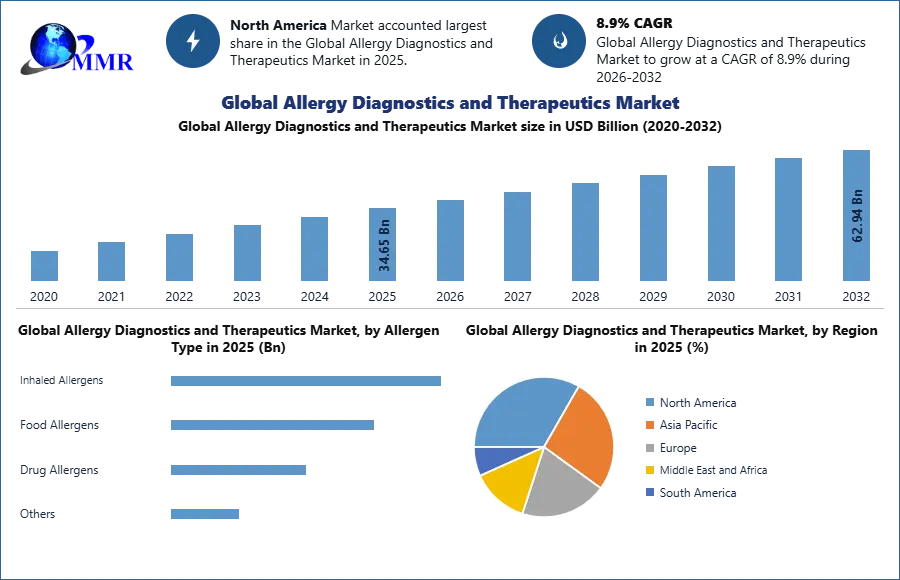
Global Allergy Diagnostics and Therapeutics Market: USD 34.65 Billion in 2025 to USD 62.94 Billion by 2032 at 8.9% CAGR. Global Allergy Diagnostics and Therapeutics Market is moving into a high-innovation growth cycle as rising allergic disease prevalence, advanced diagnostic technologies, pharmaceutical innovation and patient-centric healthcare converge. According to Maximize Market...
WOT Browser Extension Expands Social Media Protection Web of Trust (WOT) has unveiled an important update to their popular security browser extension, now offering enhanced protection across social media platforms. The free tool, which previously focused on evaluating search engine results, has expanded its capabilities to include Facebook and Twitter link assessment. The latest version...