


Benefits of Carbide Chamfer Tool in High-Speed Machining
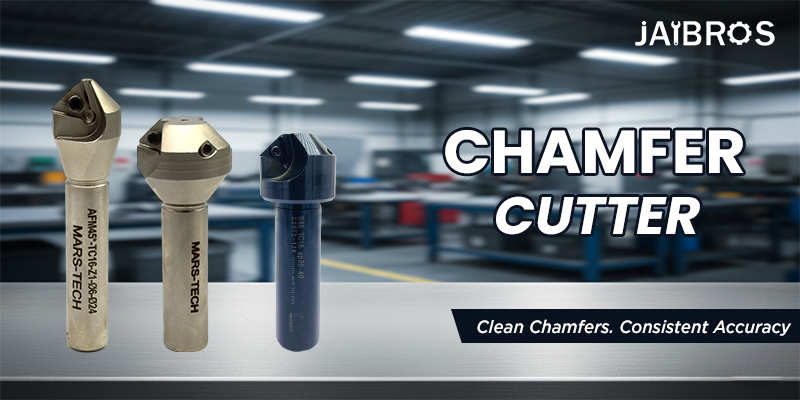
Discover the key benefits of using a carbide chamfer tool in high-speed machining for improved tool life, precision, surface finish, and CNC efficiency.
Benefits of Using a Carbide Chamfer Tool in High-Speed Machining
High-speed machining has transformed modern manufacturing by improving productivity, precision, and overall operational efficiency. Industries such as automotive, aerospace, heavy engineering, and fabrication depend on high spindle speeds and optimized feed rates to achieve faster cycle times. In such demanding environments, tool material plays a crucial role in maintaining consistent performance. One of the most reliable solutions for edge finishing operations is a carbide chamfer tool.
Chamfering may seem like a minor finishing step, but it significantly impacts component safety, assembly accuracy, and surface quality. When performed in high-speed conditions, the cutting tool must withstand heat, friction, and continuous usage. Carbide tools are specifically designed to meet these challenges and deliver long-term performance.
Why Carbide Is Ideal for High-Speed Machining
Carbide is known for its exceptional hardness and heat resistance. Compared to traditional high-speed steel, carbide maintains its cutting edge even at elevated temperatures. In high-speed machining, tools are exposed to intense friction, which can cause rapid wear. A carbide chamfer resists deformation and retains sharpness for longer periods.
The ability of carbide to handle high temperatures makes it suitable for continuous production environments. This ensures that the chamfering operation remains precise and efficient without frequent tool changes. Reduced downtime directly improves production output and lowers operating costs.
Enhanced Tool Life and Durability
One of the biggest advantages of using carbide is extended tool life. In high-speed machining, tool wear is a common issue due to heat generation and material hardness. Carbide’s superior wear resistance allows the Chamfer to maintain its geometry and cutting accuracy over extended cycles.
This durability is particularly important when working with tough materials such as stainless steel, alloy steel, and hardened metals. Carbide tools can withstand abrasive wear and maintain consistent chamfer angles, ensuring uniform results across multiple components.
Improved Surface Finish
Surface finish is critical in precision manufacturing. Poorly finished edges can lead to assembly problems and reduce product quality. Carbide tools provide clean, smooth chamfers with minimal burr formation.
Whether using a 30-degree chamfer tool for shallow beveling or a 15-degree chamfer tool for fine finishing, carbide construction ensures minimal vibration during cutting. Reduced vibration leads to improved surface quality and tighter dimensional control, which is essential in high-performance industries.
Superior Performance in Backside Machining
High-speed machining often involves complex parts with internal features. In such cases, a back tool is used to create chamfers on the reverse side of holes or internal edges. Carbide construction enhances the strength and rigidity required for such operations.
A back chamfer tool for VMC applications must perform reliably at high RPMs. Carbide provides the structural stability needed for precision machining in vertical machining centers. Its resistance to thermal expansion ensures that accuracy is maintained even under continuous cutting conditions.
Higher Cutting Speeds and Efficiency
Carbide tools allow manufacturers to operate at higher cutting speeds compared to conventional materials. Increased speed results in shorter cycle times and improved productivity.
When a chamfer tool is capable of handling high-speed operations without losing sharpness, manufacturers can optimize machining parameters without compromising quality. This advantage is particularly beneficial in large-scale production environments where efficiency directly affects profitability.
Consistent Chamfer Angles
Maintaining accurate chamfer angles is essential for assembly and aesthetic requirements. Carbide tools offer excellent dimensional stability, ensuring that chamfer angles remain consistent across production batches.
For example, a 30-degree chamfer tool made from carbide maintains its edge geometry even after prolonged use. Similarly, a 15-degree chamfer tool used for delicate finishing operations delivers uniform results without edge rounding or deformation.
Consistency in chamfer angles improves part interchangeability and reduces rejection rates, contributing to higher manufacturing standards.
Reduced Heat Generation and Thermal Stability
Heat is one of the main challenges in high-speed machining. Excessive heat can damage both the tool and the workpiece. Carbide materials exhibit excellent thermal stability, allowing them to perform efficiently at elevated temperatures.
This property is particularly valuable when using a chamfer in continuous CNC operations. Carbide minimizes heat-related wear and prevents premature tool failure. As a result, machining operations remain stable and predictable.
Cost-Effectiveness in the Long Run
Although carbide tools may have a higher initial cost compared to other materials, their extended lifespan and superior performance make them cost-effective over time. Reduced tool replacement frequency and lower downtime translate into significant savings.
In applications involving a back chamfer tool for internal finishing, carbide ensures reliable performance, reducing the need for rework and additional machining steps. This efficiency improves overall production economics.
Compatibility with Advanced Coatings
Carbide tools are often combined with advanced coatings such as TiAlN or AlTiN to further enhance performance. These coatings increase hardness and improve oxidation resistance, making the tool suitable for extreme machining conditions.
A coated carbide tool offers a combination of strength, heat resistance, and reduced friction. This synergy results in higher cutting speeds and better surface finishes in demanding applications.
Applications Across Industries
Carbide chamfering tools are widely used in automotive engine components, aerospace structural parts, heavy machinery assemblies, and fabrication units. Their reliability makes them a preferred choice for manufacturers seeking high-speed efficiency and precision.
From shallow beveling with a 30-degree chamfer tool to internal finishing using a back chamfer tool, carbide construction ensures stable and consistent performance. High-speed machining environments benefit greatly from the strength and durability offered by carbide tools.
Conclusion
High-speed machining demands tools that can withstand heat, friction, and continuous operation without compromising precision. Carbide tools meet these requirements with exceptional hardness, wear resistance, and thermal stability. Using a carbide chamfer tool enhances productivity, improves surface finish, and ensures consistent chamfer angles across production cycles.
Whether performing fine finishing with a 15-degree chamfer tool or complex internal operations with a back chamfer tool for VMC, carbide construction delivers reliable and long-lasting performance. Investing in high-quality carbide tools ultimately reduces downtime, lowers operational costs, and improves overall machining efficiency.
Jaibros is committed to providing advanced cutting solutions tailored to modern manufacturing needs. With a focus on durability, precision, and innovation, Jaibros offers high-performance chamfering tools designed to deliver consistent results in high-speed machining environments.
Frequently Asked Questions
What makes carbide better than high-speed steel for chamfering
Carbide offers higher hardness, better heat resistance, and longer tool life, making it ideal for high-speed machining applications.
Is a carbide chamfer tool suitable for hardened steel
Yes, carbide tools are highly effective for machining hardened steel and other tough materials due to their wear resistance.
Why is carbide recommended for back chamfer tool for VMC
Carbide provides the strength and thermal stability required for high-speed precision operations in vertical machining centers.
Can carbide tools improve surface finish
Yes, carbide tools reduce vibration and maintain sharp edges, resulting in smoother surface finishes.
Are carbide chamfering tools cost-effective
Although they have a higher initial cost, their durability and longer service life make them economical in long-term production.
Kategoriler
Read More
According to the latest report published by Data Bridge Market Research, the Dense Wave Digital Multiplexing (DWdm) System Market The global dense wave digital multiplexing (DWdm) system market size was valued at USD 15.66 billion in 2025 and is expected to reach USD 25.92 billion by 2033, at a CAGR of 6.50% during the forecast period The large...

In today’s fast-growing digital world, users are always looking for platforms that are fast, secure, and easy to use. Many online entertainment brands try to attract attention with bright ads and loud promotions, but not all of them focus on what truly matters: the user experience. Sunwin takes a different and refreshing approach. Sunwin is an online entertainment brand...
Cricket continues to be one of the most acclaimed sports activities in India, and IPL 2026 is anticipated to attract masses of thousands of lovers from spherical the arena. With virtual structures growing in recognition, many cricket enthusiasts are searching for methods to sign in for a cricket ID online to enjoy in-form updates, data scores, player information, and specific cricket-associated...

Essays and reports play an important role in academic education because they help students improve analytical thinking, research abilities, academic writing skills, and subject understanding. Universities expect students to complete these assignments according to academic standards while maintaining proper structure, formatting, and critical analysis. The increasing demand for student...
I takt med at vaping bliver mere populært i Europa, søger mange brugere efter en enhed, der kombinerer høj ydeevne, lang levetid og en god smagsoplevelse. En af de mest populære muligheder på markedet lige nu er randm tornado 15000. Denne moderne engangs vape er designet til brugere, der ønsker en kraftig og praktisk dampoplevelse uden besværet med...
