


Best Micro Boring Bar Options for Small Diameter Boring Jobs
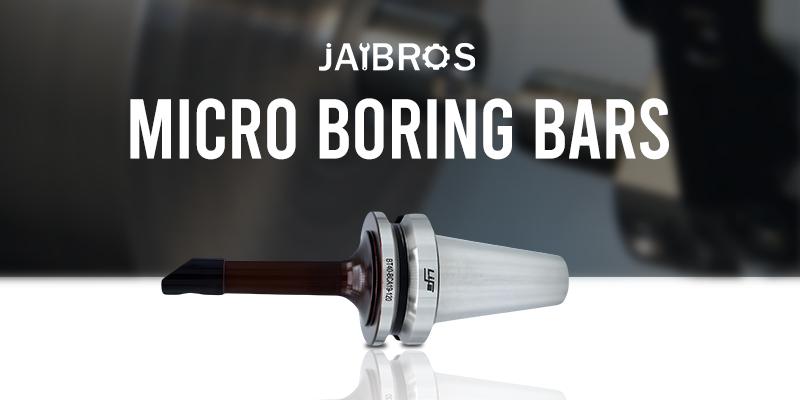
Discover the best micro boring bar options for small diameter boring jobs. Learn tool types, selection tips, VMC compatibility, and precision boring solutions.
How to Choose the Right Micro Boring Bar for Precision Small Hole Machining
Small diameter boring is one of the most precision-driven operations in CNC machining. When hole sizes are tiny and tolerance margins are extremely tight, the choice of cutting tool directly affects accuracy, finish, and repeatability. A properly selected micro boring bar helps machinists achieve exact internal diameters with minimal vibration and excellent surface quality. Industries such as aerospace, medical manufacturing, watch components, and mold production frequently depend on precision boring strategies for critical parts.
Unlike general internal machining, small bore work leaves very little room for error. Tool deflection, runout, and chip evacuation challenges become more severe as the hole diameter decreases. That is why tool geometry, material, and holding method must be carefully matched to the job.
Why Tool Rigidity Matters in Micro Boring
Rigidity is the foundation of successful micro boring operations. Because the cutting tool diameter is small, even light cutting forces can bend the tool slightly and cause taper or chatter marks. A high-quality micro boring bar is designed with maximum stiffness relative to its size so that it resists bending during cutting.
Tool manufacturers typically use fine-grain carbide for these tools because carbide delivers higher stiffness than high-speed steel. Greater rigidity leads to better dimensional control and more predictable results. When boring deep and narrow holes, rigidity becomes even more important since overhang increases deflection risk.
Solid Carbide vs Adjustable Systems
There are two major categories commonly used for precision small hole finishing: solid tools and adjustable systems. Solid carbide tools are widely used where the bore size is fixed and production is repetitive. They offer strong stability and simple setup, making them ideal for batch production environments.
Adjustable micro boring heads are preferred when diameter correction is frequently required. These systems allow the operator to shift the cutting edge by microns to reach the exact target size. This makes them especially useful in tool rooms and prototype machining. Micro boring heads require careful calibration but offer flexibility that fixed tools cannot provide.
Machine and Holder Compatibility
Machine setup plays a critical role in boring performance. Most small diameter boring work is performed on vertical machining centers, and holder precision becomes a deciding factor. A VMC boring bar must run with minimal runout because even a few microns of spindle error will show up inside the bore.
High-precision holders such as hydraulic or shrink-fit types are often recommended. These holders clamp evenly around the shank and maintain better concentricity than standard collet systems. When the holder grips properly and projection length is minimized, the micro boring bar performs more consistently and produces smoother finishes.
Cutting Geometry and Edge Preparation
Cutting geometry must match both the material and the bore size. Sharp edges reduce cutting pressure and help maintain size control. However, the edge cannot be too weak or it will wear prematurely. Proper rake and clearance angles allow smooth cutting action while protecting the edge.
Chip flow is a serious concern in micro boring because chips have limited escape space. Poor chip evacuation leads to rubbing, heat buildup, and surface damage. Correct geometry combined with directed coolant flow helps keep the bore clean during cutting. A well-designed micro boring bar features chip-friendly geometry that enables stable cutting in tight internal spaces.
Role of Tool Coatings in Performance
Coatings significantly improve tool life and cutting stability. In small diameter work, heat builds quickly because the tool mass is low. Coatings reduce friction and thermal load at the cutting edge. This helps maintain sharpness and improves finish quality over longer runs.
Different coatings are suited to different materials. Heat-resistant coatings perform well in steels and superalloys, while low-friction coatings are better for aluminium and non-ferrous materials. Choosing a coated micro boring bar is often a smart decision for production environments where consistency matters.
Cost vs Value in Tool Selection
Buyers often compare micro boring bars for VMC price when selecting tools, but purchase price alone should not drive the decision. Tool life, bore accuracy, and repeatability determine real value. A cheaper tool that fails early or produces inconsistent holes increases total cost through scrap and downtime.
A more reliable micro boring bar may cost more initially but often reduces total machining expense. Supplier support, replacement availability, and reconditioning options also add long-term value. Smart buyers evaluate performance history along with price.
Application-Based Tool Choice
Different industries place different demands on boring tools. Medical and electronics parts require ultra-fine bores with superior finish. Aerospace components may involve deep holes in difficult materials where vibration control is critical. Mold and die work often includes hardened steels that demand wear resistance.
Tool choice should reflect bore depth, material, and tolerance target. Matching the micro boring bar design to the application improves process stability and reduces trial-and-error setup time.
Setup and Parameter Control
Even the best tool will not perform well with a poor setup. Projection length should be kept as short as possible to improve stiffness. Spindle condition and holder cleanliness must be verified before mounting. Cutting parameters should begin conservatively and increase gradually.
Feed rate and depth of cut must remain light to control cutting force. Coolant direction should support chip removal rather than just flooding the area. A stable vmc boring bar setup combined with disciplined parameter control produces the best results in small diameter boring.
Common Problems and How to Prevent Them
Most small bore errors come from avoidable setup issues. Excessive overhang, poor holders, and aggressive feeds often cause chatter. Incorrect geometry can create chip packing and surface scratches. Careful preparation prevents these failures.
Using the correct micro boring bar, proper holder, and balanced cutting parameters eliminates most vibration and finish issues before they begin.
Conclusion
Small-diameter boring requires precision, stability, and the right tooling strategy to achieve accurate, repeatable results. Tool rigidity, holder quality, cutting geometry, and coating selection all play an important role in performance. Choosing the correct micro boring bar based on material type, bore depth, and tolerance requirement helps reduce vibration, improve surface finish, and extend tool life. Adjustable systems, such as micro-boring heads, are ideal when fine size control is required, while solid carbide tools perform best in repetitive production work. When tooling, setup, and parameters are properly matched, machinists can achieve consistent, high-quality internal bores even in the most demanding applications.
Jaibros is an industrial cutting tool supplier specialising in CNC and VMC machining solutions, offering precision boring, milling, and speciality tools to support accurate, efficient manufacturing across multiple industries.
FAQs
Q.What is micro boring used for?
Micro boring is used to enlarge and finish very small holes where tight tolerance and fine surface finish are required.
Q.When should adjustable micro boring heads be used?
They are best used when bore size needs fine correction or when working on prototypes and small batches.
Q.Why is carbide preferred for small boring tools?
Carbide offers higher rigidity and wear resistance, which improves accuracy in small diameter machining.
Q.How can vibration be reduced in deep small holes?
Vibration can be reduced by shortening tool overhang, improving holder precision, and lowering cutting forces.
Q. Does higher tool price always mean better performance?
Not always, but higher-quality tools often provide longer life and more consistent results, which lowers total cost.
Kategoriler
Read More
Call Girls in Noida Near Sector 18 & Pari Chowk Introduction: Noida has emerged as one of the most rapidly developing urban centers in NCR and is receiving business travelers, corporate workers, and visitors all over India. It has one of the most vibrant and high-end neighborhoods, including Sector 18 and Pari Chowk, which is home to high-end hotels, shopping malls, and a...

Upgrading a pistol magazine sounds like a simple improvement, but it’s one of those things where small choices can create annoying problems later. A lot of people jump straight into buying extended clips for glock 19 setups because they want more capacity or a better grip feel, and that’s understandable. More rounds can be useful. A larger magazine can feel better in the hand. But...
Remote Construction Market According to the latest report published by Data Bridge Market Research, the Remote Construction Market The global remote construction market size was valued at USD 1.06 billion in 2025 and is expected to reach USD 3.59 billion by 2033, at a CAGR of 16.50% during the forecast period The large scale Remote Construction...

Safety is a paramount concern on any job site, especially when installing HVAC or plumbing systems. When using traditional methods such as soldering or brazing, technicians are exposed to open flames, hot surfaces, and potential fire hazards. This is exactly why the adoption of an HVAC Press Tool has grown in recent years. WENZHOU HEWLEE TOOLS CO., LTD. promotes these tools not just for...
Le slot online soldi veri rappresentano una componente fondamentale del settore dell’intrattenimento digitale moderno. La loro crescita è legata alla diffusione delle tecnologie online e alla possibilità di accedere a esperienze interattive basate su denaro reale. Le slot online soldi veri combinano sistemi grafici avanzati, algoritmi complessi e interazioni...