


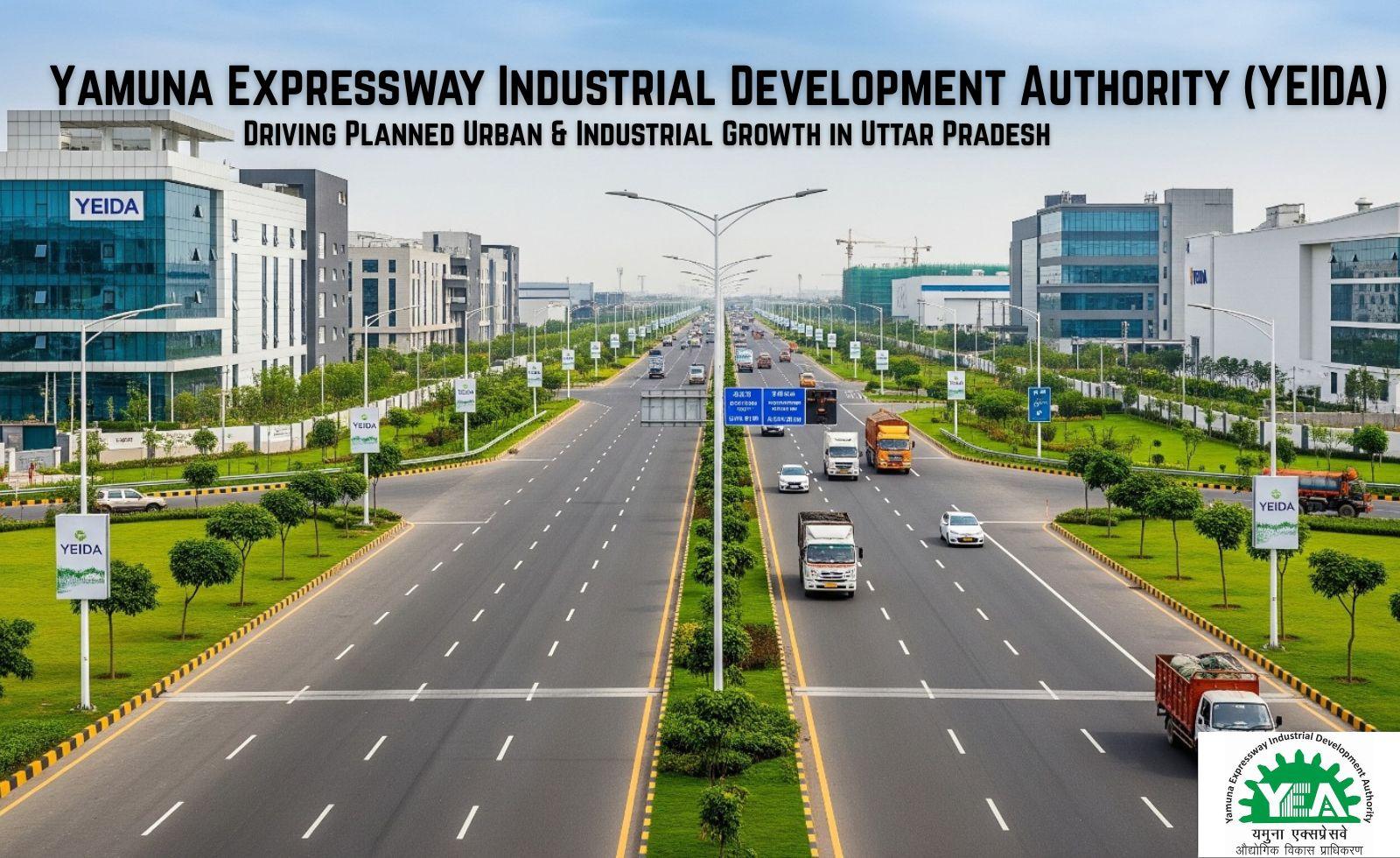
Yamuna Expressway Industrial Development Authority (YEIDA): Driving Planned Urban & Industrial Growth in Uttar Pradesh
Introduction
The rapid urban and industrial transformation of Uttar Pradesh is closely linked to visionary infrastructure planning and regulated development authorities. Among these, the Yamuna Expressway Industrial Development Authority (YEIDA) plays a critical role in shaping a future-ready economic corridor along the Yamuna Expressway Authority. Established to ensure systematic land development, industrial expansion, and world-class urban infrastructure, YEIDA development has emerged as a cornerstone of sustainable regional growth.
Vision and Mandate of YEIDA
YEIDA was constituted with a clear mandate—to promote planned industrial, commercial, institutional, and residential development in the Yamuna Expressway region. Unlike unregulated urban expansion, the authority follows a structured master-planning approach that integrates infrastructure, mobility, environmental sustainability, and economic productivity.
Its long-term vision focuses on:
-
Balanced urbanization
-
Employment generation
-
Infrastructure-led economic development
-
Transparent and policy-driven land allocation
Strategic Location Advantage
One of YEIDA’s strongest strengths is its strategic location. The Yamuna Expressway corridor connects Greater Noida to Agra, creating a high-speed development spine in western Uttar Pradesh. This region benefits from seamless connectivity to:
-
National Capital Region (NCR)
-
Eastern and Western Dedicated Freight Corridors
-
Major highways and logistics routes
-
Upcoming international aviation infrastructure
This connectivity positions YEIDA as a natural hub for industries, logistics parks, institutional campuses, and integrated townships.
Planned Industrial & Economic Zones
YEIDA has demarcated well-defined sectors for industrial and economic activities. These include zones for:
-
Manufacturing and MSMEs
-
Electronics and IT-enabled services
-
Logistics and warehousing
-
Data centers and technology parks
-
Agro-based industries
Each industrial zone is supported by wide roads, power infrastructure, water supply, drainage systems, and green buffers—ensuring operational efficiency and environmental compliance.
Residential & Institutional Development
Beyond industrial growth, YEIDA development emphasizes holistic urban development. Residential sectors are designed with adequate social infrastructure, such as:
-
Schools and universities
-
Healthcare facilities
-
Parks and open spaces
-
Commercial centers
Institutional plots are allocated for educational, research, healthcare, and public utility purposes, fostering inclusive and long-term community development rather than isolated real estate expansion.
Transparent Plot Allocation & Governance
YEIDA follows a transparent, policy-based mechanism for land allotment through published schemes and regulations. This ensures:
-
Fair access for investors, institutions, and industries
-
Clear eligibility criteria
-
Defined development timelines
-
Regulatory accountability
Digitized systems, public notices, and grievance redressal mechanisms further strengthen governance and public trust.
Infrastructure-Led Growth Model
Infrastructure is the backbone of YEIDA’s development philosophy. The authority prioritizes:
-
Wide, sector-dividing roads
-
Drainage and sewage treatment systems
-
Reliable power distribution
-
Water resource management
-
Green and eco-sensitive planning
This infrastructure-first approach reduces speculative development and encourages end-use-driven investments.
Economic Impact & Employment Generation
YEIDA’s planned development model contributes significantly to:
-
Regional employment creation
-
Industrial diversification
-
Urban decongestion of NCR
-
Increased investment inflow into Uttar Pradesh
By attracting industries and institutions, YEIDA enables a self-sustaining economic ecosystem rather than fragmented land usage.
Commitment to Sustainable Development
Environmental responsibility remains central to YEIDA’s planning framework. Green belts, designated open spaces, rainwater harvesting, and eco-friendly zoning norms ensure that development does not compromise long-term ecological balance.
Conclusion
The Yamuna Expressway Industrial Development Authority represents a future-focused approach to urban and industrial planning in India. Through structured zoning, robust infrastructure, transparent governance, and sustainable practices, YEIDA continues to transform the Yamuna Expressway Authority region into a globally competitive growth corridor. Its integrated development model serves as a benchmark for smart, policy-driven regional development in Uttar Pradesh.

Categories
Read More
"Artificial Saliva Market Summary: According to the latest report published by Data Bridge Market Research, the Artificial Saliva Market CAGR Value The global artificial saliva market size was valued at USD 1.42 billion in 2024 and is expected to reach USD 4.06 billion by 2032, at a CAGR of 14.00% during the forecast period The winning Artificial...

The location of Strasbourg in central Europe makes it a primary destination for business-to-business exhibitions and corporate gatherings, global summit meetings, and business development conferences. The city draws in decision-making personnel from different industries who work for companies that need to maintain professional standards and provide transparent information, and deliver...

Togel HK is a topic that draws significant attention in many online communities where people discuss number-based entertainment, statistical habits, and the cultural background surrounding Hong Kong–style lottery formats. Over the years, the term has become widely recognized, often appearing in conversations where individuals talk about numerical outcomes, draw schedules, and...

Reliable taxi service in Ghaziabad with clean cars, trained drivers, local travel, and comfortable outstation rides at affordable prices. Prices start at ₹9/Km.

Understanding Cyber Crime in Today’s Digital India India is witnessing a sharp increase in cyber-related offenses. Online scams, fake profiles, hacking, financial fraud, and data misuse are no longer rare cases. Many victims don’t even realize that what happened to them is a crime until it’s too late. A skilled cyber crime lawyer helps identify the offense, collect digital...
