Why Interior Layouts for Homes Fail Without Proper CAD Conversion
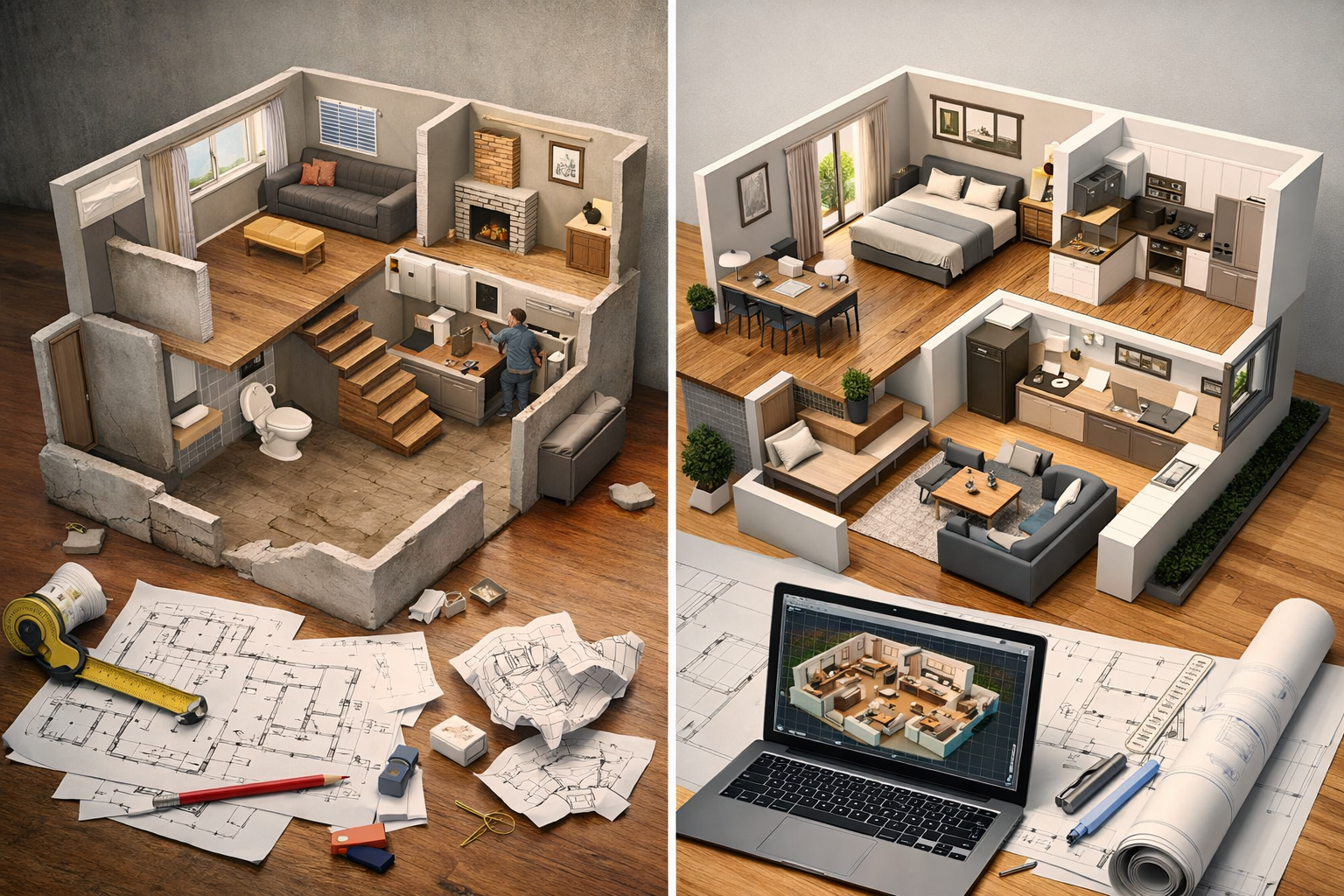
Designing a home interior is a complex process that blends creativity, engineering precision, and technical documentation. Architects and interior designers often start with conceptual sketches, scanned drawings, PDFs, or legacy blueprints. While these formats help visualize ideas, they can easily lead to misinterpretation, measurement errors, and coordination issues during construction if they are not converted into accurate digital formats.
This is where CAD conversion becomes essential. Without converting drawings into precise CAD files, even the most innovative interior layouts can fail during execution.
For businesses, architects, and construction teams in the UK, USA, and global markets, reliable cad conversion services in USA and other regions have become a foundational step in ensuring that interior design concepts translate into buildable and efficient layouts.
In this article, we’ll explore why interior layouts often fail without CAD conversion, the latest industry trends, and how professional drafting services help prevent costly mistakes.
What Is CAD Conversion and Why Does It Matter for Interior Layouts?
CAD conversion refers to the process of transforming paper drawings, PDFs, scanned plans, or raster images into precise digital CAD files such as DWG or DXF formats.
These converted drawings are editable, scalable, and compatible with modern design tools used by architects, engineers, and fabricators.
For interior layout planning, this process ensures:
-
Accurate measurements and dimensions
-
Consistent design updates across teams
-
Easy collaboration between architects and contractors
-
Improved design visualization and modifications
According to the American Institute of Architects, digital workflows have significantly improved project coordination, reducing design errors and construction delays in modern building projects.
Without an accurate cad conversion service, interior layouts often remain static or inaccurate, increasing the risk of construction mistakes.
Why Do Interior Layouts Fail Without CAD Conversion?
Interior layouts may look perfect on paper, but real-world implementation often reveals hidden issues when digital precision is missing.
Here are the most common reasons.
1. Measurement Errors in Manual Drawings
Traditional sketches or scanned drawings rarely maintain perfect scale.
Even minor measurement inconsistencies can cause:
-
Incorrect furniture placement
-
Improper cabinet dimensions
-
Misaligned walls or partitions
-
HVAC and electrical conflicts
Professional 2d cad conversion services convert drawings into precise scaled digital files, ensuring accurate measurements across the entire layout.
Research from the National Institute of Building Sciences shows that design errors account for nearly 30% of construction rework costs, highlighting the importance of accurate digital documentation.
2. Poor Collaboration Between Design and Construction Teams
Interior design projects involve multiple stakeholders:
-
Architects
-
Interior designers
-
Contractors
-
Fabricators
-
MEP engineers
Without digital CAD drawings, communication gaps often occur.
For example:
-
Designers may update layouts but contractors continue using outdated plans.
-
Fabricators may misinterpret measurements from PDFs or scanned drawings.
Using cad conversion services in USA enables teams to work from a shared digital drawing that can be easily updated and distributed.
This ensures everyone works with the same accurate design version.
3. Difficulty Modifying Layouts During Design Changes
Interior design projects frequently evolve during planning stages.
Clients may request:
-
Larger kitchens
-
Modified room layouts
-
Different storage systems
-
Updated lighting placements
If layouts exist only as PDFs or scanned drawings, updating them becomes time-consuming.
With 2d cad conversion services, design teams can quickly modify layouts digitally, saving both time and cost.
According to the McKinsey & Company, digital design technologies can increase productivity in construction projects by up to 15%.
How Does CAD Conversion Improve Interior Layout Accuracy?
The biggest advantage of CAD conversion lies in precision and design coordination.
Here’s how it helps ensure interior layouts succeed.
1. Accurate Dimensioning and Scaling
CAD drawings maintain precise measurements and consistent scale throughout the project.
Benefits include:
-
Correct wall placements
-
Accurate furniture layouts
-
Proper door and window positioning
-
Correct ceiling and lighting layouts
This precision reduces construction conflicts and installation delays.
2. Better Space Planning and Optimization
Digital CAD files allow designers to analyze space usage efficiently.
Interior designers can:
-
Test multiple layout variations
-
Adjust furniture placements
-
Improve storage and circulation space
For residential interiors, this results in more functional and efficient living environments.
3. Improved Coordination With Millwork and Furniture Design
Modern homes often include custom elements such as:
-
Built-in wardrobes
-
Modular kitchens
-
Wall paneling
-
Custom cabinetry
CAD drawings help millwork manufacturers understand exact dimensions and placement.
This reduces fabrication errors and ensures accurate installation.
Why Are 2D CAD Conversion Services Still Crucial in the Age of 3D Design?
While 3D modeling and BIM tools are becoming popular, 2D CAD drawings remain the industry standard for construction documentation.
Even advanced BIM workflows depend on 2D drawings for:
-
Floor plans
-
Electrical layouts
-
Furniture plans
-
Construction documentation
Professional 2d cad conversion services convert legacy drawings into structured CAD layers, making them compatible with both 2D and 3D cad design services platforms.
This ensures smooth integration into modern architectural workflows.
What Are the Latest Trends in CAD Conversion for Residential Design?
The CAD industry has evolved significantly in recent years.
Here are some key trends shaping interior layout design.
1. Integration With BIM Workflows
Many converted CAD drawings are now integrated into Autodesk Revit or AutoCAD workflows.
This allows architects to transition from 2D plans to full BIM models.
Benefits include:
-
Better visualization
-
Improved clash detection
-
More accurate construction documentation
2. Outsourcing CAD Conversion to Specialized Teams
Architecture firms in the UK and USA increasingly outsource CAD conversion tasks to specialized drafting companies.
This helps firms:
-
Reduce operational costs
-
Scale project capacity
-
Access experienced CAD professionals
A best cad conversion service provider typically delivers structured CAD files with proper layering, annotation, and industry-standard formatting.
3. AI-Assisted CAD Conversion Technologies
AI and machine learning tools are beginning to automate parts of the CAD conversion process.
These tools can detect:
-
Walls and partitions
-
Dimensions and annotations
-
Text and symbols
However, human expertise remains essential to verify accuracy and maintain drafting standards.
What Challenges Do Architects Face Without Accurate CAD Conversion?
Architects and interior designers often encounter serious challenges when working without proper CAD files.
Common problems include:
-
Misaligned furniture layouts
-
Incorrect wall dimensions
-
Installation issues with cabinetry
-
Conflicts between electrical and structural elements
-
Delays during construction approvals
Without an accurate cad conversion service, these issues may only become visible during the construction stage when fixing them becomes expensive.
How Does CAD Conversion Support Permit Approvals and Compliance?
In many regions, including the UK and the USA, building authorities require clear and accurate construction drawings.
Permit approval often depends on:
-
Scaled architectural drawings
-
Accurate floor plans
-
Detailed layout documentation
CAD conversion ensures drawings meet documentation standards required by local planning authorities.
This is particularly important for residential renovation and interior remodeling projects.
What Should Businesses Look for in a CAD Conversion Partner?
Choosing the right drafting partner can significantly impact the success of interior layout projects.
A reliable CAD partner should offer:
-
High accuracy and quality control
-
Industry-standard CAD layering
-
Quick turnaround times
-
Support for multiple formats (PDF, TIFF, hand sketches)
-
Experienced CAD professionals
Working with the best cad conversion service provider ensures converted drawings are ready for architectural, engineering, and construction use.
The Growing Global Demand for CAD Conversion Services
The global architecture and construction industries are rapidly adopting digital workflows.
According to the Dodge Construction Network, digital design technologies are becoming critical for improving efficiency and reducing construction risks.
As a result, demand for cad conversion services in USA and the UK continues to grow, particularly in residential design, remodeling, and interior architecture projects.
Companies are increasingly digitizing old drawings and legacy plans to streamline modern design workflows.
Final Thoughts:
Interior layouts are more than just aesthetic concepts they are technical plans that must translate accurately into physical spaces.
Without CAD conversion, design ideas remain vulnerable to errors, miscommunication, and costly construction delays.
By investing in professional cad conversion services in USA, architects and designers can ensure their interior layouts are precise, scalable, and ready for real-world implementation.
From accurate measurements to seamless collaboration and improved design flexibility, CAD conversion has become a critical step in modern residential design workflows.
For businesses and architecture firms looking to streamline their design processes, partnering with an experienced CAD drafting team can make a significant difference.
Many global firms, including leading UK CAD design companies like Shalin Designs, provide specialized CAD conversion and drafting services that help architects and interior designers transform conceptual drawings into precise, construction-ready plans.
As the architecture industry continues embracing digital transformation, accurate CAD conversion will remain a key factor in ensuring interior layouts are not only visually appealing but also technically successful.
Kategoriler
Read More
Licia is the Blood Rose Season 3 hero in Last Z, and she belongs in the "max everything" category. Unlike heroes where only the third skill matters, Licia returns value across all four skills at every star breakpoint. The reason is what her kit unlocks in combination with Bella: damage resistance, the rarest and most impactful defensive stat available to Blood Rose accounts. Skill Priority Her...

The rapid growth of electric vehicles (EVs), renewable energy storage, and advanced battery technologies has created a pressing need for greater transparency across the battery value chain. As governments introduce stricter sustainability regulations and consumers demand responsible manufacturing practices, businesses must adopt technologies that provide end-to-end visibility into every...

The Manufacturing Analytics Market is experiencing rapid growth as manufacturers increasingly adopt data-driven technologies to enhance productivity, efficiency, and decision-making. The market was valued at USD 13.59 billion in 2025 and is projected to reach USD 78.37 billion by 2035, expanding at a CAGR of 19.23% during the forecast period from 2026 to 2035. This growth is fueled by the...

About Tiger And Services – Trusted Gutter Experts in Northern Arizona When it comes to protecting your home from water damage, every detail matters—especially your gutter system. At Tiger And Services, we specialize in delivering dependable and long-lasting rainwater solutions designed for the unique weather conditions of Northern Arizona. As a trusted rain gutter company...

Photo Studio Lahore – Professional & Affordable Photography If you are searching for a reliable photo studio Lahore, you need a place that offers quality, creativity, and affordable packages. A professional photography studio helps you capture your most important moments with perfect lighting, expert editing, and modern equipment. Whether it’s a wedding, birthday, family...