Resistance Spot Welding: Principles, Applications, and Industrial Solutions
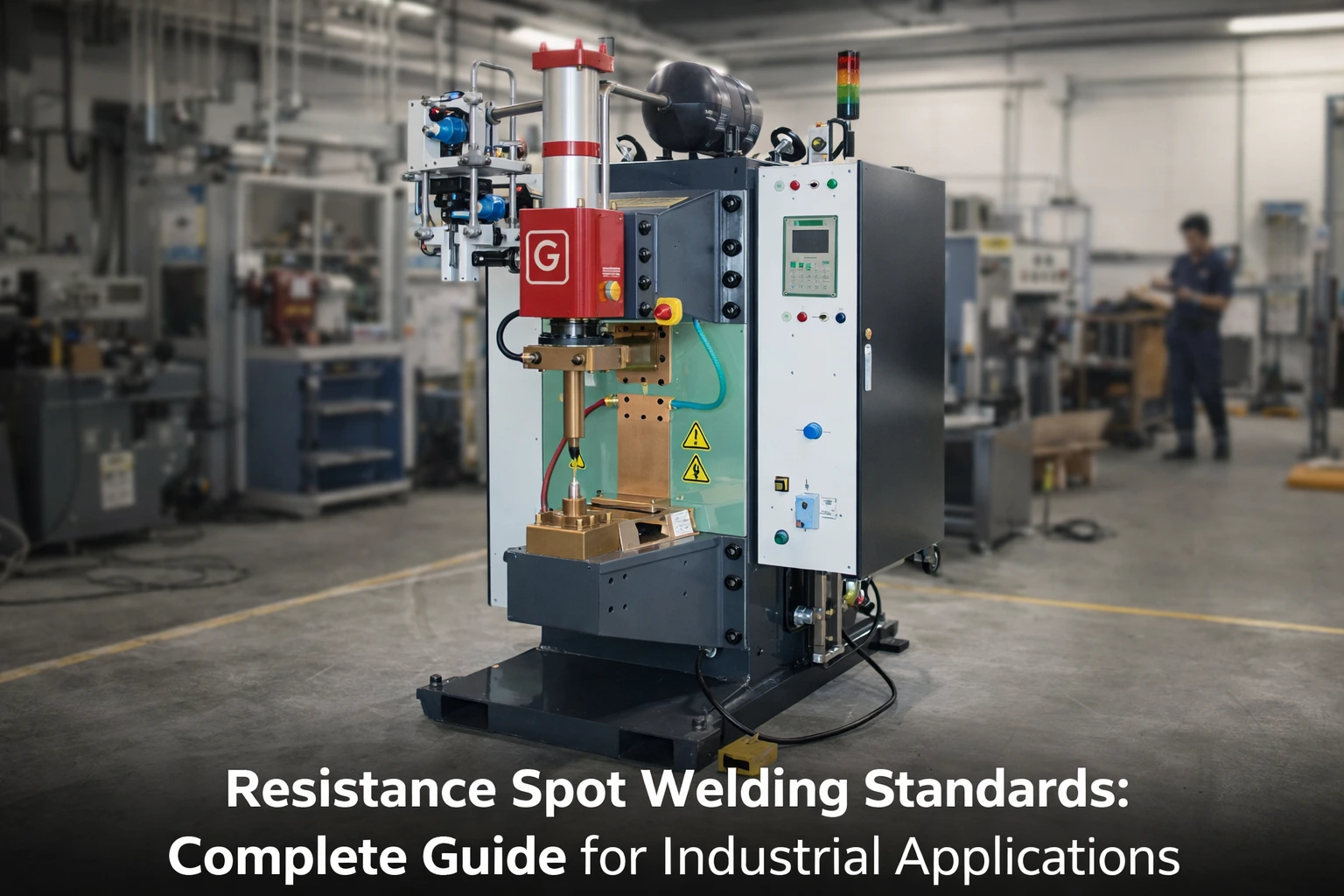
In modern manufacturing, efficient, reliable, and repeatable joining of sheet metals is critical. Resistance spot welding (RSW) has become a cornerstone process in automotive, appliance, aerospace, and heavy machinery production lines. Heron Welder, a global leader in industrial welding solutions, provides state-of-the-art resistance spot welding machines, welding guns, controllers, and automated production lines designed to meet the precision and productivity demands of today’s factories.
In this guide, we will explore the fundamentals of resistance spot welding, its applications, equipment considerations, and best practices for optimizing performance in industrial environments.
What is Resistance Spot Welding?
Resistance spot welding is a form of resistance welding in which two or more metal sheets are joined by applying pressure and passing an electric current through the contact point. The heat generated by the electrical resistance at the interface melts the metals, forming a weld nugget upon cooling. This process is fast, clean, and highly repeatable, making it ideal for high-volume manufacturing.
Key components of a resistance spot welding system include:
-
Welding electrodes – typically copper alloy tips that conduct electricity and apply force.
-
Transformers and controllers – regulate the current, duration, and sequence of the weld.
-
Clamping mechanism – ensures consistent pressure for weld formation.
Principles of Resistance Spot Welding
The process relies on three main principles:
-
Electrical Resistance Heating – The contact resistance between the metal sheets generates heat when current flows through the joint.
-
Pressure Application – Sufficient electrode force ensures intimate contact, reducing expulsion and improving nugget formation.
-
Cooling and Solidification – Once the current stops, the molten metal solidifies under pressure, forming a strong, localized weld.
Factors affecting weld quality include sheet thickness, material type, electrode size, current, and weld duration. Modern MFDC (Medium-Frequency Direct Current) resistance spot welders and capacitor discharge systems allow precise control over these parameters, improving consistency and energy efficiency.
Applications of Resistance Spot Welding
Resistance spot welding is widely used across industries due to its speed, reliability, and adaptability:
-
Automotive Manufacturing – Body panels, chassis components, and structural assemblies are often joined using RSW.
-
Appliance Production – Washing machines, refrigerators, and HVAC units require strong, repeatable sheet metal joins.
-
Aerospace and Defense – Precision RSW machines handle lightweight alloys and critical structural components.
-
Heavy Machinery and Industrial Fabrication – Steel and aluminum assemblies benefit from high-strength spot welds in production lines.
Heron Welder offers customized solutions for each of these sectors, from manual welding guns for smaller operations to fully automated robotic spot welding lines for high-volume OEM production.
Comparing Resistance Spot Welding with Other Welding Methods
| Feature | Resistance Spot Welding | MIG Welding | TIG Welding |
|---|---|---|---|
| Speed | Very high, ideal for mass production | Moderate | Slow |
| Automation | Highly automatable | Possible but less efficient | Difficult to automate |
| Material Thickness | Thin to medium sheets | Versatile | Excellent for thin sheets |
| Precision | Localized, minimal distortion | Moderate | High |
| Consumables | Electrodes wear over time | Welding wire | Tungsten electrodes and filler |
RSW stands out for high-speed, repeatable joins in sheet metal assemblies, particularly in automotive and appliance manufacturing where throughput and consistency are crucial.
Best Practices for Resistance Spot Welding
-
Electrode Maintenance – Regular dressing and replacement prevent inconsistent welds and electrode sticking.
-
Parameter Optimization – Adjust current, force, and weld time based on material type and thickness.
-
Joint Preparation – Clean, oxide-free surfaces improve conductivity and weld quality.
-
Cooling Management – Adequate cooling water flow prevents electrode overheating.
-
Automation Integration – Incorporating RSW into robotic or automated production lines enhances repeatability and reduces operator error.
Heron Welder’s portfolio includes advanced MFDC and capacitor discharge spot welders with intelligent controllers, ensuring precise, repeatable welding in even the most demanding industrial environments.
Why Choose Heron for Resistance Spot Welding Solutions?
Heron Welder brings decades of expertise in resistance welding, clinching, and FSPR riveting systems. Our solutions offer:
-
High-quality industrial welding machines – Spot, projection, and seam welders tailored to OEM needs.
-
Automation-ready equipment – Seamless integration with robotic cells and production lines.
-
Custom engineering support – System design, parameter tuning, and operator training for optimal productivity.
-
Global service network – Installation, maintenance, and spare parts worldwide.
With Heron’s advanced spot welding machines and controllers, manufacturers can achieve consistent, high-quality welds, reduce material waste, and increase production throughput.
Frequently Asked Questions (FAQs)
1. What materials can be welded using resistance spot welding?
RSW is suitable for a wide range of metals, including mild steel, stainless steel, and aluminum alloys. Material conductivity and thickness influence weld parameters.
2. How long does a typical spot weld take?
Cycle times vary based on thickness and material, but most industrial spot welds occur in 0.1–0.5 seconds, making RSW ideal for high-volume production.
3. Can resistance spot welding be automated?
Yes, modern RSW systems are fully compatible with robotic arms, conveyor integration, and automated production cells.
4. How do I know if my spot weld quality is adequate?
Non-destructive testing (NDT), pull tests, and visual inspections ensure weld integrity. Heron controllers provide monitoring and data logging for process validation.
5. What maintenance is required for spot welding machines?
Electrode maintenance, cooling water checks, and periodic calibration of transformers and controllers are essential to ensure consistent weld quality.
Conclusion: Optimize Your Production with Heron Spot Welding Solutions
Resistance spot welding remains a vital technology for sheet metal joining across industries. By leveraging Heron Welder’s advanced machines, automated systems, and expert support, manufacturers can achieve unmatched precision, efficiency, and repeatability.
Contact Heron Welder today to request a quote or consult our engineers for a customized resistance spot welding solution tailored to your production needs. Maximize productivity, reduce defects, and future-proof your manufacturing line with Heron’s cutting-edge welding technologies.
Catégories
Lire la suite
Im frisch erschienenen Pokémon TCG Pocket wurde nun die absolute Obergrenze für möglichen Kampfschaden ermittelt. Ein Spieler demonstrierte in einem eigens arrangierten Duell, dass das System bei 990 Schadenspunkten kapituliert. Diese Marke wird im regulären Spielverlauf praktisch nie erreicht. Möglich wurde sie durch ein abgestimmtes Experiment mit den Karten von...

The global ABS and ESC industry is benefiting from the automotive sector’s increasing focus on active safety technologies and accident reduction strategies. Modern braking and stability control systems help improve vehicle handling, traction, and control during emergency maneuvers, thereby reducing the likelihood of collisions. As governments introduce stricter safety standards and...
Camera technology has evolved far beyond traditional image capture, becoming a core component of intelligent sensing, automation, and real-time decision-making. Modern camera systems combine advanced image sensors, optics, embedded processors, artificial intelligence, depth sensing, and connectivity to deliver high-performance imaging across diverse applications. Industries including...

Getting dressed every day should feel simple, comfortable, and stylish — but finding the right casual outfit ideas online can quickly become overwhelming. With thousands of fashion products, trends, and style choices available, many shoppers spend more time searching than actually discovering outfits they love. Casual fashion is all about versatility. Whether you are heading to college,...

Dubai, known for its luxury, stunning skyscrapers, and golden beaches, is a city that never fails to amaze. Beyond its iconic landmarks, Dubai offers an array of water sports that attract thrill-seekers from all over the world. Among these, parasailing in Dubai has emerged as one of the most exhilarating experiences. If you’re looking for a unique perspective of this vibrant city, soaring...