


Setting Up a Wholly Owned Subsidiary in India: A Guide for UK & Europe Companies
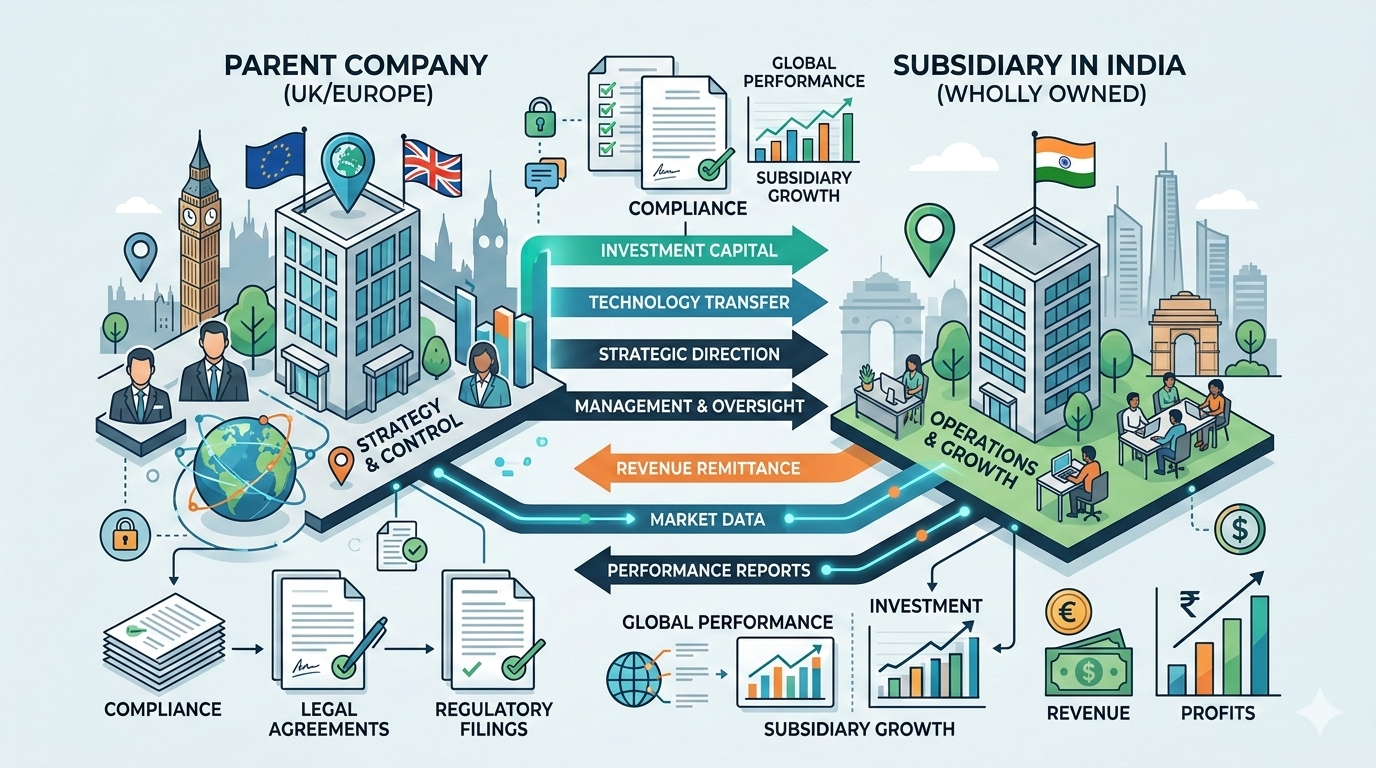
How UK & European Companies Can Successfully Establish a Wholly Owned Subsidiary in India
India is one of the world’s fastest-growing economies, attracting international businesses eager to tap into its vast market potential. For UK and European companies, establishing a wholly owned subsidiary in India provides a direct, controlled, and compliant way to operate locally.
This guide explains the concept, advantages, legal framework, step-by-step setup process, costs, and strategic considerations for international businesses looking to expand into India.
Understanding a Wholly Owned Subsidiary
A wholly owned subsidiary (WOS) is a company incorporated in India, entirely owned by a foreign parent company. This structure allows the parent company to retain full control over operations, finances, and strategic decisions, unlike joint ventures, where ownership and control are shared.
For UK and European businesses, this model offers a secure way to protect intellectual property, streamline operations, and strengthen the brand in India.
Key Benefits of a Wholly Owned Subsidiary in India
- Complete Operational Control
Decisions on strategy, finance, HR, and marketing are fully controlled by the parent company. - Enhanced Brand and Market Presence
Establishing a subsidiary in India signals long-term commitment to the local market, building trust among customers, partners, and regulators. - Intellectual Property Protection
A WOS ensures that technology, patents, trademarks, and proprietary business processes remain fully under parent company ownership. - Simplified Profit Repatriation
Profits can be legally transferred back to the parent company, subject to Indian regulations and taxation rules. - Access to Skilled Workforce and Local Expertise
Direct hiring allows companies to leverage India’s large talent pool in IT, engineering, marketing, and operations. - Regulatory Compliance and Incentives
Many sectors in India allow 100% foreign direct investment (FDI), making compliance straightforward and offering potential incentives.
Legal and Regulatory Framework
To establish a WOS in India, companies must adhere to several legal requirements:
- Company Registration: The subsidiary must be registered with the Ministry of Corporate Affairs (MCA) as a private or public limited company.
- Foreign Direct Investment (FDI) Approval: Most sectors allow automatic approval for 100% FDI, but some require government approval.
- Tax Registration: Obtain a PAN, Goods and Services Tax (GST) registration, and comply with corporate tax laws.
- Employment Compliance: Follow labor laws, social security obligations, and employee benefits regulations.
- Annual Filings: Submit annual returns, audited financial statements, and maintain statutory records as required under the Companies Act.
Step-by-Step Process to Set Up a WOS in India
- Decide the Company Structure
Usually, a private limited company is preferred for foreign investors due to operational flexibility and limited liability. - Reserve a Company Name
Apply to the MCA for name approval, ensuring it is unique and does not conflict with trademarks. - Prepare Legal Documents
Draft the Memorandum of Association (MoA) and Articles of Association (AoA), including shareholder and director details. - Obtain Digital Signatures and Director Identification Numbers (DINs)
Directors must secure DINs and digital signatures to file electronically with the MCA. - Incorporation Filing
Submit the incorporation forms online. Once approved, a Certificate of Incorporation is issued. - Open Bank Account and Inject Capital
Deposit the initial share capital in an Indian bank account and comply with RBI rules on foreign investment. - Register for Taxes and Sector-Specific Licenses
Apply for PAN, GST, and any industry-specific permits required. - Commence Operations
The subsidiary can legally start operations once all registrations and approvals are complete.
Estimated Costs
Setting up a wholly owned subsidiary in India can vary based on authorized capital, professional fees, and statutory charges. On average:
- Incorporation fees: ₹50,000–₹2,00,000 (~£500–£2,000)
- Ongoing compliance, accounting, and operational costs: ₹1,00,000–₹3,00,000 annually (~£1,000–£3,000)
Strategic Considerations
- Conduct Market Research: Understand customer preferences, competitors, and pricing strategies.
- Engage Local Experts: Legal, accounting, and business consultants can help navigate regulatory requirements.
- Cultural Awareness: Familiarity with Indian business practices helps build relationships and partnerships.
- Long-Term Commitment: A WOS requires investment, management involvement, and continuous compliance.
How Stratrich Can Assist
At Stratrich, we specialize in helping UK and European companies establish wholly owned subsidiaries in India. Our end-to-end services include:
- Business registration and legal compliance
- FDI approval guidance
- Tax registration and accounting support
- Strategic market entry advice
With Stratrich, international companies can establish a strong, compliant, and profitable presence in India with minimal hassle.
Conclusion
A wholly owned subsidiary in India provides UK and European businesses with full control, market access, and long-term growth opportunities. By following legal and regulatory processes, leveraging local expertise, and partnering with consultants like Stratrich, companies can successfully navigate India’s dynamic business environment and maximize their investment potential.
Kategoriler
Read More
في العصر الرقمي الحديث، أصبحت العلامة الشخصية (Personal Brand) من أهم عوامل النجاح لأي فرد يسعى للتميز على وسائل التواصل الاجتماعي. سواء كنت صانع محتوى، رائد أعمال، أو حتى موظفًا يبحث عن فرص أفضل، فإن بناء هوية رقمية قوية يمكن أن يفتح لك أبوابًا واسعة زيادة لايكات تيك توك الفرص. وهنا يأتي دور خدمات مثل DrD3M التي تساعدك على تسريع هذا النمو وبناء حضور مؤثر عالميًا. العلامة الشخصية لا تعني فقط...

Book Kolhapur to Belgaum cab online at best price. CabBazar Both One way drop taxi and round trip cab available at lowest price. Price starts Rs. 9/Km
El éxito de cualquier artista del tatuaje depende en gran medida de la calidad del material de tatuaje profesional que utiliza. Contar con herramientas adecuadas no solo mejora el resultado final de cada diseño, sino que también garantiza la seguridad, la higiene y la comodidad tanto del tatuador como del cliente. En un sector donde la precisión es esencial, invertir...
" According to the latest report published by Data Bridge Market Research, the Europe Indoor Air Purification Market Data Bridge Market Research analyses that the indoor air purification market is expected to reach a value of USD 34,632.87 million by 2029, at a CAGR of 7.9% during the forecast period. The solution segment accounts for the largest offering segment in the air...
Get updated and exam-focused 250-586 Dumps and verified 250-586 PDF Dumps from DumpsHero. Prepare confidently with expert-crafted study material designed to help you pass your Broadcom 250-586 certification exam on the first attempt. 250-586 Exam Dumps to Achieve the Best Results on Your First Attempt DumpsHero provides trusted and professionally designed Broadcom 250-586 exam questions that...