


Why is my DC fast charging speed significantly reduced after multiple consecutive sessions?
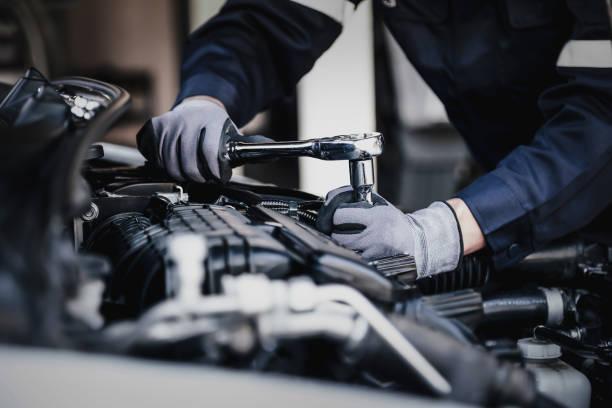
Electric vehicle owners often celebrate the convenience of DC fast charging, especially during long road trips where time is of the essence. However, many drivers notice a frustrating phenomenon: while the first charging session of the day might be lightning-fast, the second, third, or fourth consecutive session often sees a dramatic drop in charging speeds. This isn't usually a fault with the charging station itself, but rather a complex interplay of physics, chemistry, and the vehicle’s onboard software designed to protect the most expensive component of the car—the battery. Understanding these factors is becoming a vital part of modern automotive literacy, which is why a professional car mechanic now needs to be as proficient with software and thermal dynamics as they are with traditional wrenches.
The Role of Thermal Management and Heat Buildup
The primary culprit behind reduced charging speeds during back-to-back sessions is heat. DC fast charging involves pushing a massive amount of electrical current into the battery in a very short amount of time. This process is not 100% efficient; a portion of that energy is converted into heat due to the internal resistance of the battery cells. During a single session, the car’s active cooling system can usually manage this temperature rise effectively. However, when you drive at highway speeds immediately after a fast charge and then pull into another charger, the battery doesn't have enough time to shed that residual heat.
The battery management system (BMS) monitors these temperatures meticulously. If the internal cell temperature exceeds a certain threshold, the BMS will "throttle" or limit the incoming power to prevent permanent damage or fire risks. This technical nuance is a major topic in any modern car mechanic course, as diagnosing EV performance issues now requires a deep understanding of thermal management systems and coolant loops that are far more advanced than those found in internal combustion engines.
Battery Chemistry and the "Rapidgate" Phenomenon
Different EVs handle consecutive fast charging differently based on their battery chemistry and cooling design. Some earlier or more budget-friendly electric models rely on passive air cooling rather than liquid cooling. In the EV community, the significant slowing of charge speeds due to heat is often referred to as "Rapidgate." Because lithium-ion batteries are sensitive to extreme temperatures, charging them when they are already hot can lead to accelerated degradation.
To ensure the longevity of the vehicle, manufacturers program the BMS to prioritize battery health over charging speed. This means that even if the charger is capable of delivering 150kW, your car might only request 30kW if the cells are too warm. For those interested in the intricacies of how these electrical systems interact, enrolling in a car mechanic course provides the foundational knowledge needed to interpret live data from a vehicle's OBD-II port, allowing technicians to see exactly why a car is requesting a lower charge rate than expected.
The State of Charge (SoC) and Charging Curves
Another factor that can confuse drivers is the "charging curve." A battery does not charge at its maximum rate from 0% all the way to 100%. Think of it like a theater filling up with people; when the theater is empty, it's easy for people to find seats quickly. As it gets closer to full, people have to move more slowly to find the remaining spots. In battery terms, as the State of Charge (SoC) increases, the resistance increases, and the charging speed naturally tapers off.
If you arrive at your second or third charging stop with a higher SoC than the first one (for example, 30% instead of 10%), the car will naturally start at a lower point on the charging curve. When you combine a higher starting SoC with a battery that is already thermally saturated from a previous session, the reduction in speed becomes even more apparent. This intersection of chemical engineering and electrical physics is exactly what a modern car mechanic must master to help customers optimize their driving and charging habits for long-distance travel.
Software Limits and Manufacturer "Buffer" Zones
Manufacturers often implement "safety buffers" and software-level limits to protect the battery from the stress of repeated high-voltage DC input. Some vehicles are programmed to allow only a certain number of peak-speed charging sessions within a 24-hour period. Once that limit is reached, the software may enforce a more conservative charging profile regardless of the temperature. This is a preventative measure against lithium plating—a phenomenon where lithium ions move too fast and turn into metallic lithium on the anode, which can cause internal short circuits.
Understanding these software-defined limits is a crucial skill set. Modern automotive repair is shifting away from purely mechanical fixes and toward software diagnostics. By taking a comprehensive car mechanic course, aspiring technicians learn how to navigate these manufacturer-specific software environments, helping them explain to EV owners that the slow charging isn't a "broken" part, but a deliberate protective feature designed to make the battery last for a decade or more.
Tips for Maintaining Optimal Charging Speeds
While you cannot override the laws of physics or the car’s BMS, there are ways to mitigate speed reductions. Plan your stops so that you arrive at chargers with a lower State of Charge (ideally below 20%), as this is when the battery is most receptive to high power. If your vehicle has a "battery pre-conditioning" feature, use the in-car navigation to route to the charger; this allows the car to either heat or cool the battery to the optimal temperature before you arrive.
Categorias
Leia Mais
"Global Executive Summary Asia-Pacific Robotic Vacuum Cleaner Market: Size, Share, and Forecast Data Bridge Market Research analyses that the Asia-Pacific robotic vacuum cleaner market which was USD 2.58 billion in 2022, is expected to reach USD 16.01 billion by 2030, and is expected to undergo a CAGR of 25.60% during the forecast period of 2023 to 2030.The complete Asia-Pacific Robotic...

The wait for the NEET UG 2026 Result is one of the most important phases for medical aspirants across India. After months of preparation, examination stress, and intense competition, students are now eagerly awaiting their scores, ranks, and counselling schedules. With the National Testing Agency (NTA) managing the examination process, candidates are advised to stay updated through the official...

Moving is consistently ranked as one of life's most stressful events. From packing countless boxes and coordinating logistics to navigating the emotional farewells, there's an endless list of tasks to complete. Among these, one often overlooked yet critically important element is the End Of Tenancy Cleaning Bracknell. This isn't just about tidying up; it's about adhering to the stringent...

The Legal Process Outsourcing Market was valued at USD 9.62 Billion in 2025 and is expected to reach USD 20.00 Billion by 2035, growing at a CAGR of 7.60% from 2026 to 2035. The Legal Process Outsourcing Market is gaining momentum as corporate legal departments, law firms, and enterprises increasingly adopt outsourcing strategies to streamline legal operations, reduce overhead costs, and...

Gift Wrapping Paper Market Report Size, Share and Growth Report (2025–2031) Market Overview The Gift Wrapping Paper Market is witnessing steady growth as consumers increasingly prioritize attractive and personalized gift presentation. The market was valued at USD 5.9 billion in 2025 and is projected to reach USD 8.4 billion by 2030, expanding at a CAGR of 6.1% during the forecast period...
