Improving Internal Machining Efficiency with Carbide Boring Bar
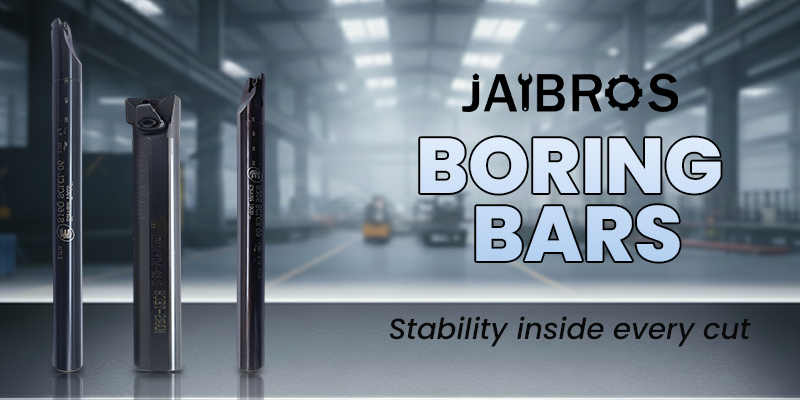
Learn how a carbide boring bar improves internal machining efficiency in CNC operations. Discover setup tips, tool benefits, and machining best practices.
Boost Internal Machining Performance with Carbide Boring Bars
Modern manufacturing relies heavily on precision machining processes to produce high-quality parts. Among these processes, internal machining plays a crucial role in industries such as automotive, aerospace, and heavy equipment manufacturing. Internal turning operations require tools that can deliver accuracy, durability, and consistent performance under demanding conditions. One of the most reliable tools used for this purpose is the carbide boring bar.
When machinists want to improve productivity and achieve better internal finishes, selecting the right tooling becomes essential. With the help of advanced cutting technology, modern machining tools can significantly improve internal machining efficiency while maintaining tight tolerances. In this blog, we will explore how boring tools improve machining productivity, what factors influence performance, and how operators can achieve better results during internal turning operations.
Understanding Internal Machining in CNC Operations
Internal machining refers to the process of enlarging or finishing holes inside a workpiece. It is commonly performed after drilling operations to improve accuracy and surface quality. CNC lathes and machining centers use specialised cutting tools designed specifically for internal operations.
A high-quality cnc tool designed for boring operations allows operators to machine internal surfaces with better precision. Internal machining requires tools that are rigid enough to resist cutting forces while maintaining stability during operation.
The carbide boring bar is widely used for this purpose because it offers excellent rigidity and durability compared to traditional steel tools. Its design allows machinists to perform accurate internal turning even in deep bores where tool stability is critical.
Why Tool Rigidity Matters in Internal Machining
Rigidity is one of the most important factors in internal machining operations. When a cutting tool lacks rigidity, it can vibrate during the machining process. This vibration, also known as chatter, can damage the surface finish and reduce machining accuracy.
Using a carbide boring bar helps reduce vibration because carbide material is much stiffer than many other tool materials. Higher rigidity allows the tool to maintain consistent cutting conditions and produce smoother internal surfaces.
Many modern workshops prefer solid carbide boring bars because they provide superior stiffness and vibration resistance. These tools are particularly useful for machining small or deep holes where maintaining stability is difficult.
With improved rigidity, machinists can run their machines at higher speeds and feeds, which ultimately improves overall machining efficiency.
Improving Surface Finish and Dimensional Accuracy
One of the main goals of internal machining is to achieve a smooth and accurate surface inside the workpiece. Poor surface finish can lead to assembly issues or reduced component performance.
The carbide boring bar helps improve surface quality because it maintains stable cutting conditions. Its sharp cutting edges and durable structure allow it to remove material smoothly without creating excessive vibration.
When machining operations remain stable, the cutting tool produces better dimensional accuracy. This means the internal diameter of the components stays within the required tolerance range.
Precision internal machining is especially important in industries such as automotive and aerospace where even small dimensional errors can affect the performance of mechanical components.
Reducing Tool Wear and Increasing Tool Life
Tool wear is a common challenge in machining operations. Continuous cutting generates heat and friction, which gradually wears down the cutting edge of the tool.
A properly designed carbide boring bar can withstand high cutting temperatures and maintain its sharpness for a longer time. Carbide materials are known for their excellent heat resistance and hardness.
Because of these properties, machinists can use carbide tools for extended machining cycles without frequent tool changes. This not only reduces downtime but also improves overall productivity.
When tools last longer, manufacturers can reduce operational costs and maintain consistent machining performance across multiple production batches.
Selecting the Right Tool for the Job
Choosing the correct boring tool is essential for achieving efficient internal machining. Different workpieces require different tool sizes, geometries, and cutting conditions.
Many workshops keep a carbide boring bar set that includes multiple tool sizes for various internal diameters. This allows machinists to select the most appropriate tool for each machining operation.
Having a variety of tool options improves flexibility in production and ensures that machinists can handle different types of machining tasks without compromising on accuracy.
Managing Cutting Parameters for Better Efficiency
Cutting speed, feed rate, and depth of cut all influence the performance of internal machining operations. Incorrect cutting parameters can reduce tool life and produce poor surface finishes.
When using a carbide boring bar, machinists should follow recommended cutting parameters based on the workpiece material and tool specifications. Proper cutting conditions allow the tool to perform efficiently while maintaining stable machining performance.
Balan Ced machining parameters also help reduce heat generation and improve chip control. This results in smoother cutting operations and better machining efficiency.
Operators should monitor machining conditions and make adjustments when necessary to maintain optimal cutting performance.
Evaluating Cost and Performance
When selecting machining tools, manufacturers often consider both performance and cost. The carbide boring bar price can vary depending on the material quality, coating technology, and brand reputation.
Although carbide tools may initially cost more than conventional tools, they provide better durability and longer service life. This makes them a cost-effective choice for many machining operations.
Investing in high-quality tooling helps manufacturers achieve better productivity while maintaining consistent machining quality.
Over time, the benefits of improved efficiency and reduced tool replacement costs often outweigh the initial investment.
Role of Modern CNC Technology
Advancements in CNC technology have significantly improved the efficiency of machining operations. Modern machines offer better control systems, higher spindle speeds, and improved stability.
When combined with advanced cutting tools like the carbide boring bar, these machines allow manufacturers to achieve exceptional machining performance.
Modern CNC systems also support automation and real-time monitoring, which helps operators maintain consistent machining conditions throughout the production process.
As machining technology continues to evolve, manufacturers can expect even greater improvements in internal machining efficiency.
Conclusion
Internal machining plays a vital role in modern manufacturing processes, and achieving high efficiency requires the right combination of tools, machine settings, and operator expertise. The carbide boring bar has become one of the most trusted tools for internal turning operations due to its strength, durability, and vibration resistance.
By selecting high-quality tools such as solid carbide boring bars, maintaining proper cutting parameters, and using the right tooling setups, machinists can significantly improve productivity and machining accuracy.
Although the carbide boring bar price may vary depending on the tool quality and specifications, investing in reliable tools ensures long-term performance and cost savings.
With the right strategies and modern machining technology, manufacturers can achieve better efficiency, improved surface finishes, and consistent results in internal machining operations.
Frequently Asked Questions
1. What is a carbide boring bar used for?
A carbide boring bar is used for internal turning operations to enlarge or finish holes with high precision and improved surface quality.
2. Why are solid carbide boring bars preferred in machining?
Solid carbide boring bars provide higher rigidity and vibration resistance, making them ideal for deep or small internal machining operations.
3. What factors affect carbide boring bar price?
The boring bar price depends on tool material quality, coatings, size, brand reputation, and durability.
4. Why do machinists use a boring bar set?
A carbide boring bar set includes different tool sizes, allowing operators to handle various internal machining tasks efficiently.
5. How can internal machining efficiency be improved?
Efficiency can be improved by selecting the right cnc tool, maintaining proper cutting parameters, reducing vibration, and using high-quality cutting tools.
Κατηγορίες
Διαβάζω περισσότερα
디지털 금융 시대와 소비자의 변화 디지털 기술이 금융 산업 전반에 빠르게 확산되면서 소비자의 금융 이용 방식도 크게 변화하고 있다. 과거에는 금융기관을 직접 방문하여 상담을 받고 상품을 비교하는 과정이 일반적이었지만, 현재는 온라인 플랫폼을 통해 다양한 금융 정보를 손쉽게 확인할 수 있는 환경이 마련되었다. 이러한 변화는 금융 서비스의 접근성을 높이는 동시에 소비자가 더욱 효율적으로 금융상품을 탐색할 수 있도록 지원하고 있으며, 온라인 기반의 금융 서비스는 일상적인 금융 활동의 중요한 수단으로 자리 잡고 있다. 다양한 금융상품을 편리하게 비교할 수 있는 환경 대출상품은 금융기관마다 금리, 한도, 상환 기간, 이용 조건 등 여러 요소에서 차이를 보인다. 소비자가 개별 금융기관을 직접...

The global Crystal Pullers Market is witnessing steady expansion, driven by increasing demand for high-quality crystalline materials across semiconductors, photovoltaics, telecommunications, and consumer electronics. Crystal pullers are essential equipment in advanced material manufacturing, enabling the production of high-purity single crystals used in wafers, sensors, optics, and...

The contemporary high-end travel landscape is being actively sculpted by a set of powerful and transformative Luxury Travel Market Trends, with hyper-personalization leading the charge. This trend moves far beyond simply remembering a guest's preferred pillow type; it's about using data and artificial intelligence to anticipate needs and craft a journey that is deeply and uniquely resonant...

"Asia-Pacific Surgical Staplers Market Summary: According to the latest report published by Data Bridge Market Research, the Asia-Pacific Surgical Staplers Market The Asia-Pacific surgical staplers market size was valued at USD 796.80 million in 2025 and is expected to reach USD 1,717.97 million by 2033, at a CAGR of 10.08% during the forecast period This...

Bonuses are one of the biggest attractions of any online betting platform. A generous welcome offer or a cashback deal can make the difference between choosing one site over another. Tiger365 Pro offers several promotional deals to new and existing users. However, not all bonuses provide the same value. Understanding how Tiger365 Pro bonuses work, what the terms mean, and how to use them wisely...