Why Your CNC Tool Breaks Frequently: Causes & Fixes
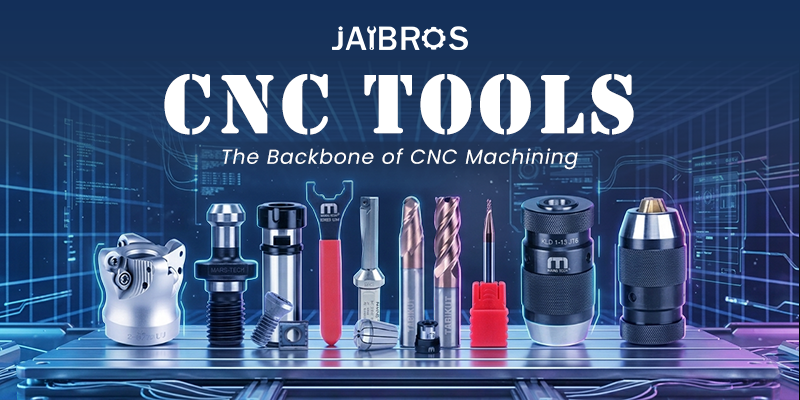
Why Your CNC Tool Breaks Frequently
In modern machining, tool failure is one of the most common and costly challenges faced by manufacturers. Frequent breakage not only disrupts production but also increases operational costs, reduces efficiency, and affects product quality.
A CNC tool plays a critical role in ensuring smooth machining operations. However, when it breaks frequently, it becomes a serious concern that needs immediate attention. Understanding the reasons behind tool failure is the first step toward improving performance and extending tool life.
1. Incorrect Cutting Parameters
One of the primary reasons for tool breakage is the use of incorrect cutting parameters. Speed, feed rate, and depth of cut must be properly set according to the material and machining operation.
When parameters are too aggressive, the tool experiences excessive stress, leading to breakage. On the other hand, very low parameters can cause rubbing instead of cutting, generating heat and damaging the tool.
Solution:
-
Follow recommended cutting parameters
-
Adjust speed and feed based on material
-
Monitor performance during machining
2. Poor Tool Quality
Using low-quality or worn-out tools significantly increases the chances of failure. Inferior materials cannot withstand high cutting forces and temperatures.
Manufacturers often try to save costs by purchasing cheaper tools, but this leads to frequent replacements and downtime. Investing in the best CNC ensures durability and consistent performance.
Solution:
-
Choose high-quality tools from trusted suppliers
-
Avoid using damaged or worn tools
-
Focus on long-term performance instead of short-term savings
3. Improper Tool Selection
Not all tools are suitable for every application. Selecting the wrong tool for a specific material or operation can result in poor performance and breakage.
A proper tool must match the material, machine capability, and cutting requirements.
Solution:
-
Analyze material properties before selecting tools
-
Use application-specific tooling solutions
-
Ensure compatibility with different types of CNC machine setups
4. Tool Holder and Setup Issues
Incorrect tool holding and setup can lead to instability during machining. Loose or misaligned tools cause vibration, which increases stress on the cutting edge.
Even a high-quality CNC tool can fail if it is not properly secured in the machine.
Solution:
-
Ensure proper tool clamping
-
Check alignment before starting operations
-
Use high-quality tool holders
5. Excessive Heat Generation
Heat is a major factor that contributes to tool wear and breakage. High temperatures weaken the tool material and reduce its cutting efficiency.
Without proper cooling, the CNC tool can quickly lose its hardness and fail during machining.
Solution:
-
Use appropriate coolant systems
-
Optimize cutting parameters to reduce heat
-
Select coated tools with better heat resistance
6. Lack of Maintenance
Regular maintenance is essential for ensuring smooth machining operations. Ignoring maintenance can lead to tool wear, machine issues, and unexpected failures.
A well-maintained tool performs more efficiently and lasts longer.
Solution:
-
Inspect tools regularly
-
Replace worn tools on time
-
Maintain machines properly
7. Machine Condition and Stability
The condition of the machine plays a crucial role in tool performance. Worn-out components, poor spindle condition, or lack of rigidity can cause vibrations and instability.
These factors put additional stress on the tool, increasing the risk of breakage.
Solution:
-
Perform regular machine maintenance
-
Ensure machine rigidity and alignment
-
Address mechanical issues promptly
8. Incorrect Tool Path Programming
Programming errors can lead to sudden tool movements, excessive load, and collisions. Poor tool path strategies increase stress on the tool and cause breakage.
Solution:
-
Optimize tool paths in CNC programs
-
Use simulation software to detect errors
-
Avoid abrupt changes in direction
9. Overloading the Tool
Using a tool beyond its capacity is another common mistake. Each tool is designed for specific cutting conditions and load limits.
When a CNC is overloaded, it cannot handle the stress and breaks under pressure.
Solution:
-
Use the correct tool for each operation
-
Avoid excessive cutting depth
-
Follow manufacturer recommendations
10. Poor Chip Removal
Improper chip evacuation can cause chips to accumulate around the tool. This leads to increased friction, heat, and tool damage.
Solution:
-
Ensure proper chip evacuation systems
-
Use suitable cutting fluids
-
Select tools designed for efficient chip removal
11. Accessibility and Sourcing Issues
Sometimes, manufacturers use substandard tools due to limited availability or urgent requirements.
Today, businesses can easily explore CNC tools online platforms to access a wide range of high-quality tools. Additionally, searching for tools near me helps find reliable local suppliers for quick support.
Choosing the right sourcing method ensures consistent quality and reduces the risk of tool failure.
Conclusion
Frequent tool breakage is not just a technical issue—it is a sign that something is wrong in the machining process. From incorrect parameters and poor tool selection to machine instability and lack of maintenance, multiple factors can contribute to tool failure.
A high-quality tool is essential for achieving reliable machining performance. Across various types of CNC machine systems, proper tool selection, correct setup, and regular maintenance play a crucial role in preventing breakage.
Manufacturers should focus on using the best tools, optimizing cutting conditions, and sourcing tools through reliable channels such as CNC tools online platforms or trusted local suppliers found via CNC tools near me.
At Jaibros, we are committed to providing high-quality tooling solutions that help manufacturers reduce downtime, improve efficiency, and achieve consistent machining performance. With a strong focus on durability and precision, Jaibros supports businesses in overcoming tooling challenges and achieving long-term success.
FAQs
1. Why does my CNC tool break frequently?
Common reasons include incorrect cutting parameters, poor tool quality, improper selection, and machine instability.
2. How can I increase tool life?
Use proper cutting parameters, maintain machines regularly, and choose high-quality tools.
3. Does tool quality really matter?
Yes, high-quality tools provide better durability, performance, and long-term cost savings.
4. How do I choose the right tool?
Consider material type, machining operation, and machine capability before selecting a tool.
5. Where can I find reliable CNC tools?
You can explore online platforms or contact trusted local suppliers for high-quality tooling solutions.
Categorias
Leia mais
Stage Lighting Market was valued at a solid USD 634 million in 2024, and is now on a consistent growth path, projected to reach USD 824 million by 2032. This sustained expansion, representing a compound annual growth rate (CAGR) of 3.9%, is detailed in a comprehensive new report published by Semiconductor Insight. The study underscores the essential function of these...

The global S100A11 Antibody Market is experiencing a major surge in demand, primarily fueled by breakthrough developments in oncology diagnostics and targeted therapeutics. As a prominent member of the S100 calcium-binding protein family, S100A11 is heavily implicated in cellular progression, motility, and inflammatory responses. Its documented overexpression in numerous malignancies—such...
"In-Depth Study on Executive Summary Organic Fruit Extracts Market Size and Share The global organic fruit extracts market size was valued at USD 2.90 billion in 2024 and is projected to reach USD 5.24 billion by 2032, with a CAGR of 7.65% during the forecast period of 2025 to 2032. The world class Organic Fruit Extracts Market business report presents with the continual...
Orange essential oils are concentrated oils that originate from plants—the types of oils produced from citrus species, including oranges, lemons, etc. Orange essential oil is extracted from the peel of the sweet orange, Citrus sinensis. It is done through a method called cold-pressing, which applies pressure to squeeze the oils from the crust. Orange Oil has a pleasant scent and a...

I've been meaning to share my experience with GO99 because I think it could really help some of you who are looking for a reliable online gaming platform. I stumbled upon GO99 a few months back while searching for a place to enjoy some classic games, and it has since become one of my go-to options.What I love about GO99 is its user-friendly interface. From the moment I landed on...