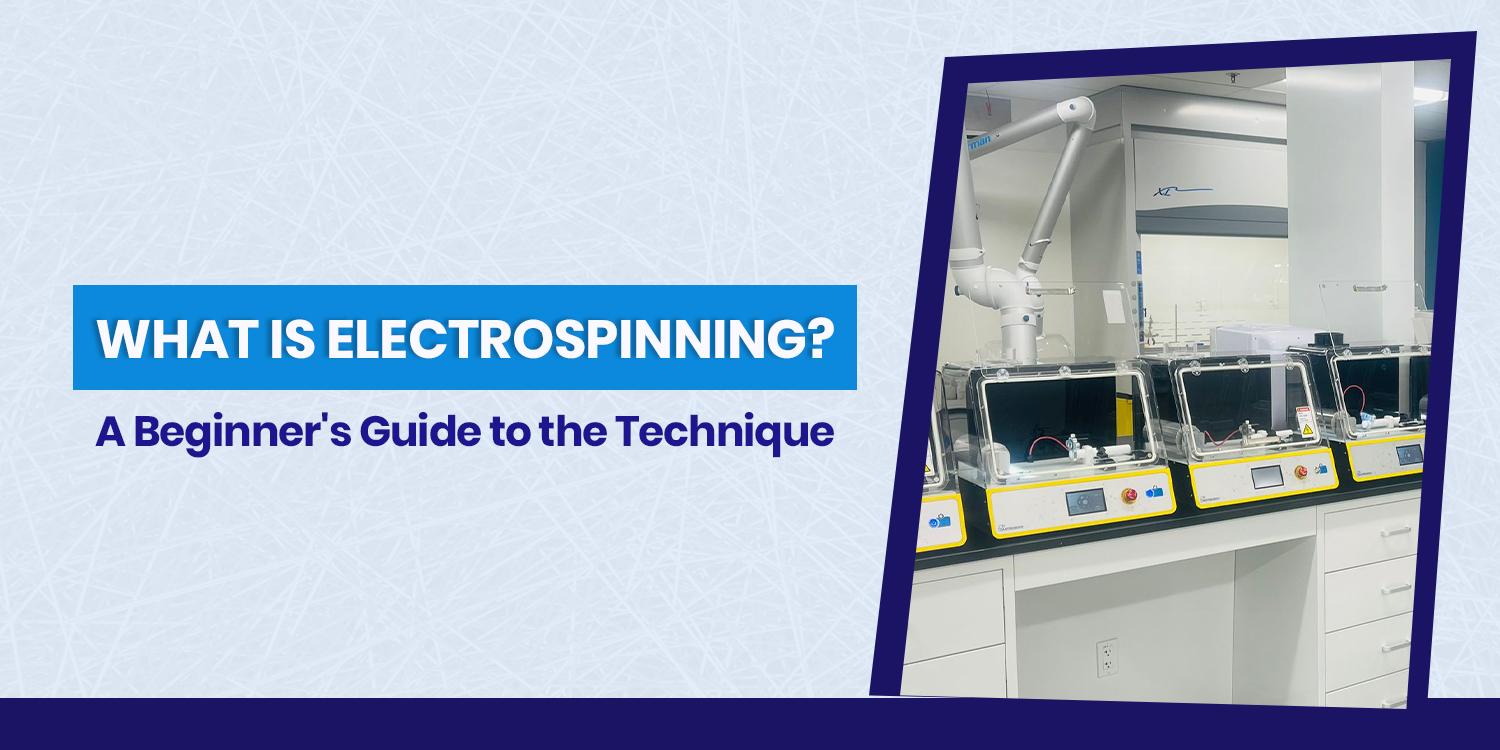
Electrospinning is rapidly gaining attention as a powerful method for producing ultra-fine fibers with remarkable properties. Whether you're a student, researcher, or industry professional, understanding Nanofiber Electrospinning is essential in today’s evolving material science landscape. In this beginner-friendly guide, we’ll break down the concept, process, and applications of this innovative technique, while highlighting how companies like Electrospintek are shaping the future of nanofiber technology.
What is Electrospinning?
Electrospinning is a fabrication technique used to create extremely thin fibers, often at the nanoscale, using an electric field. These fibers, known as nanofibers, typically have diameters ranging from nanometers to a few micrometers. The process is widely used in Nanofiber Production because it allows precise control over fiber structure, diameter, and composition.
At its core, Nanofiber Electrospinning transforms a liquid polymer solution into solid fibers through electrical forces. This simple yet powerful method has opened doors to advanced Nanofiber Solutions across multiple industries.
How Does Nanofiber Electrospinning Work?
The electrospinning process may sound complex, but it follows a straightforward principle. Here’s a simplified breakdown:
- Polymer Solution Preparation
A polymer is dissolved in a solvent to create a viscous solution suitable for spinning.
- Loading into a Syringe
The solution is placed into a syringe equipped with a fine needle.
- Application of High Voltage
A high-voltage power supply creates an electric field between the needle and a collector plate.
- Formation of Taylor Cone
The electric force pulls the liquid into a cone shape at the needle tip.
- Fiber Jet Ejection
Once the force overcomes surface tension, a thin jet of polymer is ejected.
- Solvent Evaporation
As the jet travels through the air, the solvent evaporates, leaving behind solid nanofibers.
- Collection of Fibers
The fibers are collected on a grounded surface, forming a nonwoven mat.
This process is at the heart of modern Nanofiber Production, enabling high-quality and customizable materials.
Key Components of an Electrospinning Setup
To better understand Nanofiber Electrospinning, it’s important to know the essential equipment involved:
- High Voltage Power Supply – Generates the electric field
- Syringe Pump – Controls the flow rate of the polymer solution
- Spinneret (Needle) – Where the fiber jet originates
- Collector – A surface where fibers accumulate
- Polymer Solution – The raw material for nanofiber formation
Companies like Electrospintek design advanced systems that optimize these components for efficient and scalable Nanofiber Solutions.
Advantages of Nanofiber Electrospinning
Electrospinning offers several benefits that make it a preferred technique in research and industry:
1. Ultra-Fine Fiber Production
It produces fibers with extremely small diameters, increasing surface area significantly.
2. Versatility
A wide range of polymers can be used, enabling diverse Nanofiber Solutions.
3. Cost-Effective
Compared to other nanofiber fabrication methods, electrospinning is relatively affordable.
4. Customizable Properties
Fiber thickness, porosity, and structure can be tailored for specific applications.
5. Scalable Technology
With advancements from companies like Electrospintek, scaling up Nanofiber Production has become more practical.
Applications of Nanofiber Electrospinning
The applications of Nanofiber Electrospinning are vast and continue to expand:
1. Filtration Systems
Nanofibers are widely used in air and water filtration due to their high surface area and porosity.
2. Medical and Healthcare
Used in wound dressings, drug delivery systems, and tissue engineering scaffolds.
3. Energy Storage
Applied in batteries, fuel cells, and supercapacitors.
4. Textiles
Enhances fabric performance with properties like water resistance and breathability.
5. Environmental Protection
Supports eco-friendly solutions through advanced filtration and biodegradable materials.
These applications highlight the growing importance of Nanofiber Solutions in solving real-world challenges.
Challenges in Electrospinning
While Nanofiber Electrospinning offers many benefits, it also comes with some challenges:
- Maintaining consistent fiber quality
- Controlling environmental conditions like humidity and temperature
- Scaling up production efficiently
- Handling high-voltage equipment safely
However, continuous innovation by industry leaders like Electrospintek is helping overcome these limitations and improving reliability in Nanofiber Production.
The Future of Nanofiber Electrospinning
The future of Nanofiber Electrospinning looks promising as research and technology continue to evolve. Emerging trends include:
- Automation and AI-driven systems
- Multi-jet and needleless electrospinning
- Eco-friendly and biodegradable materials
- Integration with smart technologies
As demand for advanced materials grows, companies like Electrospintek are at the forefront, delivering innovative Nanofiber Solutions for industries worldwide.
Conclusion
Nanofiber Electrospinning is a groundbreaking technique that has revolutionized how we produce and utilize nanomaterials. From healthcare to environmental applications, its impact is undeniable. For beginners, understanding the fundamentals of this process is the first step toward exploring its vast potential.
With ongoing advancements and support from innovators like Electrospintek, the future of Nanofiber Production is not only exciting but also full of opportunities for innovation and growth.