


BIS FMCS Scheme: Complete Guide to BIS FMCS License & Certificate
Introduction
If you are a foreign manufacturer planning to export products to India, understanding the BIS FMCS Scheme is essential. The Bureau of Indian Standards (BIS) has made it mandatory for many foreign products to comply with Indian quality standards before entering the market. In this blog, we will explain everything about BIS FMCS, including the BIS FMCS Scheme, BIS FMCS License, and BIS FMCS Certificate, in a simple and easy-to-understand way.
What is BIS FMCS?
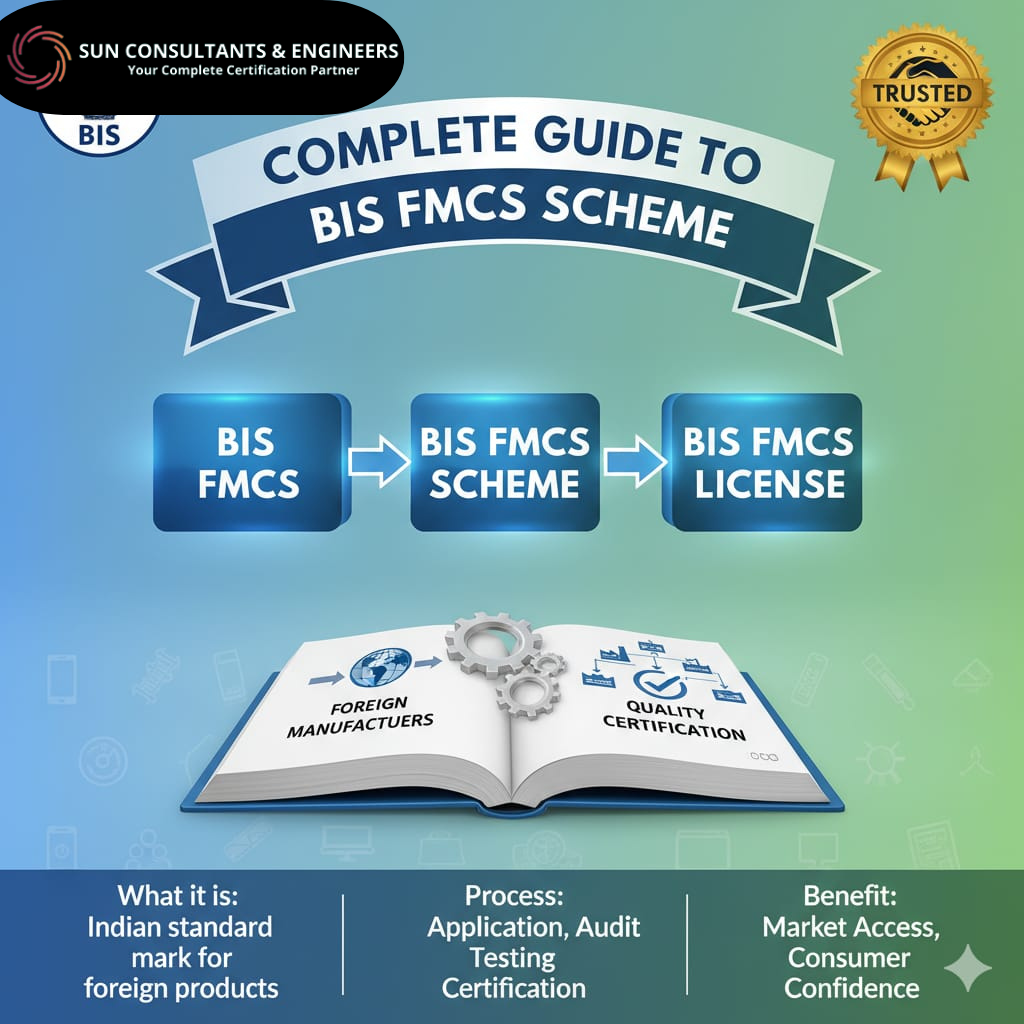
BIS FMCS stands for Foreign Manufacturers Certification Scheme. It is a certification system introduced by the Bureau of Indian Standards for manufacturers located outside India. Under this scheme, foreign manufacturers must obtain a BIS license to use the Standard Mark (ISI Mark) on their products before exporting them to India In simple words, BIS FMCS allows foreign companies to sell their products in India legally by meeting Indian standards.
Overview of BIS FMCS Scheme
The BIS FMCS Scheme ensures that products manufactured outside India meet the same quality and safety standards as products made within the country.
Key Features of the BIS FMCS Scheme:
-
Applicable to foreign manufacturers only
-
Requires factory inspection by BIS officials
-
Mandatory product testing in BIS-approved labs
-
Grants permission to use the ISI mark
-
Ensures compliance with Indian standards
This scheme plays a crucial role in maintaining product quality in the Indian market.
What is BIS FMCS License?
The BIS FMCS License is an official authorization granted to foreign manufacturers under the FMCS scheme.
This license allows manufacturers to:
-
Use the ISI mark on their products
-
Export certified goods to India
-
Demonstrate compliance with BIS standards
Without a valid BIS FMCS license, foreign manufacturers cannot sell certain regulated products in India.
What is BIS FMCS Certificate?
The BIS FMCS Certificate is the document issued after successful approval of the application. It confirms that the product and manufacturing process meet Indian standards. BIS FMCS Certificate = Proof of compliance with Indian quality standards for foreign manufacturers This certificate is essential for customs clearance and market entry in India.
Importance of BIS FMCS for Foreign Manufacturers
The BIS FMCS Scheme is not just a legal requirement but also a strategic advantage.
Benefits:
-
Legal entry into the Indian market
-
Builds trust among Indian consumers
-
Enhances product credibility
-
Reduces risk of rejection at customs
-
Ensures product quality and safety
For global businesses, BIS FMCS certification acts as a gateway to one of the largest markets in the world.
Products Covered Under BIS FMCS
The FMCS scheme covers a wide range of products, including:
-
Cement
-
Steel products
-
Electrical appliances
-
Automotive components
-
Chemicals and polymers
If your product falls under mandatory certification, obtaining a BIS FMCS license is compulsory.
BIS FMCS Certification Process
Getting a BIS FMCS Certificate involves multiple steps:
Step 1: Application Submission
The manufacturer submits the application along with required documents to BIS.
Step 2: Documentation Review
BIS reviews the documents such as:
-
Factory details
-
Product specifications
-
Quality control measures
Step 3: Product Testing
Samples are tested in BIS-recognized laboratories to ensure compliance with Indian standards.
Step 4: Factory Inspection
BIS officials visit the manufacturing unit abroad to verify production processes and quality control systems.
Step 5: Grant of License
After successful inspection and testing, the BIS FMCS License is issued.
Documents Required for BIS FMCS Scheme
To apply under the BIS FMCS Scheme, you need:
-
Business registration certificate
-
Manufacturing unit details
-
Product test reports
-
Quality control documents
-
Authorization letter (AIR – Authorized Indian Representative)
The Authorized Indian Representative (AIR) plays a key role in coordinating with BIS on behalf of the foreign manufacturer.
Role of Authorized Indian Representative (AIR)
Under the BIS FMCS scheme, appointing an AIR is mandatory.
Responsibilities of AIR:
-
Acts as a local contact for BIS
-
Handles compliance and communication
-
Ensures product conformity
-
Represents the foreign manufacturer in India
Choosing a reliable AIR is critical for smooth certification.
Validity and Renewal of BIS FMCS License
The BIS FMCS License is usually granted for a limited period (generally 1–2 years).
Renewal Process:
-
Submit renewal application before expiry
-
Provide updated test reports
-
Ensure continued compliance
Timely renewal is important to avoid business interruptions.
Challenges in BIS FMCS Certification
Foreign manufacturers often face challenges such as:
-
Complex documentation requirements
-
Coordination with Indian authorities
-
Factory inspection logistics
-
Understanding Indian standards
Proper planning and expert support can help overcome these challenges efficiently.
Tips for Smooth BIS FMCS Approval
-
Ensure accurate documentation
-
Conduct pre-testing of products
-
Maintain proper quality control systems
-
Appoint an experienced AIR
-
Follow BIS guidelines strictly
These steps can significantly improve approval chances and reduce delays.
Conclusion
The sunconsultants.co.in. is essential for foreign manufacturers who want to enter the Indian market. By obtaining a BIS FMCS License and BIS FMCS Certificate, businesses can ensure compliance with Indian standards and build trust among consumers. Although the process involves multiple steps like testing and inspection, it becomes manageable with the right approach and guidance. BIS FMCS certification not only ensures legal compliance but also enhances product credibility and market acceptance in India.
Categorie
Leggi tutto
Book Udaipur to Ranthambore cab online at best price. CabBazar provides car rental services for all cab types AC, Non AC, Hatchback, SUV, Sedan, Innova and Tempo Traveller. Both One way drop taxi and round trip cab available at lowest price. Price starts Rs. 9/Km.

Enjoy the most thrilling gaming experience in Khelo24Bet Casino which is a place where excitement is accompanied by unlimited winning opportunities. As the most well-known betting and gambling center online, Khelo24Bet Casino delivers a seamless blend of classic gambling thrills and high-stakes betting on sports. When you're gaming slot machines or blackjack tables as well as betting on your...

Leading Dental Clinic in Pune – Advanced Care for Healthy Smiles Welcome to the top dental clinic in Pune, where your oral health and comfort come first. We are committed to providing high-quality dental care using modern technology, safe procedures, and a patient-centric approach. Whether you need routine dental care or advanced treatments, our expert dentists ensure results that...

What if one simple change could completely redefine the way your home looks, feels, and smells? Imagine walking into every room and being welcomed by sparkling surfaces, naturally fresh air, and the confidence that your family is surrounded by safer cleaning solutions. That future is closer than ever with best natural home cleaning products from The Good Home Company. Now is the...

Every cyclist knows the sinking feeling that comes with leaving a valuable bike unattended. Whether you commute daily, enjoy weekend adventures, or rely on an electric bike for convenience, security should never be an afterthought. Investing in New york chain kryptonite is one of the smartest decisions you can make to safeguard your ride against theft. High-quality protection delivers peace of...
