Corrugated Cardboard Boxes vs Regular Boxes: What's the Difference?
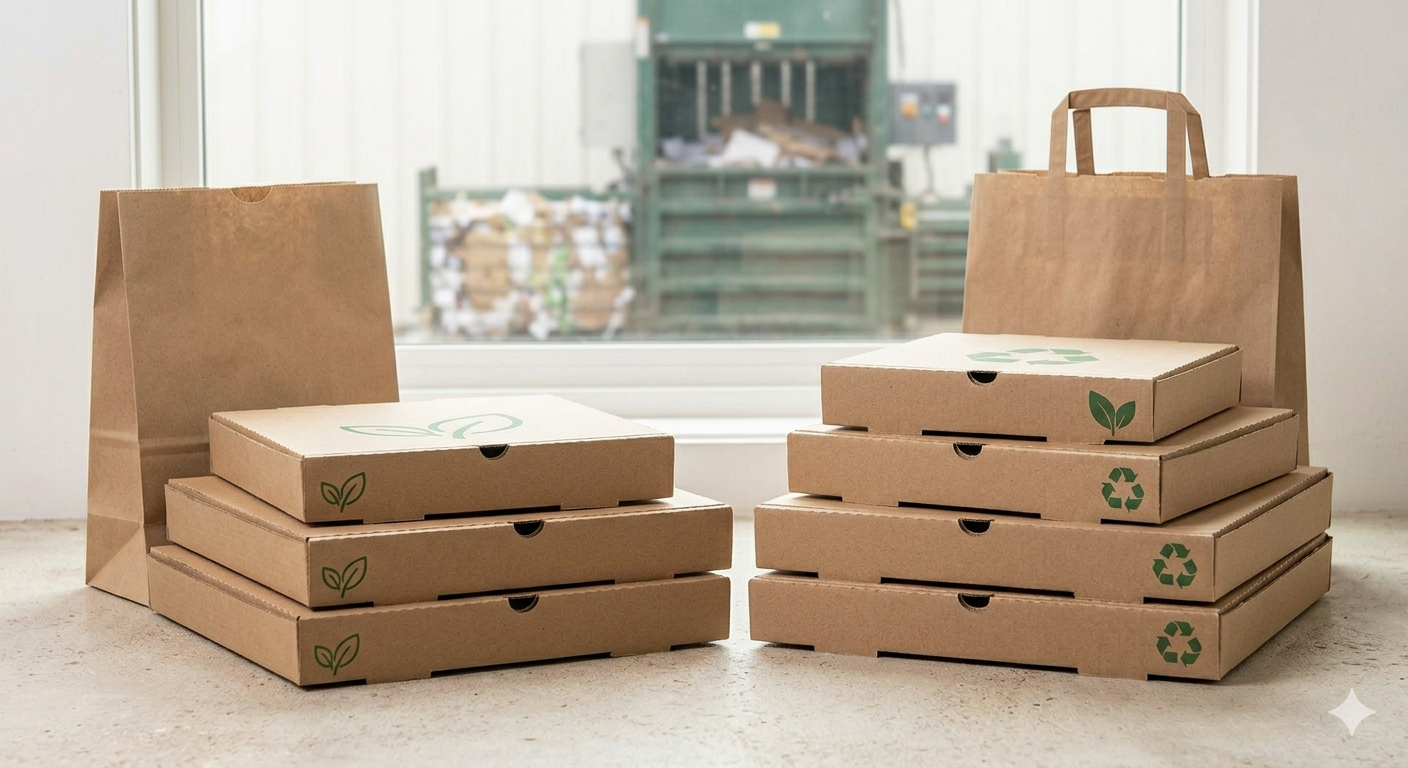
Walk into any warehouse, fulfilment centre, or retail stockroom and you'll see boxes everywhere. But not all boxes are created equal. Two terms that get used interchangeably — often incorrectly — are corrugated box and regular cardboard box. To the untrained eye, they look similar. To a packaging professional, they are fundamentally different products built for different purposes.
Understanding the distinction can save your business money, reduce product damage, and help you make smarter packaging decisions — whether you're choosing between corrugated cardboard, folding boxes, or paper bags.
What Is a Regular Cardboard Box?
A regular cardboard box — more accurately called a paperboard or chipboard box — is made from a single layer of thick, compressed paper pulp. It is flat, rigid, and relatively smooth on the surface. You'll recognise it immediately from everyday products: cereal boxes, shoe boxes, medicine packaging, and cosmetic cartons. These are all examples of regular cardboard, also known as folding boxes or folding cartons in the packaging industry.
Regular cardboard is lightweight, prints beautifully, and folds crisply into neat retail-ready shapes. It is designed primarily for presentation and point-of-sale display — not for the rigours of shipping and transit.
What Is a Corrugated Box?
A corrugated box is an entirely different structure. It is made from corrugated board — a multi-layer material consisting of a wavy, fluted inner layer sandwiched between two flat liner sheets. This fluted core is the defining feature. It creates a series of air columns that give corrugated cardboard its characteristic strength, rigidity, and cushioning ability.
The result is a box that is significantly more durable than regular cardboard — capable of withstanding stacking pressure, rough handling, and the physical demands of a shipping journey. When you order something online and it arrives in a brown shipping box, that is almost certainly a corrugated box.
Key Differences Between Corrugated and Regular Boxes
Structure and Construction
This is the most fundamental difference. Regular cardboard is a single solid layer. A corrugated box has three layers — an outer liner, a fluted medium, and an inner liner — engineered together to create strength through structure rather than sheer material thickness. Cut a corrugated box open along its edge and you will see the distinctive wave pattern of the fluting immediately.
Strength and Durability
Regular cardboard has limited structural strength. It dents, compresses, and loses integrity quickly when wet or under load. A corrugated box, by contrast, is designed to handle compression, impact, and stacking. The fluted core distributes pressure across its surface, making corrugated cardboard many times stronger than an equivalent weight of regular board. For e-commerce, freight, and industrial shipping, corrugated wins decisively.
Weight and Cushioning
The air pockets created by corrugated fluting serve a dual purpose — they keep the box lightweight while simultaneously acting as a natural cushion. This built-in shock absorption protects contents during transit without requiring excessive additional padding. Regular cardboard offers no such cushioning. Fragile items packed in a regular box need significantly more internal protective material to arrive safely.
Print Quality and Aesthetics
This is where regular cardboard — particularly folding boxes — has a clear advantage. The smooth, flat surface of paperboard accepts high-resolution printing exceptionally well, making it the preferred choice for premium retail packaging, cosmetics, and branded gift boxes. Standard corrugated board has a more textured surface that can limit fine print detail, though modern microflute corrugated and litho-laminated boxes have narrowed this gap considerably for brands that need both structural strength and print quality.
Best Use Cases
Regular cardboard and folding boxes shine in retail environments — on shelves, in boutiques, as gift packaging, or for lightweight products that won't be shipped independently. A corrugated box is the right choice whenever a product needs to travel: through courier networks, across international freight routes, or stacked in a warehouse. E-commerce businesses, manufacturers, and logistics operators rely almost exclusively on corrugated packaging for this reason.
Cost Considerations
Regular cardboard is generally cheaper to produce in small quantities and is well-suited to brands ordering retail packaging at moderate volumes. Corrugated boxes carry a slightly higher material cost due to their construction, but deliver far greater value in shipping contexts — where the cost of a damaged product far outweighs any saving made on cheaper packaging. At scale, corrugated is extremely cost-competitive.
What About Paper Bags?
Paper bags occupy a different category altogether. Made from kraft or coated paper, they are flexible, lightweight, and ideal for retail carry-out, gifting, and lightweight products. Paper bags lack the rigid structure of either corrugated or regular cardboard boxes, making them unsuitable for heavy, fragile, or stackable goods. However, for fashion retailers, boutiques, food businesses, and brand activations, paper bags are a sustainable and visually appealing packaging choice that complements a broader packaging strategy.
A well-rounded packaging operation typically uses all three — corrugated boxes for shipping and storage, folding boxes for retail presentation, and paper bags for carry-out and gifting — each chosen for the role it performs best.
Which One Do You Need?
The answer depends entirely on what your packaging needs to do.
If your product is being shipped through a courier or freight network, you need a corrugated box. Full stop. The structural integrity, cushioning, and stacking strength of corrugated cardboard are non-negotiable in a transit environment.
If your product is displayed on a retail shelf or handed directly to a customer in-store, a folding box made from regular cardboard will likely serve you better — offering a cleaner print finish and a more refined visual presentation.
If you are operating a retail boutique, restaurant, or gifting service, paper bags are a practical, on-brand, and eco-friendly complement to your packaging mix.
Final Thoughts
The corrugated box and the regular cardboard box might look similar from the outside, but they are designed for entirely different jobs. Choosing the wrong one is a common and costly mistake — whether that means a regular box that fails in transit, or a corrugated box where a sleek folding box would have created a far stronger retail impression.
Categorias
Leia Mais
In today’s internet-driven world, video streaming has become a regular part of daily life. From tutorials and educational content to movies and entertainment, users rely heavily on online platforms. However, constant streaming isn’t always practical—especially when dealing with slow internet, limited data, or no connectivity. This is where a URL to MP4 converter becomes a...

Netflix is one of the most popular online streaming platforms in the world, offering unlimited access to movies, TV shows, documentaries, and award-winning Netflix Originals. With a simple monthly subscription, users can enjoy high-quality entertainment anytime and anywhere. However, like any digital service, users may sometimes face technical or account-related problems. In such situations,...

In the modern world of sports, fitness, and demanding lifestyles, performance recovery solutions have become essential for maintaining physical and mental well-being. Whether you are an athlete, a gym enthusiast, or someone managing a busy routine, recovery is no longer viewed as optional—it is a critical component of achieving consistent performance. With the right recovery strategies,...

Executive Summary Electronic Display Market: Share, Size & Strategic Insights CAGR Value The global electronic display market size was valued at USD 169.22 billion in 2025 and is expected to reach USD 224.04 billion by 2033, at a CAGR of 3.57% during the forecast period This Electronic Display Market research report is a detailed synopsis on the study of Electronic Display Market...
In today’s hyper-visual digital economy, businesses are under constant pressure to look modern, stylish, and “on trend.” From minimalist logos and pastel palettes to AI-generated visuals and viral social aesthetics, design trends move at lightning speed. But while trend-driven design may generate short-term attention, it rarely builds long-term brand equity. A...