Harmonic Filter Market Forecast 2026–2036: Global Market to Witness Robust Expansion

The global harmonic filter market is set to experience strong growth over the next decade, expanding from approximately USD 1.2 billion in 2026 to around USD 2.4 billion by 2036, registering a CAGR of 7.2%, according to the latest analysis by Future Market Insights (FMI).
Market expansion is being fueled by increasing demand for power quality optimization across industrial, commercial, and utility sectors. The rising adoption of non-linear loads such as variable frequency drives (VFDs), renewable energy systems, and advanced industrial automation equipment is intensifying harmonic distortions in electrical networks, making harmonic filters a critical component in modern power systems.
As industries prioritize energy efficiency, equipment protection, and compliance with stringent grid standards, manufacturers are increasingly integrating advanced harmonic filtering technologies. Both passive and active harmonic filters are gaining traction as essential solutions to ensure stable and efficient power distribution.
Harmonic Filter Market Snapshot (2026–2036)
-
Market size in 2026: USD 1.2 billion
-
Market size in 2036: USD 2.4 billion
-
CAGR (2026–2036): 7.2%
-
Leading filter type: Passive harmonic filters (~60% market share)
-
Key end-use sectors: Industrial manufacturing, utilities, commercial infrastructure
-
Key growth regions: Asia Pacific, North America, Europe
-
Fastest-growing countries: India, China, United States, Germany, Japan
Momentum in the Market
Starting at an estimated USD 1.2 billion in 2026, the harmonic filter market is witnessing accelerated adoption across power-intensive industries. The growing use of automation technologies, electric drives, and renewable integration systems is increasing harmonic pollution, creating sustained demand for filtering solutions.
Between 2026 and 2030, industrial modernization and infrastructure upgrades are expected to drive significant deployment of harmonic filters, particularly in manufacturing hubs and smart grid projects.
From 2030 to 2036, the market is projected to benefit from the expansion of renewable energy systems, electric vehicle charging infrastructure, and digitized power networks. These developments require improved power quality management, further reinforcing the importance of harmonic filtering technologies.
The Reasons Behind the Market's Growth
The harmonic filter market is expanding as industries face increasing challenges related to power quality and grid stability. Harmonic distortions caused by non-linear electrical loads can lead to overheating, equipment malfunction, energy losses, and reduced system efficiency.
Regulatory standards and grid codes are becoming stricter, compelling industries to adopt harmonic mitigation solutions. Compliance with international standards such as IEEE and IEC guidelines is pushing organizations to invest in reliable filtering systems.
Additionally, the transition toward renewable energy sources such as solar and wind is contributing to harmonic generation, as inverter-based systems introduce distortions into the grid. This shift is further strengthening the long-term demand for harmonic filters.
Top Segment Analysis
Filter Type: Passive Harmonic Filters Lead with ~60% Share
Passive harmonic filters dominate the market due to their cost-effectiveness, reliability, and widespread use in industrial applications. These filters are particularly suitable for stable load conditions and large-scale installations.
Active harmonic filters are gaining momentum as well, especially in dynamic environments where load conditions fluctuate. Their ability to provide real-time harmonic correction makes them increasingly attractive in advanced industrial and commercial setups.
End-Use Sector Insights
Industrial Sector Remains the Primary Demand Driver
Industries such as manufacturing, oil & gas, mining, and data centers represent the largest consumers of harmonic filters. The increasing use of automation equipment and power electronics in these sectors significantly contributes to harmonic distortion.
The commercial sector, including hospitals, IT infrastructure, and commercial buildings, is also emerging as a key growth area due to rising dependence on sensitive electronic equipment requiring stable power quality.
Regional Development: Asia Pacific Leads Market Expansion
Asia Pacific continues to dominate the harmonic filter market, supported by rapid industrialization, infrastructure development, and increasing energy demand.
-
India: Strong growth driven by industrial expansion and renewable energy integration
-
China: Significant demand from manufacturing and large-scale infrastructure projects
-
United States: Growth supported by grid modernization and industrial automation
-
Germany: Increasing adoption in advanced manufacturing and energy-efficient systems
-
Japan: Demand driven by high-tech industries and smart grid initiatives
India, in particular, is emerging as a high-growth market due to expanding industrial clusters, government-led electrification initiatives, and increasing investments in power infrastructure.
Challenges, Trends, Opportunities, and Drivers
Drivers
-
Rising demand for power quality and energy efficiency
-
Increasing use of non-linear loads and power electronics
-
Expansion of renewable energy and smart grid infrastructure
Opportunities
-
Growth in active harmonic filtering technologies
-
Integration with smart monitoring and digital power systems
-
Expansion in EV charging infrastructure and data centers
Trends
-
Shift toward intelligent and adaptive filtering systems
-
Adoption of hybrid harmonic filter solutions
-
Increasing focus on energy-efficient and compact designs
Challenges
-
High initial investment costs for advanced filter systems
-
Complexity in system design and integration
-
Need for continuous monitoring and maintenance
Country Growth Outlook (CAGR 2026–2036)
-
India: ~8.0%
-
China: ~7.5%
-
United States: ~6.8%
-
Germany: ~6.5%
-
Japan: ~6.2%
The Competitive Environment
The harmonic filter market is moderately competitive, with key players focusing on technological innovation, product efficiency, and compliance with global standards.
Leading companies include ABB Ltd., Siemens AG, Schneider Electric SE, Eaton Corporation, Mitsubishi Electric Corporation, and General Electric Company. These players are investing heavily in R&D to develop advanced harmonic filtering solutions that cater to evolving industrial requirements and smart grid applications.
Strategic collaborations, product innovation, and expansion into emerging markets remain key growth strategies among market participants.
For a comprehensive strategic outlook, deeper segmentation insights, and detailed competitive analysis, readers can explore the full report on the official Future Market Insights website:
https://www.futuremarketinsights.com/reports/harmonic-filter-market
Categorias
Leia Mais
The Robots Electric Grippers Market was valued at USD 1.2 billion in 2024 and is projected to reach USD 3.5 billion by 2034, registering a CAGR of 11.5%. The latest report, titled ‘Global Robots Electric Grippers Market,’ comprises a profound analysis of the fundamental parameters contributing to the global Robots Electric Grippers market scenario. The research report provides the...

Maintaining strong joint health and healthy skin is essential for a comfortable, active, and confident life. Your joints allow movement, flexibility, and strength, while your skin acts as the body’s protective barrier. When both systems are functioning well, you feel energetic, mobile, and physically comfortable. However, when joint health weakens or skin becomes dry and irritated, daily...

Executive Summary Soil Field Testing Equipment Market: Growth Trends and Share Breakdown The global soil field testing equipment market size was valued at USD 786.19 million in 2024 and is expected to reach USD 1206.55 million by 2032, at a CAGR of 5.50% during the forecast period. Soil Field Testing Equipment Market research report is a verified source of...

When it comes to durability, functionality, and style, Canopy Utes from EZ Toolbox Sydney are the ultimate solution for Australian drivers. Whether you use your Ute for work, travel, or recreation, a well-designed canopy adds a whole new level of practicality and security to your vehicle. Why Choose Canopy Utes for Your Vehicle The right canopy transforms your Ute from a simple transport...

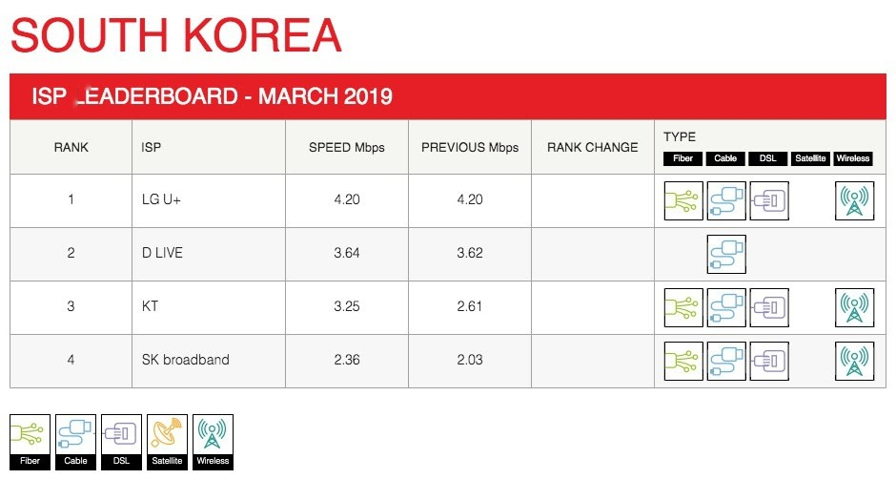
In the latest Netflix ISP Speed Index for March, several internet providers around the globe demonstrated notable improvements in streaming quality during prime time. South Korean ISPs led the charge, with KT showing the most significant jump, increasing its average speed by 0.64 Mbps to reach 3.25 Mbps, up from February’s 2.61 Mbps. Similarly, SK Broadband continued its upward trend,...