


How to Track Your International Freight Shipment in Real Time
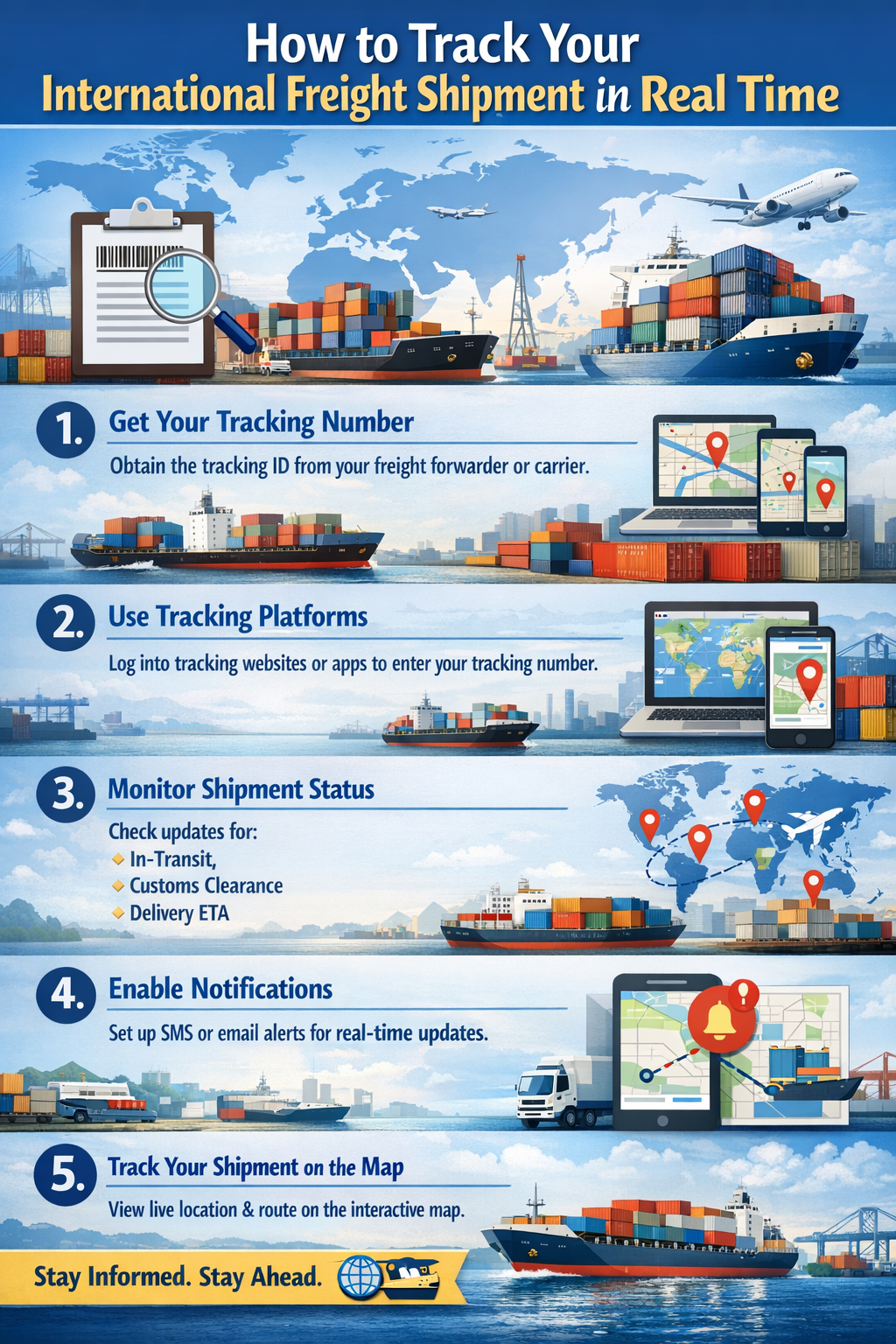
In the modern global economy, the movement of goods across borders is the lifeblood of commerce. Whether you are a business owner awaiting critical inventory or an individual sending a high-value parcel across the ocean, the period between dispatch and delivery can be filled with uncertainty. The complexity of international logistics often involves multiple carriers, customs checkpoints, and various modes of transport. However, the evolution of digital logistics has transformed this "black box" into a transparent process.
Knowing exactly where your cargo is located at any given moment is no longer a luxury; it is a fundamental requirement for efficient supply chain management. Real-time tracking provides the visibility necessary to manage expectations, prepare for arrivals, and mitigate the impact of unforeseen delays. This comprehensive guide explores the mechanisms, technologies, and best practices for monitoring your global shipments. As a key player in the industry, TerraLinkLogistics offers international freight and forwarding services that prioritize this level of transparency for every client.
The Fundamentals of International Shipment Tracking
To effectively monitor a shipment, one must first understand the foundational identifiers used by logistics providers. Every international shipment is assigned a unique series of codes that serve as its digital passport. The most common of these is the tracking number, but in the world of professional freight, the documentation is more specialized.
Understanding Key Identification Documents
For sea freight, the primary document is the Bill of Lading (BoL). This is a legal document between the shipper and the carrier that details the type, quantity, and destination of the goods. For air freight, the equivalent is the Air Waybill (AWB). According to the technical definitions provided by Wikipedia, the Bill of Lading serves as a document of title, a receipt for shipped goods, and a contract of carriage.
To track a shipment in real time, you typically enter the BoL number or the AWB number into the carrier’s tracking portal. These numbers are linked to the physical container or pallet. As the cargo moves through various transit points, such as ports, warehouses, and customs hubs, these identifiers are scanned, and the data is uploaded to a centralized system accessible to the customer.
The Role of Container Numbers
If you are shipping via ocean freight, you will often deal with a Container Number. This is a unique alphanumeric code consisting of four letters (the owner code) and seven digits. By using specialized container tracking websites or the shipping line’s own portal, you can see the specific vessel your container is currently loaded onto. This level of detail allows you to cross-reference the vessel's position using maritime AIS (Automatic Identification System) data, providing a literal map view of your goods on the open sea.
Advanced Technologies Powering Real-Time Visibility
While traditional scanning at checkpoints provides "milestone" tracking, true real-time visibility is achieved through advanced technological integration. The logistics industry has seen a massive influx of investment in Internet of Things (IoT) devices and satellite communication to bridge the gaps in the supply chain.
IoT and Sensor Integration
Modern freight forwarding involves more than just knowing a location. For sensitive cargo, such as pharmaceuticals or perishable food, environmental factors are just as important as geographical coordinates. IoT sensors can be attached to containers to monitor:
-
GPS Location: Precise coordinates updated via satellite.
-
Temperature and Humidity: Critical for cold chain logistics.
-
Shock and Vibration: Identifying if a container was dropped or mishandled.
-
Light Exposure: Detecting if a container was opened prematurely, which is vital for security and theft prevention.
The Impact of AI and Predictive Analytics
Artificial Intelligence is now being used to predict delays before they happen. By analyzing vast amounts of data, including weather patterns, port congestion levels, and historical transit times, AI can provide an "Estimated Time of Arrival" (ETA) that is far more accurate than traditional estimates. Forbes highlights that AI-driven supply chain tools are helping companies reduce shipping costs and improve reliability by identifying bottlenecks in real time. This proactive approach allows freight forwarders to reroute shipments or notify customers of delays days in advance.
Navigating the Challenges of Global Transit
Even with the best technology, international shipping is subject to external forces. Understanding these challenges helps shippers interpret tracking data more effectively.
Customs Clearance and Documentation
One of the most frequent points of "stalled" tracking is the customs office. When a shipment reaches a border, it must be cleared by local authorities. If the tracking status shows "Held in Customs" or "Regulatory Review," it does not necessarily mean there is a problem. It simply means the documentation is being verified. Efficient freight forwarders ensure that all paperwork is filed correctly in advance to minimize these pauses.
Port Congestion and Transshipment
Sometimes, a shipment might appear to be stationary for several days at a major hub like Singapore or Rotterdam. This is often due to transshipment, where a container is moved from one vessel to another. During peak seasons, port congestion can lead to "vessel skipping," where a ship bypasses a scheduled port to stay on schedule, leaving containers to wait for the next available slot. Real-time tracking allows you to see if your cargo has been "rolled" to a later voyage.
Best Practices for Successful Freight Monitoring
To ensure you are getting the most out of your tracking tools, follow these professional strategies:
-
Consolidate Your Tracking: If you are managing multiple shipments across different carriers, use a third-party tracking aggregator. These platforms pull data from hundreds of airlines and shipping lines into a single dashboard.
-
Enable Automated Alerts: Most modern tracking systems allow you to sign up for email or SMS notifications. This ensures you are alerted the moment a "Milestone" is reached, such as "Arrival at Port" or "Out for Delivery."
-
Verify the Mode of Transport: Ensure you are using the correct portal. Tracking a flight on a maritime website will yield no results.
-
Communicate with Your Forwarder: Technology is a tool, but human expertise is irreplaceable. If a tracking status is unclear, your freight forwarder can provide context that a computer script cannot.
Recent reports in Google News indicate that the industry is moving toward a standard of "Universal Visibility," where different logistics providers share data more freely to create a seamless tracking experience for the end user. This trend is significantly reducing the instances of "lost" cargo in the global network.
Conclusion
Tracking an international freight shipment in real time is a combination of utilizing the right documentation, leveraging cutting-edge IoT technology, and understanding the nuances of global trade routes. By staying informed and using the digital tools available today, you can transform the logistics process from a source of stress into a streamlined, predictable part of your operations.
Managing complex global movements requires a partner who understands the value of transparency. TerraLinkLogistics offers international freight and forwarding services designed to keep you connected to your cargo at every stage of its journey. Whether you are navigating customs in Europe or shipping bulk goods across the Pacific, having a professional team and robust tracking systems at your disposal is the key to success.
Nach Verein filtern
Read More
Montessori Academy Near Me – Find the Right Place for Quality Teacher Training and Early Childhood Education Searching for a Montessori Academy Near Me is often the first step for parents seeking quality education for their children or aspiring educators looking to build a career in early childhood teaching. Montessori academies are known for their child-centered learning...

In today’s competitive digital environment, businesses need more than just an online presence—they need websites that convert visitors into customers. As I have research, companies that invest in conversion-driven websites experience higher engagement, better lead generation, and improved revenue growth. A well-designed website acts as a powerful marketing tool that not only...

EFRAG has expanded its digital sustainability reporting infrastructure for small and medium enterprises by launching a multilingual VSME template and its accompanying XBRL taxonomy. This development directly affects how SMEs across Europe report environmental, social and governance (ESG) data, aiming to improve accessibility, consistency, and regulatory alignment. The primary keyword for this...

Online card gaming has become one of the fastest-growing entertainment categories in India. With increasing smartphone usage, better internet connectivity, and the popularity of digital gaming platforms, more users now prefer online card games for entertainment and interactive gameplay. Modern players look for platforms that provide smooth usability, mobile-friendly access, responsive...

Introduction Over the last few years, investor interest has steadily shifted from traditional residential plots to Logistics Park Land, driven by real demand from warehousing, supply chains, and distribution-led businesses. This shift is less about short-term gains and more about an infrastructure-backed utility. In professional advisory discussions and site-level...
