


ChaiFi (CHAI) Announces Massive Airdrop for BNB Chain Community
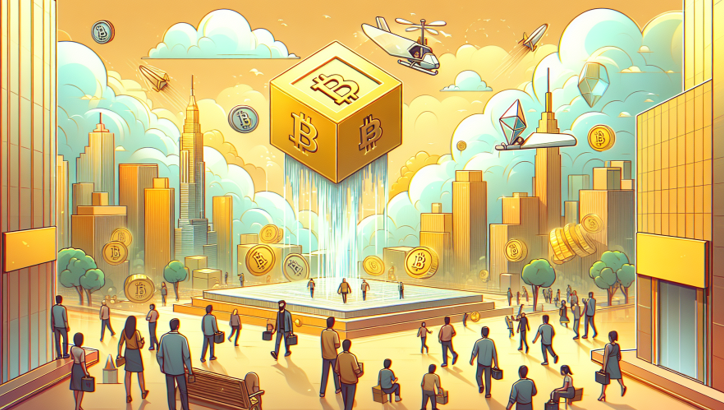
Airdrops in 2026 are a dime a dozen. Most are forgettable. But the ones that work — really work — still do something no other distribution mechanism can: they put governance tokens directly into the hands of people who'll actually use them.
ChaiFi just announced a large-scale CHAI airdrop targeting active BNB Chain participants. The project bills itself as community finance — financial tools built collectively by participants rather than handed down by a centralized team. The airdrop is how they plan to bootstrap that community from day one.
Community finance, explained
CHAI holders don't just vote on protocol upgrades (the bare minimum for "governance" these days). They shape the actual parameters — lending rates, collateral requirements, yield distribution formulas. Granular, hands-on control over the financial products themselves.
The platform plans community-managed lending pools, collaborative yield strategies, and group investment vehicles that let smaller holders access opportunities usually reserved for whales. Smart contracts enforce transparent rules for pooled funds. Every decision, allocation, and distribution gets recorded on-chain.
The idea isn't new. Blockchain just makes it enforceable without trusting a middleman.
Airdrop eligibility
The team kept some criteria under wraps to prevent gaming, but here's what's confirmed: you need real engagement with BNB Chain. Meaningful transaction history on DEXs, participation in other DeFi protocols, activity in ChaiFi community channels. Bot wallets and sybil addresses get filtered aggressively.
Distribution follows tiers — more engaged participants get larger allocations. The goal is getting tokens to people who'll actually use the platform, not mercenaries who claim and dump immediately.
The snapshot period is still ongoing. Current activity counts. Engaging with the project's social channels and community discussions contributes to eligibility scoring.
Why this airdrop might actually matter
The difference between airdrops that create lasting communities and ones that crash on day two comes down to one thing: post-claim utility. Tokens with no purpose after claiming always dump. Tokens that unlock access to something genuinely useful create sticky holders.
ChaiFi ties the airdrop directly to platform governance and financial tool access. Receive CHAI, and you can immediately participate in shaping lending pools and yield strategies. That's a reason to hold.
BNB Chain makes the mechanics work
Claiming tokens, interacting with contracts, making your first trades — all fractions of a cent on BNB Chain. On higher-fee networks, small airdrop allocations can cost more in gas to claim than they're worth. That friction kills participation from exactly the people a community finance project needs most: smaller holders.
Liquidity after distribution
CHAI trades on PancakeSwap post-airdrop. The team committed to a robust initial pool and indicated that liquidity will be managed through liquidity locker with on-chain verification against premature withdrawal.
This matters more than usual in an airdrop context. When thousands of new holders receive tokens simultaneously, deep and secure liquidity prevents the chaotic price action that destroys confidence before the platform even ships its core products.
Roadmap
Community lending pool launch with governance-controlled parameters. Collaborative yield strategies for resource pooling. Cross-chain expansion. Partnership integrations with established BNB Chain protocols.
The gap it fills
Most DeFi platforms cater to sophisticated users with significant capital. Smaller participants get priced out of the best opportunities or take on disproportionate risk. Pooling resources and decisions levels that playing field. The airdrop distributes governance power widely so the platform develops according to community needs rather than insider priorities.
That's the theory. The execution starts now.
Nach Verein filtern
Read More
Pink Palm Puff is a clothing brand known for fresh daily wear. The brand focuses on shirts, hoodies, and other needed items. Many people choose this brand for daily use and light outings. The brand gives close care to fabric choice and sizing. Each item aims to match daily life needs. The brand keeps its range clear and easy to pick from. Pink Palm Puff also keeps prices in a fair range for...

The Ganga Club Game is a term that many online gaming enthusiasts search for today. People are interested in learning about its features, gameplay options, user experience, and the reasons behind its growing popularity. Whether you are a beginner or an experienced mobile gamer, understanding the basics of the Ganga Club Game can help you decide whether it matches your gaming interests. In...

Safety is paramount in any industrial setting, and custom equipment offers the opportunity to integrate safety features that go beyond the minimum requirements. A Custom Washer handles hazardous elements: scalding water, aggressive chemicals, high voltage, and moving mechanical parts. Protecting operators from these risks is a critical part of the design process. This involves physical...
Whether you're a business traveller rushing in for a morning meeting, a couple planning an intimate engagement ceremony, or a family looking for a comfortable overnight stay near Patna Junction — finding the right place at the right price in Patna can feel overwhelming. The city is growing fast, and so is the demand for quality accommodation and event spaces. That's where Hotel...

Introduction Smartphones have become the primary device for accessing digital platforms, especially among cricket enthusiasts who want instant access to online services throughout the day. Whether following international tournaments, domestic leagues, or seasonal cricket competitions, users expect mobile applications to deliver fast performance, intuitive navigation, and reliable functionality...
