


The Science of Sound and Color: Why Your Senses Are Less Accurate Than You Think
We rely on our senses to navigate every second of our lives. We assume our ears can perfectly distinguish a high-pitched whistle and our eyes can unfailingly identify a specific shade of crimson. However, cognitive science tells a different story. Our "echoic" (sound) and "iconic" (visual) memories are incredibly short-lived, often fading or becoming distorted within just a few seconds of the original stimulus.
This gap between what we think we remember and what we actually remember is exactly what makes sensory training so fascinating. While many brain games focus on logic or vocabulary, a new wave of interactive tools is shifting the focus back to the raw, analog precision of our biological hardware.
Decoding the Sound and Color Challenge
What makes the experience on Dialed GG unique is its commitment to scientific accuracy. It doesn't just ask you to "guess"; it requires you to recreate a stimulus from a blank slate.
In the Sound Mode, the platform utilizes the ERB (Equivalent Rectangular Bandwidth) psychoacoustic model. This is crucial because human hearing is non-linear—we perceive pitch changes differently at low frequencies than we do at high ones. By using this model, the game ensures that your score reflects true perceptual accuracy rather than just mathematical distance. Similarly, the Color Mode challenges you to manipulate Hue, Saturation, and Brightness (HSB) to match a target color you saw only moments before, exposing how quickly our visual memory starts to "blur" colors together.
Frictionless Social Competition
Beyond the science, the real draw of these challenges is their accessibility. In an era of heavy app downloads and mandatory sign-ups, Dialed GG stands out by offering a completely "zero-friction" environment. You can jump into a Solo round to test your own limits or host a Multiplayer room for up to 50 people to see who among your friends truly has "perfect pitch" or an "artist's eye."
With over 10 million plays recorded, it’s clear that there is a deep-seated curiosity about the limits of our own perception. Whether you’re an audiophile, a digital artist, or simply someone who enjoys a quick mental reset during a break, these bite-sized challenges provide a powerful (and often humbling) look into how your brain processes the world around you.
Conclusion
Our sensory memory is like a muscle—the more you challenge it, the more refined your perception becomes. Instead of taking your eyes and ears for granted, why not put them to a precise, scientifically-scored test?
If you're ready to see how "dialed in" your senses actually are, you can start playing these minimalist sensory perception games right now in your browser. It only takes a few seconds to discover if your memory is as sharp as you think, or if your senses have been playing tricks on you all along.
Categorie
Leggi tutto
🌉 Savory Slices and Scenic Views: Best Pizza in Marin North of San Francisco, Marin County is popular for its stunning views and food. And beyond the rolling hills and redwoods, some of the best pizza in Marin is nestled. Be it deep-dish or thin crust. Marin County has you covered. 🔥 Marin County Pizza Difference Marin is known for its comforting pizza places and is different from the fast...
In 2025, online privacy and unrestricted access to global content are more important than ever. Whether you’re streaming Netflix, downloading torrents, or simply browsing securely, choosing the best VPN in Canada can make all the difference. A VPN (Virtual Private Network) encrypts your data, hides your IP address, and keeps your online activity private — all while unlocking...

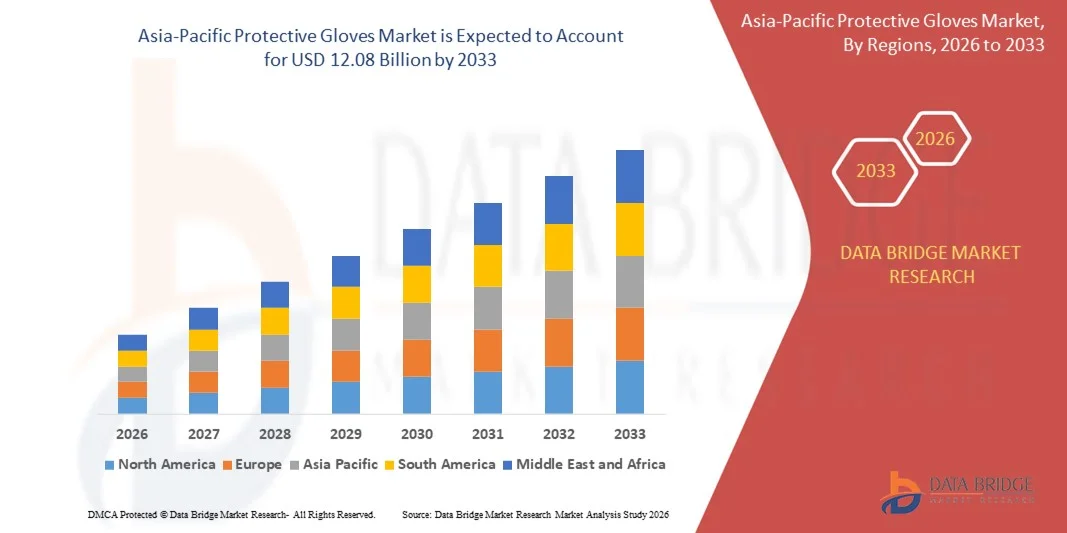
"Executive Summary Asia-Pacific Protective Gloves Market: Growth Trends and Share Breakdown CAGR Value The Asia-Pacific protective gloves market size was valued at USD 6.67 billion in 2025 and is expected to reach USD 12.08 billion by 2033, at a CAGR of 7.70% during the forecast period This global Asia-Pacific Protective Gloves Market research report...
"Regional Overview of Executive Summary Baby Feeding Bottle Market by Size and Share Global baby feeding bottle market is expected to gain market growth in the forecast period of 2022 to 2029. Data Bridge Market Research analyses that the market is growing at a CAGR of 5.8% in the forecast period of 2022 to 2029 and is expected to reach USD 4,377,641.88 thousand by 2029. The...
Le casino en ligne france a révolutionné l’industrie du jeu grâce à l’innovation numérique et à la flexibilité qu’il offre aux joueurs. Les plateformes modernes combinent technologie, sécurité et diversité des jeux pour créer une expérience immersive et engageante. Comprendre les tendances...