


Private vs Commercial Pilot License: Why CPL, PPL, and Instrument Rating Matter for Your Aviation Career
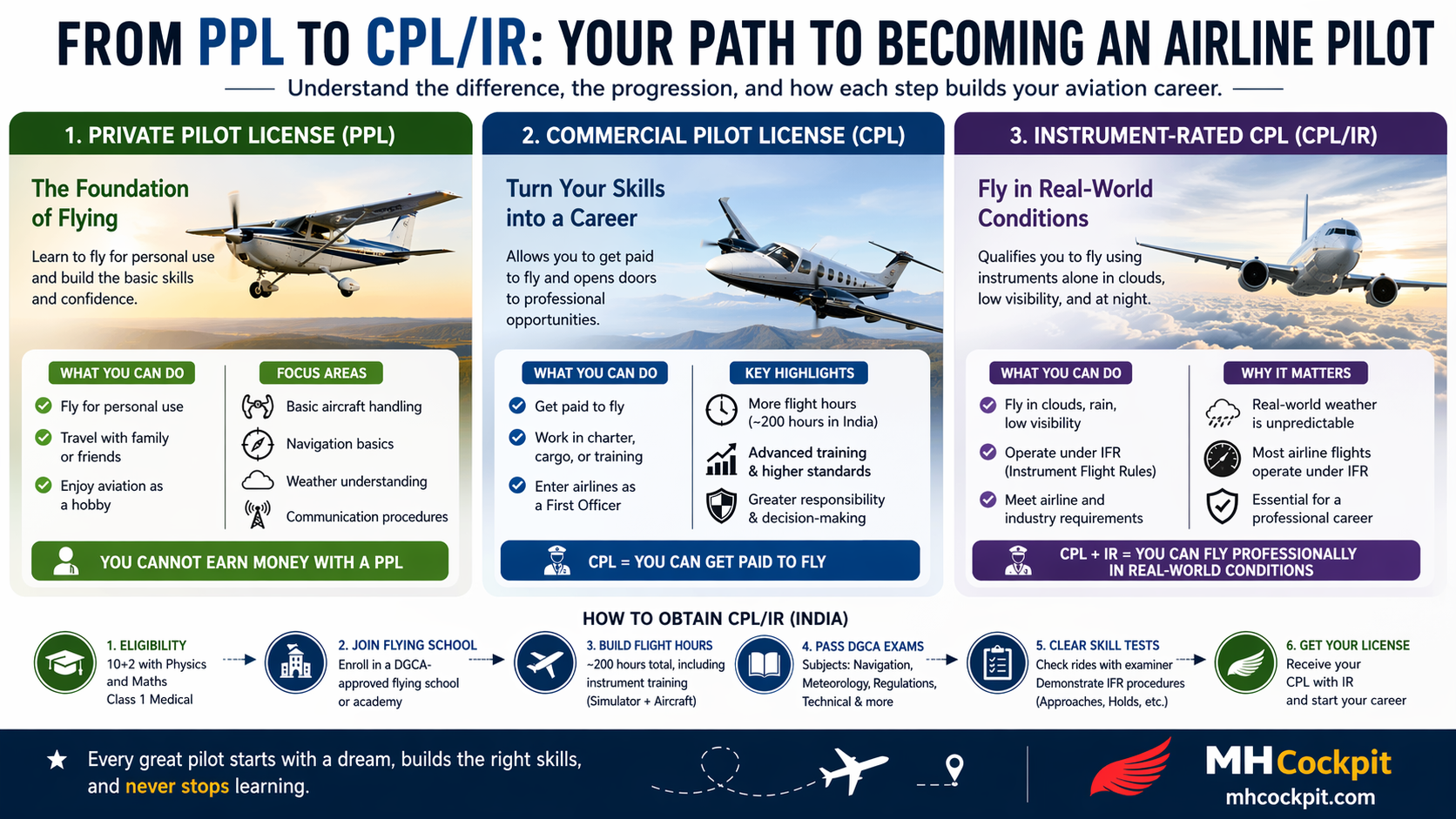
If you’re exploring a career in aviation, you’ve probably come across terms like Private Pilot License (PPL), Commercial Pilot License (CPL), and Instrument Rating (IR). At first glance, they can feel confusing or even interchangeable. But in reality, they represent different stages of skill, responsibility, and career progression.
Understanding how they connect is essential if your goal is to move from learning to fly all the way to becoming a professional pilot.
Private Pilot License (PPL): The Foundation of Flying
A Private Pilot License (PPL) is where everything begins. It’s designed to teach you the fundamentals of flying and build your confidence in the cockpit.
With a PPL, you can:
- Fly aircraft for personal use
- Travel with friends or family
- Build basic aviation experience
However, there’s one major limitation—you cannot earn money as a pilot with a PPL.
At this stage, the focus is on:
- Aircraft handling
- Navigation basics
- Weather understanding
- Communication procedures
Think of PPL as the stage where you learn how to fly safely and independently, but not professionally.
Commercial Pilot License (CPL): Turning Skill into a Career
A Commercial Pilot License (CPL) is what transforms flying from a passion into a profession.
With a CPL, you can:
- Get paid to fly
- Work as a pilot in charter, cargo, or training roles
- Enter airline pathways as a First Officer
Compared to PPL, CPL involves:
- More flight hours (typically around 200 hours in India)
- Advanced training and stricter standards
- Greater emphasis on precision and decision-making
This is where aviation becomes a career with responsibility, not just an experience.
Why Do Pilots “Need Both”?
A common misconception is that pilots must separately obtain both PPL and CPL.
In reality, it’s more accurate to say:
- PPL skills are the foundation
- CPL builds on that foundation
In many training programs, especially in India, you can enroll directly into a CPL course where PPL-level training is included within the curriculum.
So you don’t pursue them as two separate end goals—you progress from basic to professional training as part of a continuous journey.
What Is an Instrument-Rated CPL (CPL/IR)?
Once you move toward professional aviation, just having a CPL is not enough. This is where Instrument Rating (IR) becomes critical.
An instrument-rated CPL means:
- You are licensed to fly commercially
- You are also trained to fly using instruments alone, without relying on outside visibility
This is essential because real-world flying often involves:
- Clouds and poor visibility
- Night operations
- Complex airspace conditions
With IR, you can operate under Instrument Flight Rules (IFR), which is how most airline flights are conducted.
In simple terms:
CPL = You can get paid to fly
CPL + IR = You can fly professionally in real-world conditions
How to Obtain a CPL with Instrument Rating (India)
The journey to becoming an instrument-rated commercial pilot typically follows these steps:
- Complete 10+2 with Physics and Maths
- Clear a DGCA Class 1 medical examination
- Join a DGCA-approved flying school or academy
- Build around 200 flight hours, including instrument training
- Pass DGCA theory exams (Navigation, Meteorology, Regulations, Technical)
- Complete skill tests and check rides
After this, you receive your CPL with Instrument Rating, which qualifies you for professional flying roles.
Many pilots also clear ATPL theory exams during or after this phase, setting themselves up for future career growth.
Why This Progression Matters
Each stage—PPL, CPL, and IR—adds a layer of capability:
- PPL builds confidence and basic flying skills
- CPL builds professional competence
- IR prepares you for real-world airline operations
Skipping the importance of any stage can create gaps in your training.
That’s why modern aviation training focuses not just on completing hours, but on building industry-ready pilots. Programs aligned with MH Cockpit (mhcockpit) emphasize this approach by combining strong fundamentals with practical exposure to airline-style operations.
Final Take
If you’re serious about aviation, don’t think of these as separate licenses to choose from. Think of them as steps in a structured journey:
- Learn to fly (PPL foundation)
- Become a professional pilot (CPL)
- Become operationally ready (Instrument Rating)
The real goal isn’t just to earn a license—it’s to become a pilot who is confident, capable, and ready for real-world flying.
Κατηγορίες
Διαβάζω περισσότερα
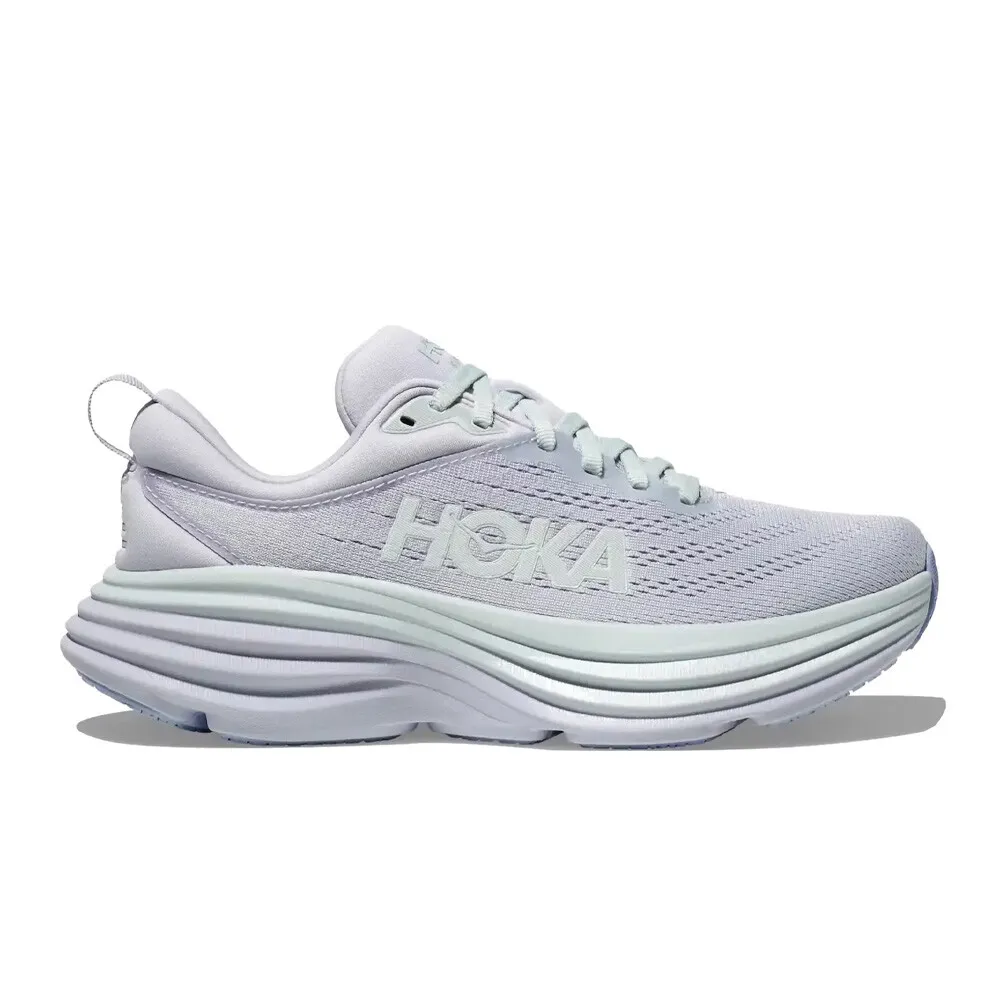
In the evolving world of performance footwear, one brand has redefined what runners and walkers expect from their shoes — Hoka Shoes. Known for oversized midsoles, ultra-light cushioning, and smooth ride technology, Hoka has transitioned from a niche ultramarathon brand into a global leader in comfort-driven performance footwear. As we move through 2026, models like the Bondi 8, Clifton...
When it comes to timeless jewelry that combines elegance, affordability, and everyday luxury, the 925 Sterling Silver Round Gemstone and White Topaz Necklace with 16 Inch Chain stands out as a must-have accessory. Crafted with sparkling white topaz accents and premium sterling silver, this gemstone necklace adds sophistication to every outfit — whether you’re dressing for a casual...

The ICC T20 World Cup 2026 is set to capture global attention with fast-paced cricket, high-pressure games, and intense rivalries. Fans across regions are already tracking schedules, team preparations, and venue details. Cricbet99 brings a focused way to follow the tournament by presenting upcoming matches in a clear and organized format that suits both regular followers and casual viewers....

Have you noticed your clothes taking longer to dry, or a musty smell lingering after laundry day? These issues are often linked to lint buildup inside the dryer vent. Many homeowners are now turning to an unexpected tool for the job: a leaf blower. But how do you properly use a leaf blower for dryer vent cleaning? Why It Matters A clogged dryer vent does more than slow down drying cycles. It...

" According to the latest report published by Data Bridge Market Research, the Childcare Software Market Data Bridge Market Research analyses that the childcare software market was valued at USD 174.56 million in 2021 and is expected to reach the value of USD 324.78 million by 2029, at a CAGR of 8.07% during the forecast period. This Childcare Software Marketdocument provides...
