SaaS Contract Tips for Risk-Free Agreements | WNS Procurement
SaaS Contracts in 2026: How AI Is Transforming Negotiation and Drafting
The Evolution of SaaS Contracts in 2026
In 2026, the structure and management of saas contracts are undergoing a fundamental transformation driven by artificial intelligence. What was once a manual, time-intensive process involving legal teams, procurement professionals, and multiple negotiation cycles is now increasingly augmented by intelligent systems. These technologies are not replacing human expertise but enhancing it—allowing organizations to move faster, reduce risk, and extract greater strategic value from agreements.
AI’s growing role reflects a broader shift in contract lifecycle management, where automation, data intelligence, and predictive capabilities are becoming central to how agreements are created, negotiated, and maintained.
AI-Powered Drafting: Speed Meets Precision
One of the most visible impacts of AI is in contract drafting. Generative AI tools can now produce high-quality first drafts in a fraction of the time it traditionally took. Reports indicate that AI-assisted drafting can accelerate initial contract creation by up to 90%, while maintaining legal consistency and structure.
These systems rely on pre-trained legal models, historical contract data, and organizational templates to generate context-aware clauses. They can adapt language based on jurisdiction, industry requirements, and risk tolerance, ensuring that drafts are not only fast but also aligned with compliance standards.
However, drafting is no longer just about speed. AI introduces a layer of intelligence that enables continuous improvement. By analyzing past contracts and outcomes, systems can recommend optimized clause structures, reducing ambiguity and strengthening enforceability.
Transforming Negotiation Through Intelligence
Negotiation is another area where AI is reshaping traditional practices. Instead of relying solely on human judgment and experience, organizations now leverage AI to generate negotiation strategies, benchmark terms, and simulate outcomes.
AI-driven tools can analyze thousands of comparable agreements to identify market standards for pricing, service levels, and liability terms. This allows procurement and legal teams to enter negotiations with data-backed insights rather than assumptions.
More advanced systems are beginning to support semi-autonomous negotiation by suggesting counteroffers, highlighting risk exposures, and even executing predefined negotiation scenarios within approved boundaries. This reduces cycle times and ensures consistency across agreements.
At the same time, human oversight remains essential. Negotiation involves nuance, relationship management, and strategic trade-offs—areas where human judgment continues to play a critical role.
From Reactive to Predictive Contract Management
AI is also shifting contract management from a reactive to a predictive function. Traditional approaches focused on storing documents and tracking milestones. In contrast, modern AI-enabled systems actively monitor contracts, extract key clauses, and provide real-time risk assessments.
Predictive analytics allows organizations to anticipate issues such as renewal risks, cost escalations, or compliance gaps before they materialize. This proactive approach enhances decision-making and ensures that contracts deliver their intended value throughout their lifecycle.
Additionally, AI-powered dashboards provide visibility into contract performance, enabling stakeholders to align agreements with broader business objectives.
The Rise of Agentic AI and Autonomous Workflows
A defining trend in 2026 is the emergence of agentic AI—systems capable of taking autonomous actions within defined parameters. These tools can manage workflows, trigger approvals, and ensure compliance without constant human intervention.
In the context of contracts, agentic AI can track deadlines, flag deviations, and initiate renegotiations based on predefined rules. This represents a shift from static documents to dynamic, self-managing agreements.
While the potential is significant, organizations must implement strong governance frameworks to ensure accountability, transparency, and ethical use of AI.
Balancing Innovation with Risk and Governance
Despite its advantages, AI in contract drafting and negotiation introduces new challenges. Issues such as data quality, model accuracy, and regulatory compliance must be carefully managed. Legal professionals are increasingly required to understand the capabilities and limitations of AI systems, ensuring outputs are validated and contextually appropriate.
Κατηγορίες
Διαβάζω περισσότερα
The Air Cargo Services Market is experiencing strong growth, driven by expanding e-commerce, globalization of trade, demand for time-sensitive shipments, and advancements in logistics technology. According to Business Market Insights, the market was valued at USD 177.42 billion in 2024 and is expected to reach USD 333.64 billion by 2033, registering a CAGR of...

A streamer's tournament exclusion has sparked an unexpected career surge. Removed from a high-stakes competitive event over a team disagreement, he has since witnessed his community support skyrocket. Viewer donations and new subscriptions quickly surpassed the prize money he originally stood to win. His channel achieved Partner status, unlocking new features and revenue streams. Even the...
The precise structural engineering, load calibration, and multi-layered sub-grade stabilization required to install custom concrete driveways across North County San Diego require absolute hardscaping mastery. Across Carlsbad, Oceanside, Vista, San Marcos, and Encinitas, residential and commercial structural driveways face intense environmental and physical loads. Shifting coastal water tables,...

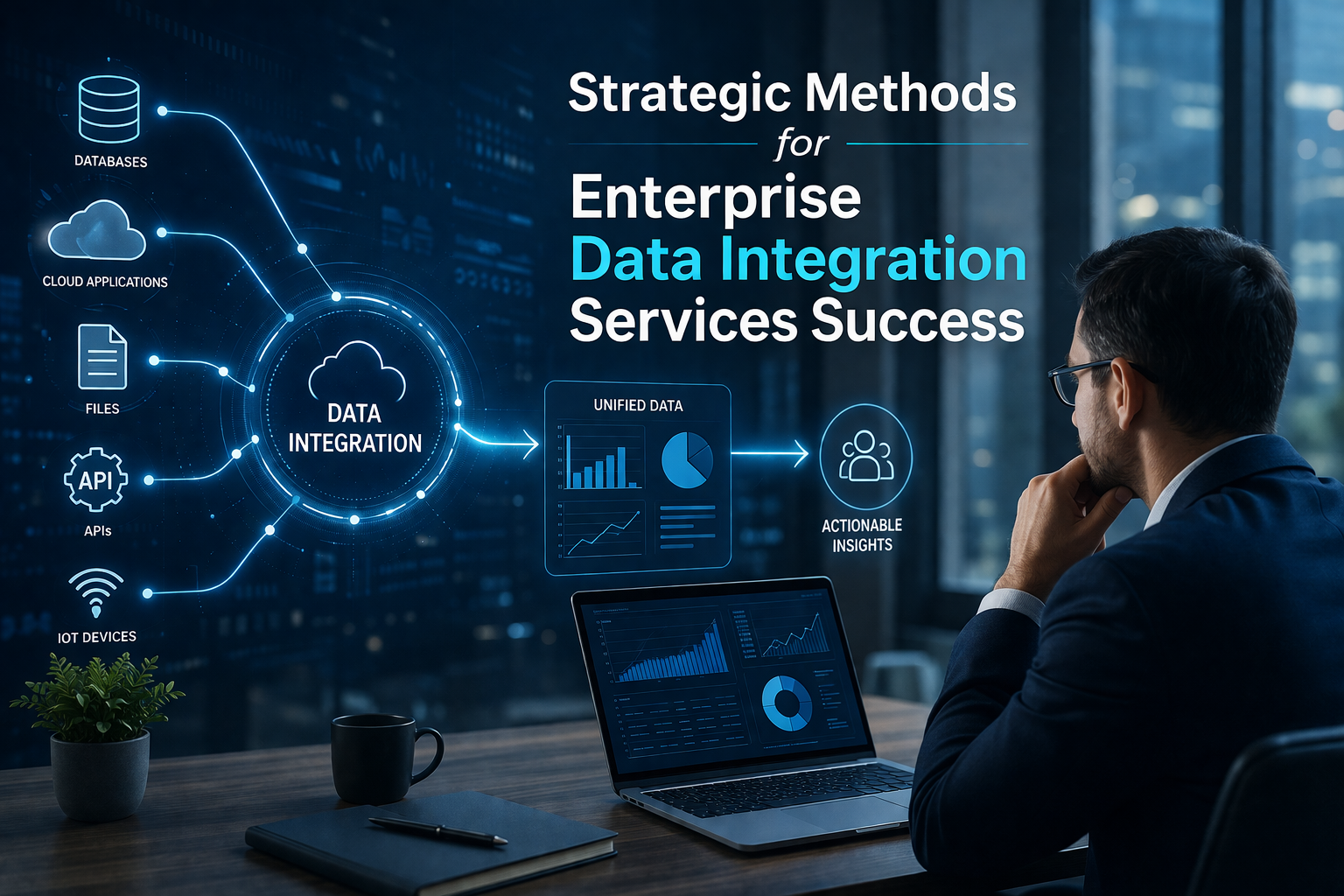
Introduction In the current hyper-connected commercial environment, the ability to unify disparate information streams is the primary differentiator between market leaders and those struggling to keep pace. Most large-scale organizations operate across a fragmented landscape of legacy systems, modern cloud applications, and localized databases that rarely communicate effectively on their own....
These days, simply having an academic degree is usually not enough to make a successful career. Practical skills, technical knowledge and job-oriented skills are what employers search for nowadays. This is where the advanced training programs comes to action. They're intended to build upon previous knowledge and prepare someone for more specialized roles in different...