What is a Conoscope Lens? Expert Guide | ARVR Optical
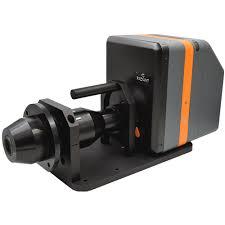
In the world of high-end display manufacturing, precision is everything. Whether it is a smartphone, an automotive dashboard, or a cutting-edge VR headset, engineers must ensure that colors and brightness remain consistent from every viewing angle. This is where the conoscope lens becomes an indispensable tool. Unlike standard lenses that capture a spatial image of an object, a conoscope lens captures the angular distribution of light.
At ARVR Optical, we specialize in the optical components that make advanced testing possible. As displays become more complex—especially with the rise of Micro OLED and Mini LED technology—the need for accurate angular analysis has skyrocketed. In this guide, we will break down the science of the conoscope lens in simple terms, explaining why it is the heartbeat of modern display metrology.
What is a Conoscope Lens?
To understand a conoscope lens, you first have to understand how we normally see. A standard camera lens shows you "what" is at a certain point in space. A conoscope lens (often called a Fourier transform lens) shows you "where" the light is going.
Technically speaking, a conoscope lens maps every emission angle from a single point on a display to a specific location on a camera sensor. This allows a manufacturer to measure the brightness (luminance) and color (chromaticity) of a display from +60°, +80°, or even higher angles—all in a single snapshot. Without this lens, a robot would have to physically move a light meter around the screen, a process that takes hours instead of seconds.
How Does a Conoscope Lens Work?
The "magic" of a conoscope lens lies in its ability to perform a physical Fourier transform.
-
Angle to Position: Light rays leaving a display at the same angle, regardless of where they start, are focused by the lens onto the same spot on the sensor.
-
Wide Numerical Aperture (NA): A high-quality conoscope lens from ARVR Optical features a very high Numerical Aperture. This allows the lens to "collect" light from very steep angles, providing a complete 2D map of the display’s performance.
-
Instant Mapping: The resulting image is a circular map where the center represents light looking straight ahead (0°), and the edges represent the furthest viewing angles.
[Image suggestion: A diagram showing light rays from a display being mapped to a sensor via a conoscope lens]
Why It Is Essential for AR/VR and Automotive Tech
The demand for conoscope lens technology has shifted from the laboratory to the production line, driven largely by two industries:
1. Augmented and Virtual Reality (AR/VR)
In a VR headset, your eye is positioned very close to the screen. Because your eye moves, you see the pixels from many different angles. If the display loses brightness or shifts color at an angle, the immersion is ruined. ARVR Optical provides conoscope solutions specifically tuned to measure these "near-eye" parameters, ensuring a perfect visual experience.
2. Automotive Displays
Modern cars feature curved screens and "pillar-to-pillar" displays. A driver sees the center console from a sharp side angle. Manufacturers use a conoscope lens to ensure that the navigation map and speedometers are clearly visible and color-accurate from the driver's perspective, even in bright sunlight.
Technical Specifications: What Experts Look For
If you are a professional sourcing a conoscope lens, certain specifications are non-negotiable. At ARVR Optical, we focus on:
-
Field of View (FOV): Most standard conoscope lenses offer a ±60° or ±80° measurement range. For specialized optics, we push these boundaries even further.
-
Working Distance: This is the gap between the lens and the display. In AR/VR testing, a small working distance is often required to simulate the human eye's position.
-
Angular Resolution: How many data points can the lens capture? High-resolution conosocopes allow for the detection of tiny artifacts or "flicker" at specific angles.
-
Spectral Range: Does the lens maintain accuracy across the entire visible spectrum (400nm to 700nm)? Our lenses are color-corrected to prevent "fringing" at high angles.
Conoscope Lens vs. Goniophotometer
A common question we receive at ARVR Optical is: "Why not just use a goniophotometer?"
-
Goniophotometer: This is a mechanical arm that rotates a sensor around a light source. It is extremely accurate but very slow. It is best for testing individual light bulbs or large light fixtures.
-
Conoscope Lens: It is a "solid-state" measurement tool. No moving parts are required. It is thousands of times faster, making it the only viable choice for testing thousands of displays per day on a manufacturing line.
The Challenges of Conoscope Design
Designing a conoscope lens is one of the hardest tasks in optoelectronics. Because the lens must capture light from extreme angles, it is prone to "stray light" and internal reflections.
ARVR Optical solves this through proprietary anti-reflective (AR) coatings and precision-machined internal baffles. We ensure that the light you see on the sensor is exactly what is coming from the display, with no "ghosting" or distortion.
The Future: Micro-Conoscopes and AI Metrology
As we move through 2026, the trend is toward miniaturization. We are developing "Micro-Conoscopes" that can be integrated directly into a headset for real-time calibration. Additionally, AI algorithms are now being used to analyze the complex 2D maps produced by these lenses, automatically identifying defects in OLED layers before the product ever reaches a consumer.
Conclusion: Precision Starts with ARVR Optical
The conoscope lens is a bridge between engineering theory and visual reality. It allows us to quantify "quality" in a way that is repeatable and incredibly fast. As displays continue to evolve into more immersive and curved formats, the role of angular measurement will only grow in importance.
At ARVR Optical, we are committed to providing the industry with the highest grade of conoscope lenses and optical testing equipment. We don't just help you see your display; we help you understand every ray of light it emits. Whether you are in the R&D phase or high-volume manufacturing, trust ARVR Optical to deliver the clarity and precision your project deserves.
Categorias
Leia mais
In 2026, the restaurant industry is under more scrutiny than ever before. With increasing consumer awareness, stricter inspections, and the rapid spread of online reviews, cleanliness has become a defining factor in a restaurant’s success. For restaurant owners in Nashville, maintaining compliance with health codes is not just about passing inspections—it’s about protecting...
You can improve daily life and mental health by combining targeted therapies, skills training, environmental accommodations, and practical supports tailored to your needs and goals. Many autistic adults experience meaningful gains when interventions focus on reducing real-world friction—boosting communication, managing sensory needs, and building routines that fit your life through...

"Detailed Analysis of Executive Summary Digital Health Market Size and Share Data Bridge Market Research analyses that the global digital health market which was USD 255.87 billion in 2022, is expected to reach USD 565.23 billion by 2030, and is expected to undergo a CAGR of 15.5% during the forecast period of 2023 to 2030.With this Digital Health Market report, businesses can get...

Executive Summary Polyethylene (PE) Pipes Market Opportunities by Size and Share Data Bridge Market Research analyzes that the global Polyethylene (PE) pipes market is expected to reach USD 53.52 billion by 2033 from USD 27.08 billion 2023, growing with a CAGR of 7.13%. Polyethylene (PE) Pipes Market research report is a verified and consistent source of information that...
Every kitchen produces waste, but one of the most overlooked forms of waste is used cooking oil. Whether you cook at home, operate a restaurant, or manage a commercial kitchen, understanding how to dispose of used cooking oil properly is essential for protecting plumbing systems, preventing environmental damage, and maintaining a clean workspace. Many people still believe that pouring leftover...