Beyond the Whiteboard: Engineering High-Velocity Growth in Service Firms
In the professional trades, growth is often a double-edged sword. When a service business expands beyond its first five vehicles, the administrative friction of manual coordination—paper invoices, WhatsApp groups, and shared spreadsheets—starts to outpace the revenue generated by the technicians. This is the "Scalability Trap": the more you grow, the more inefficient the back office becomes, eventually eating every dollar of new profit.
The most resilient and profitable firms in 2026 have moved away from this fragmented "hustle" in favor of a systems-first approach. By implementing a unified service scheduling software, these companies transform their operations into a high-speed engine where data, not guesswork, dictates the daily schedule.
1. Closing the "Response Gap"
The most expensive minute in a service business is the one between a customer clicking "Request a Quote" and your team confirming the job. In a market where nearly 80% of consumers hire the first provider to respond, a manual intake process is a structural weakness.
Automation collapses this "Response Gap." When your lead intake is native to your operational platform, a booking doesn't sit in an email inbox; it becomes a confirmed work order on a technician’s mobile device instantly. This zero-friction intake captures high-intent leads at their peak interest, significantly lowering your Customer Acquisition Cost (CAC) by preventing prospects from "leaking" to faster competitors.
2. The Logic of Route Density
One of the largest hidden taxes on a field service company is windshield time. Every hour a technician spends driving across town is an hour of lost billable labor, increased fuel consumption, and unnecessary vehicle wear. True scaling requires geographic density, not just high job volume.
Modern systems protect your margins through territory-aware dispatching:
-
Clustered Scheduling: The logic suggests time slots to customers based on where your trucks will already be located, naturally grouping jobs.
-
GPS Telemetry: Dispatchers can see the exact real-time location of every pro, allowing them to route emergency calls to the "nearest qualified technician" without disrupting the entire day's flow.
-
Minimized Dead Miles: Algorithms calculate the most efficient path between stops, often reclaiming up to 1.5 billable hours per truck, per day.
3. Trust as a Digital Deliverable
In 2026, your reputation is built as much on the digital experience as it is on the physical repair. Customers have been conditioned by ride-sharing and delivery apps to expect total transparency. Providing a "four-hour arrival window" while your competitors provide a live GPS tracking link is a recipe for losing the modern homeowner's trust.
A unified ecosystem allows you to provide a high-tier professional experience:
-
Automated Identification: Customers receive an automated SMS with the technician’s photo, bio, and background-check verification before they arrive.
-
Live Tracking: A map link showing the vehicle’s progress eliminates the "waiting game" and reduces "customer not home" failed visits.
-
Digital Documentation: Before-and-after photos, parts lists, and digital inspection reports are uploaded to a cloud portal the moment the job is finished.
4. Solving the "Work-to-Cash" Crisis
Cash flow is the primary reason service businesses fail during a growth spurt. When you double your job volume, your upfront costs (fuel, labor, parts) double immediately, but your revenue often lags behind by weeks due to slow, manual invoicing cycles.
Automation collapses the Lead-to-Cash cycle. When a technician marks a job "Complete" in the field, the invoice is triggered and sent via SMS immediately. By offering integrated mobile payments, firms often see their DSO (Days Sales Outstanding) drop from 14 days to under 4 hours. This immediate liquidity allows you to fund your next van or marketing campaign without needing high-interest credit lines.
Conclusion: Systems Over Stress
The transition from a "hustle-based" business to a "systems-based" enterprise is the most important move a contractor can make. It is the moment you stop being a firefighter and start being an architect.
By implementing a specialized platform designed for the unique workflows of the trades, you create a business that can grow without breaking. You empower your technicians to be more productive, your office staff to be more efficient, and your customers to be more loyal. Ultimately, automation doesn't replace the human touch of your craftsmanship; it provides the structure that allows that craftsmanship to reach more people, more profitably. The future belongs to those who recognize that the most powerful tool in the truck is the logic in the cloud.
Catégories
Lire la suite
Fashion transcends fabric—it is an intimate reflection of emotion and identity. Every outfit narrates a silent dialogue, revealing fragments of joy, uncertainty, defiance, or tranquility. Mixed emotion outfits amplify this dialogue by merging contradictions into one expressive ensemble. They allow wearers to embody complexity—balancing chaos with calm, boldness with vulnerability....

Find the best carbide drills for precision machining. Learn how to choose durable, high-performance tools to boost productivity in manufacturing. How to Choose the Right Carbide Drill for Maximum Precision In today’s manufacturing industry, where precision and productivity drive success, selecting the right carbide drills can make all the difference. Whether you are handling CNC...

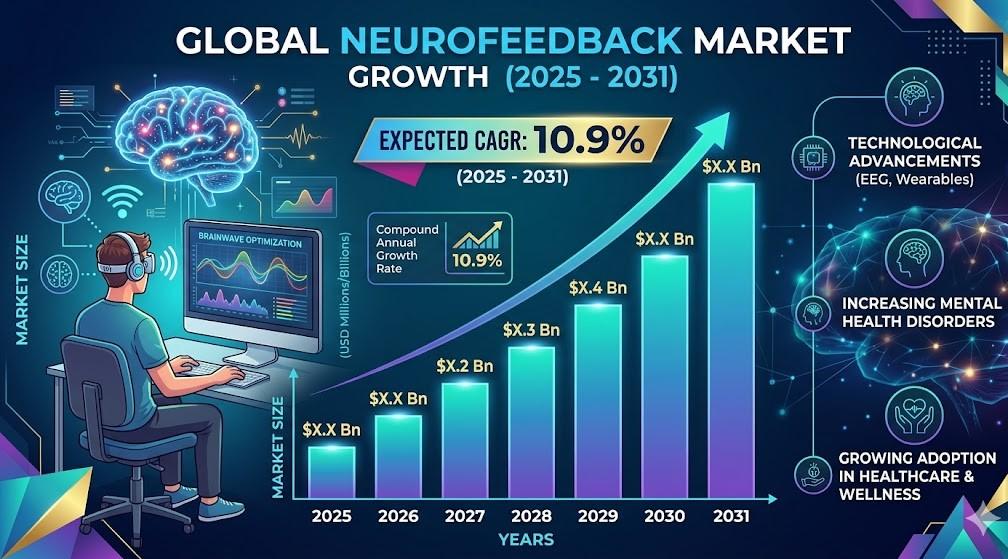
The global neurofeedback industry is undergoing a transformative phase, supported by growing awareness of brain health and the increasing demand for non invasive therapeutic solutions. Neurofeedback, which involves real time monitoring and training of brainwave activity, has gained recognition as a reliable approach for improving cognitive function and managing neurological conditions. Its...
Dehradun attracts travelers for many reasons, including tourism, education, business, medical visits, and family events. With such a diverse flow of visitors, the demand for reliable and affordable accommodation remains high throughout the year. Hotel Sukhsadan has earned the trust of guests by offering comfort, cleanliness, and fair pricing. Because of its consistent service quality and guest...

In today’s fast-paced world, maintaining sharp memory, mental clarity, and optimal brain function has become a significant challenge. Many adults experience brain fog, forgetfulness, and declining focus due to stress, aging, or busy lifestyles. For these individuals, finding a reliable solution to improve brain memory daily has become essential. One supplement gaining attention in the...