The Critical Roadmap of Early-Stage Medical Discovery

The journey from a promising molecular discovery to a life-saving treatment is a marathon of scientific rigor and regulatory compliance. Every modern medicine found in a hospital or pharmacy began its life as a hypothesis in a laboratory, undergoing years of scrutiny before ever reaching a human subject. This early phase is the bedrock of medical advancement, serving as the ultimate filter to ensure that only the most viable and safe candidates proceed toward clinical application. For developers and stakeholders, understanding the nuances of this stage is not merely a technical requirement but a strategic necessity to navigate the complex landscape of therapeutic development.
The Bridge Between Benchtop and Bedside
Translational science functions as the essential link between basic laboratory findings and clinical utility. In the earliest stages, researchers focus on characterizing the biological activity of a compound. This involves complex biochemical assays and cellular models designed to observe how a molecule interacts with specific disease targets. By establishing a "proof of concept" early on, scientists can justify the significant resources required for further development. This phase is characterized by an iterative process of optimization, where the chemical structure or delivery mechanism of a therapy is refined to maximize its therapeutic effect while minimizing potential off-target interactions.
Advanced Methodology in Biological Screening
Efficiency in modern drug development is increasingly driven by sophisticated screening technologies. Traditional methods are now supplemented by high-throughput screening, which allows for the simultaneous testing of thousands of chemical compounds against biological targets. Furthermore, the emergence of "organ-on-a-chip" technology and 3D cell cultures has provided researchers with more accurate simulations of human physiology than ever before. These advancements allow for the early detection of metabolic issues or cellular toxicity, providing a clearer window into how a treatment might behave in a complex living system. By utilizing these high-fidelity models, the industry can reduce the time spent on non-viable candidates and focus energy on those with the highest probability of clinical success.
Regulatory Benchmarks and Data Integrity
The transition from the laboratory to human trials is governed by strict oversight from global regulatory bodies like the FDA and EMA. Central to this transition is the accumulation of a robust data package that details every aspect of a therapy’s safety and performance. This is where preclinical research plays its most vital role, providing the empirical evidence needed for an Investigational New Drug (IND) application. Regulatory agencies require exhaustive documentation on pharmacokinetics—how the body processes the drug—and pharmacodynamics—what the drug does to the body. Maintaining the highest standards of data integrity and adhering to Good Laboratory Practices (GLP) ensures that the findings are reproducible and trustworthy, forming the safety foundation for all subsequent human studies.
Strategic Design of Experimental Protocols
Success in early-stage development is often a direct result of meticulous study design. A well-structured protocol must account for a vast array of variables, from dosage levels and administration routes to the selection of appropriate biological models. Researchers must choose models that closely mimic the human disease state to ensure the data is truly predictive. This phase also involves assessing "dose-response" relationships, which help determine the starting dose for Phase 1 clinical trials. A strategic approach to protocol design minimizes the risk of unexpected outcomes later in the development cycle, allowing for a smoother and more predictable path through the regulatory gauntlet.
Assessing Scalability and Chemical Stability
A therapeutic candidate must be more than just effective; it must be practical. Early research must also address the "Chemistry, Manufacturing, and Controls" (CMC) aspects of a product. This includes testing the stability of the compound under various environmental conditions and ensuring that it can be synthesized or manufactured with high purity at a commercial scale. If a drug is too unstable for transport or too expensive to produce, its clinical benefit may never reach the general population. Addressing these logistical and manufacturing challenges during the initial research phase prevents costly delays and ensures that a breakthrough in the lab can successfully transform into a viable product for the global market.
Accelerating Innovation Through Expert Collaboration
The path to a successful regulatory submission requires a combination of deep scientific expertise and state-of-the-art infrastructure. Infinixbio stands as a premier partner in this journey, offering comprehensive services that span from early lead optimization to final validation studies. The team at Infinixbio specializes in designing custom assays and executing rigorous experimental protocols that meet the highest industry standards. By integrating advanced analytical techniques with a thorough understanding of regulatory expectations, the company helps developers de-risk their portfolios and move their most promising assets forward with confidence. With a focus on precision, transparency, and scientific excellence, Infinixbio provides the essential support needed to turn innovative biological concepts into reality.
Conclusion
The evolution of modern medicine is built upon the disciplined execution of early-stage scientific inquiry. By focusing on rigorous screening, strategic protocol design, and unwavering data integrity, the medical community can continue to bridge the gap between discovery and delivery.preclinical research
Categorias
Leia Mais
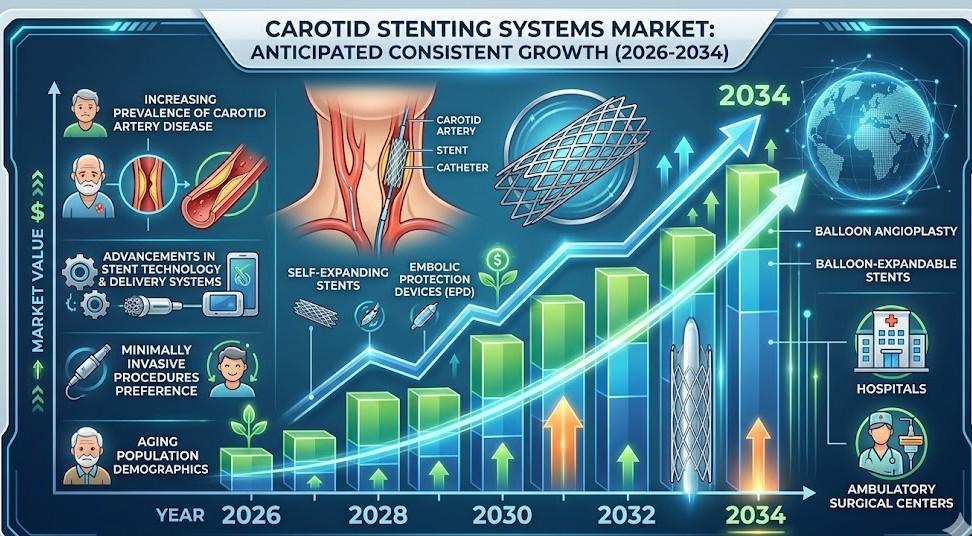
The carotid stenting systems industry is experiencing steady expansion, supported by the rising prevalence of cardiovascular diseases and the growing need for minimally invasive treatment solutions. Increasing awareness about stroke prevention and early diagnosis has significantly influenced the adoption of advanced interventional procedures. Healthcare providers are increasingly focusing on...
Staying connected is essential in today’s world, and choosing the right internet plan can save you money while providing reliable service. Understanding what is high speed home internet is the first step to making an informed decision. High-speed internet allows multiple devices to stream, work, and browse simultaneously without buffering or slowdowns. If you...

Polaris Market Research has announced the latest report, namely U.S. Procure To Pay Solution Market Size, Share, Trends & Industry Analysis Report: By Component (Software and Services), By Deployment, By Enterprise Size, and By End Use – Market Forecast, 2025–2034, that examines the overall market condition both now and in the future. It provides comprehensive and accurate...

The latest Netflix ISP Speed Index for January offers insights into which internet providers deliver optimal streaming quality during peak hours worldwide. In the United States, cable providers experienced shifts in rankings; Bright House dropped to ninth place with an average speed of 3.53 Mbps, while Time Warner Cable fell to tenth at 3.39 Mbps. Conversely, both Suddenlink and AT&T...

The Modern Elegance of Bottega Shoes and Bottega Sneakers Bottega Veneta has long stood as a symbol of quiet luxury—craftsmanship that speaks softly yet confidently. While the Italian house is best known for its iconic intrecciato leather technique, the brand’s footwear line has rapidly evolved into a cultural phenomenon. From sculptural heels to fashion-forward sneakers, Bottega...