Regulatory Compliance by Design: Software Built for Manufacturing Standards
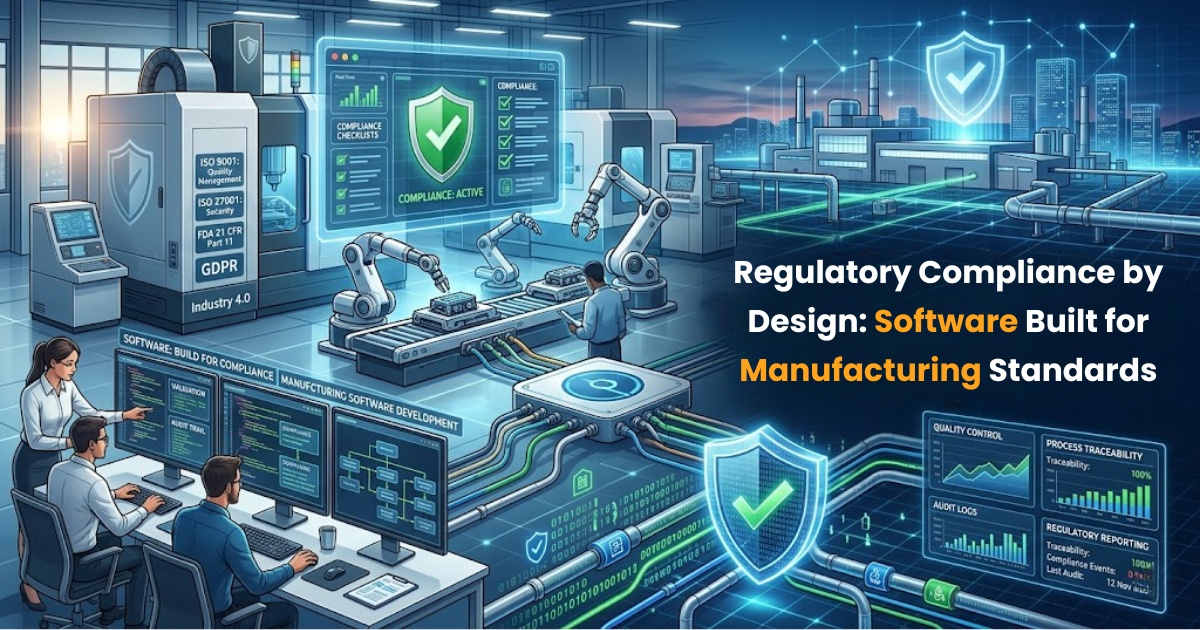
The modern factory floor operates under a strict web of global regulations. Manufacturers face constant pressure to meet safety, quality, and environmental standards. Traditionally, companies treated compliance as a final check at the end of production. This approach often leads to costly delays or product recalls. Today, leading firms adopt a "Compliance by Design" strategy. This means building regulatory requirements directly into the software architecture from day one. Engaging in Manufacturing Software Development with a focus on these standards is no longer optional. It is a core requirement for survival in a competitive global market.
Understanding Compliance by Design
Compliance by Design means that every line of code serves a regulatory purpose. The software does not just track production. It enforces the rules that govern production. For example, if a machine exceeds a heat threshold, the software stops the line automatically. It then logs the event for a future audit.
A specialized Manufacturing Software Development Company understands these nuances. They do not just build tools for speed. They build tools for legal and safety assurance. This proactive method prevents errors before they occur. It saves companies from the heavy fines associated with non-compliance.
The Rising Cost of Non-Compliance
The financial stakes for manufacturers are incredibly high. Industry data from 2025 shows that the average cost of a single non-compliance event is $14.8 million. This figure includes fines, legal fees, and lost productivity. In contrast, the cost of maintaining strong compliance programs is much lower. Organizations spend roughly $5.4 million on average to stay compliant.
These stats prove that investing in high-quality software is a sound financial choice. When you pay for Manufacturing Software Development, you are buying insurance against systemic failure.
Critical Standards for Modern Manufacturing
Different sectors require different software features. However, several global standards apply to most modern plants.
1. ISO 9001: Quality Management
This is the most common standard. It focuses on consistent quality and customer satisfaction. Software built for ISO 9001 must track every step of the manufacturing process. It requires clear documentation and "Proof of Process."
2. ISO 27001: Information Security
As factories become more connected, they become targets for hackers. ISO 27001 ensures that the software protects sensitive data. This includes intellectual property and employee records.
3. FDA 21 CFR Part 11: Electronic Records
This is vital for food and drug manufacturers. It requires that electronic signatures are as valid as paper ones. The software must maintain a permanent, unchangeable audit trail. You cannot delete or alter a record without leaving a digital footprint.
4. GDPR and Data Privacy
Even on the factory floor, worker privacy matters. Software must handle personal data according to strict privacy laws. This includes biometric data used for clocking into shifts.
Technical Features of Compliant Software
To meet these standards, a Manufacturing Software Development Company must include specific technical features. These features ensure the system remains reliable and auditable.
1. Granular Access Control
The software must restrict access based on roles. A junior operator should not have the ability to change safety limits. The system uses "Least Privilege" logic. This means users only see the tools they need for their specific job.
2. Immutable Audit Trails
An audit trail is a chronological record of all system activities. Compliance requires that these logs are immutable. This means no one can edit them. If an inspector arrives, the software provides a clear history of who did what and when.
3. Automated Reporting
Manual reporting is prone to human error. Compliant software generates reports automatically. It pulls data directly from machines and sensors. This ensures the data is accurate and timely.
4. Version Control for Work Instructions
Manufacturing processes change over time. The software must track every version of a work instruction. It ensures that every worker on the floor uses the most recent, approved version of a task.
The Role of AI in Regulatory Assurance
In 2026, Artificial Intelligence plays a massive role in compliance. Manufacturing Software Development now includes machine learning models that predict risks.
-
Anomaly Detection: AI monitors sensor data in real-time. It flags deviations that might violate safety standards.
-
Predictive Maintenance: The software predicts when a safety valve might fail. It schedules repairs before a dangerous incident occurs.
-
Document Processing: AI scans thousands of pages of new regulations. It alerts managers to changes that affect their specific factory.
Recent surveys show that 62% of manufacturers now use AI to assist with regulatory reporting. This technology reduces the time spent on paperwork by nearly 40%.
Building a Culture of Compliance
Software alone cannot solve every problem. It requires a partnership between the tech and the people. A top Manufacturing Software Development Company provides training alongside the software.
-
User Experience (UX): If the software is hard to use, workers will find shortcuts. Compliant software must be intuitive.
-
Feedback Loops: Operators should be able to report safety issues through the software easily.
-
Continuous Updates: Regulations change. The software architecture must allow for quick updates to meet new laws.
Data Integrity and the Single Source of Truth
Data integrity is the pillar of compliance. If your data is messy, your compliance is a myth. Software developers focus on creating a "Single Source of Truth." This means all departments use the same data set.
-
Sales sees what Production is making.
-
Quality Control sees the raw material logs.
-
Shipping sees the safety approvals.
When everyone uses the same data, the risk of error drops. According to industry experts, unified data platforms reduce compliance-related errors by 35%.
Security as a Compliance Requirement
You cannot be compliant if you are not secure. Cybersecurity is now a major part of manufacturing standards. Hackers often target industrial control systems. A breach can lead to a total shutdown or a safety disaster.
Manufacturing Software Development includes several security layers:
-
End-to-end Encryption: This protects data as it moves from the machine to the cloud.
-
Multi-Factor Authentication (MFA): This prevents unauthorized logins.
-
Network Segmentation: This keeps the factory floor separate from the office Wi-Fi.
The Future of Global Manufacturing Standards
Regulations will only become more complex. Governments are now focusing on "Green Compliance." This means software must track carbon footprints and waste levels.
The Circular Economy is also gaining traction. Software will soon need to track a product's entire life. This includes where it goes after the customer is done with it. Companies that adopt "Compliance by Design" now will be ready for these changes.
The Evolution of Green Compliance and the Circular Economy
As we navigate through 2026, the manufacturing landscape is undergoing a profound shift. Sustainability is no longer a marketing buzzword. It is a strict technical requirement. Governments worldwide have shifted from voluntary guidelines to mandatory "Green Compliance." This evolution forces a change in how we approach Manufacturing Software Development. Software must now act as the primary record-keeper for every atom that enters and leaves a factory.
The Rise of Digital Product Passports (DPP)
One of the most significant changes in 2026 is the implementation of the Digital Product Passport (DPP). Under regulations like the EU's Ecodesign for Sustainable Products Regulation (ESPR), products must carry a digital identity. This identity stays with the product throughout its entire life.
A Manufacturing Software Development Company must now build systems that store:
-
Material Composition: Exactly what chemicals and raw materials are inside.
-
Recyclability Scores: Clear instructions on how to dismantle the product.
-
Repair History: A log of every fix or part replacement.
This "passport" ensures that when a product reaches the end of its life, recyclers know exactly how to process it. This prevents valuable materials from ending up in landfills.
Conclusion
Regulatory compliance is the foundation of modern industry. It protects workers, consumers, and the environment. By focusing on Manufacturing Software Development that prioritizes these standards, companies can grow safely.
Investing in a specialized Manufacturing Software Development Company ensures your systems are robust. You gain the ability to pass audits with ease. You reduce the risk of massive fines. Most importantly, you build a brand that people trust. In the world of 2026, trust is the most valuable currency a manufacturer can hold. Compliance by design is how you earn that trust every single day.
Категории
Больше
Ignitra is a natural dietary supplement designed to support metabolism, energy levels, liver health, blood sugar balance, and overall weight management. It is formulated for individuals who want a simple daily solution to improve wellness without relying on strict diets, extreme workouts, or stimulant-based products. Popular in Canada, Ignitra is positioned as a holistic support...

Furnishing a home is rarely a one-time expense -it is a series of decisions that shape how a space feels, functions, and holds up over the years. Among those decisions, the choice between mass-produced pieces and luxury furniture is one of the most consequential. While the upfront price tag of premium pieces often draws the most attention, the real story lies in what happens five, ten, or...

The Los Angeles Olympic 2028 gives Martin Bilello a clear goal for handball. He wants the sport to feel big. He wants each match to feel fresh. His work now moves toward the Games and LA 28. The task is not small. It needs care. It needs skill. Bilello brings years of sports work. His plan gives handball a clear path in Los Angeles. Every step now has value. This focus guides his work with...

Alprazolam is a prescription medication commonly used to treat anxiety disorders and panic disorder. It belongs to a group of medicines known as benzodiazepines, which work by calming the brain and central nervous system. When prescribed appropriately and used as directed, alprazolam can help relieve symptoms of anxiety and improve daily functioning. However, because it carries risks of...

Tyre Change Services Dubai: A Quick and Reliable Solution for Your Vehicle When you are faced with a flat tire or in need of a tire change in Dubai, it can be a stressful situation. However, with professional tyre change services available in the city, you can quickly get back on the road without any hassle. These services offer convenience, expertise, and peace of mind for drivers in Dubai,...