


How AI and Automation Are Reshaping Everyday Life
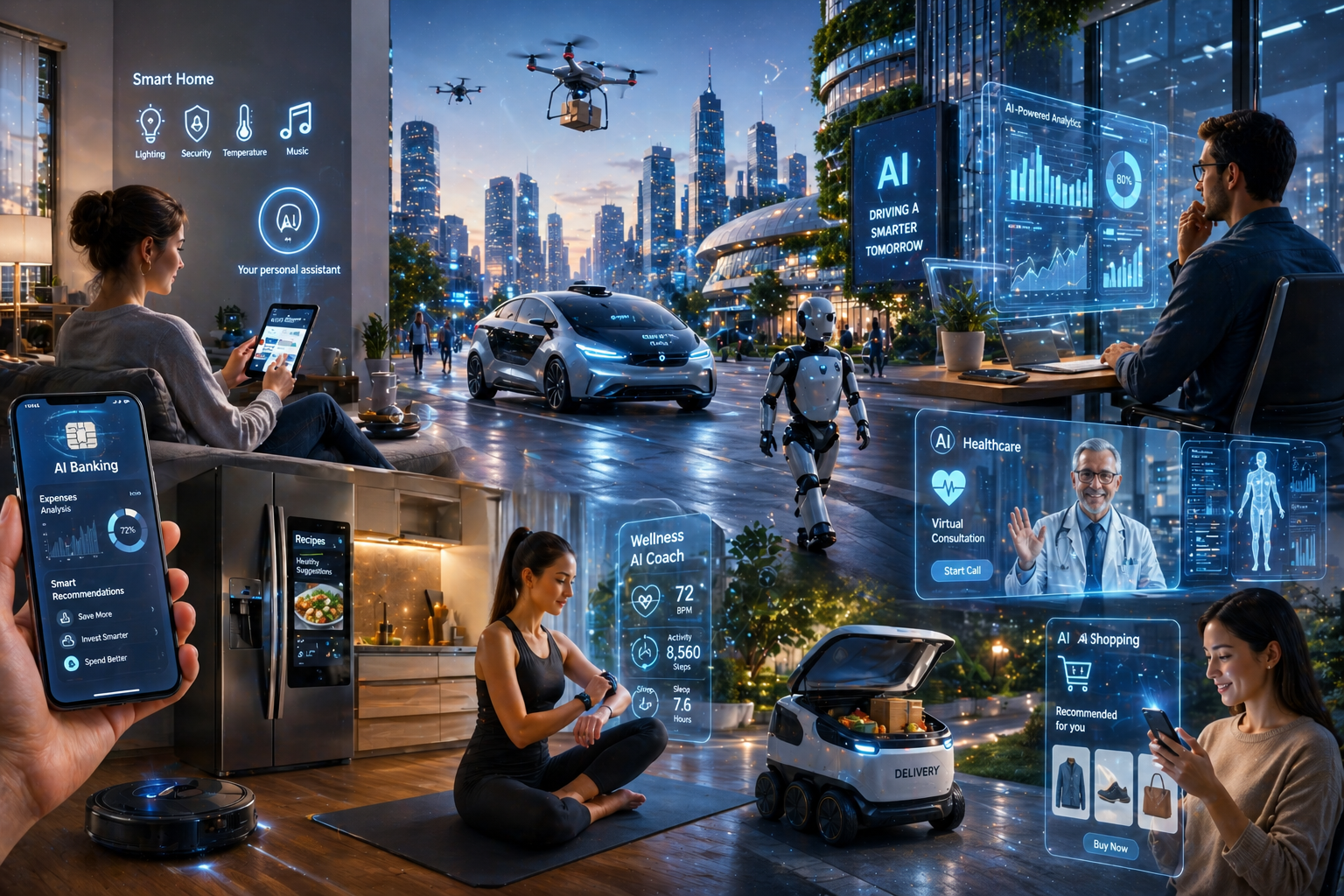
Artificial Intelligence (AI) and automation are no longer limited to big factories or tech companies. Today, they are becoming part of daily life. From smartphones to smart homes, and from online shopping to healthcare, AI is influencing how people work, communicate, and make decisions.
In 2026, AI and automation will become even more common. Many everyday tasks will be managed through intelligent systems that save time, reduce effort, and improve efficiency. At the same time, these technologies also raise concerns about privacy, job changes, and human dependence on machines.
This article explains how AI and automation are reshaping everyday life and what people should understand about their growing influence.
What Is AI and Automation?
AI refers to computer systems designed to perform tasks that normally require human intelligence. These tasks include learning, decision-making, problem-solving, language understanding, and image recognition.
Automation refers to the use of machines and software to perform tasks without human involvement. Automation can be simple, such as automatic email responses, or advanced, such as robotic systems in factories.
When AI is combined with automation, it creates intelligent systems that not only perform tasks but also improve over time by learning from data.
AI in Smartphones and Daily Digital Services
Smartphones are one of the biggest examples of AI in everyday life. Most people use AI daily without realizing it. Features such as face recognition, voice assistants, predictive typing, and photo editing are powered by AI.
AI also improves search engines and social media platforms. It analyzes user behavior to recommend videos, posts, and news. Streaming platforms like YouTube and Netflix also use AI to suggest content based on viewing history.
In 2026, AI-powered digital services will become more personalized. Apps will predict what users want, offer customized suggestions, and reduce manual work.
While this makes life easier, it also increases the collection of personal data, which creates privacy concerns.
Smart Homes and AI-Based Living
Smart home technology is becoming more common worldwide. AI-powered smart devices such as voice assistants, smart cameras, and automated lighting systems are changing how people manage their homes.
Smart home systems can control room temperature, detect security threats, and manage household energy use. Many homes now use smart speakers that allow users to control devices through voice commands.
In 2026, smart homes will become more advanced. AI systems will learn user routines and automatically adjust lighting, temperature, and security settings. Smart kitchens may also improve through automated cooking systems and food tracking devices.
Smart home technology can improve convenience and safety, but it also requires strong cybersecurity because connected devices can become targets for hacking.
AI and Automation in Healthcare
Healthcare is one of the most important industries being transformed by AI. AI tools are already being used to analyze medical reports, detect diseases, and assist doctors in diagnosis.
Automation is also improving hospital management. Systems can schedule appointments, manage patient records, and track medical supplies. Telemedicine platforms are allowing patients to consult doctors online, reducing the need for hospital visits.
Wearable devices such as smartwatches track heart rate, sleep patterns, and physical activity. AI uses this data to provide health insights and early warnings about possible health problems.
In the future, AI will support faster diagnosis and personalized treatment plans, improving healthcare services worldwide.
AI in Education and Learning
Education is changing rapidly due to AI-based learning tools. Students can now access online courses, digital tutors, and personalized learning platforms.
AI systems can analyze student performance and adjust lessons according to their needs. This helps students learn at their own speed. Automated grading systems also reduce workload for teachers.
In 2026, AI will play a bigger role in online education, language learning, and skill development. Virtual classrooms will become more interactive, and AI tutors will become more accurate in providing learning support.
However, education systems must ensure that AI tools support learning fairly and do not create inequality between students who have access to technology and those who do not.
AI and Automation in Transportation
Transportation is also being reshaped by AI. Ride-sharing apps use AI to calculate routes, estimate fares, and match drivers with passengers. Delivery services use automation to optimize delivery routes and reduce time.
Self-driving technology is improving, especially in logistics and commercial transportation. While fully autonomous cars may still face legal and safety challenges, automation in transport systems will expand by 2026.
AI is also improving traffic management. Smart city systems use AI to monitor traffic flow and reduce congestion. Automated public transport systems may become more common in large cities.
Drones are another part of transportation automation. Many companies are testing drones for delivery services, especially for medical supplies and small packages.
AI in Shopping and Customer Experience
Shopping habits have changed due to AI and automation. Online stores use AI to recommend products based on customer interest. This personalization increases sales and improves user experience.
AI is also being used in customer service through chatbots. Many businesses use automated customer support systems that answer common questions and handle complaints quickly.
In physical stores, automation is also increasing. Some supermarkets now offer cashier-free checkout systems, where customers pay automatically through sensors and digital payment systems.
In 2026, AI shopping experiences will become more advanced, offering virtual try-on features, personalized discounts, and faster delivery options.
AI in Workplaces and Job Roles
Workplaces are changing due to AI and automation. Many companies are using automation tools for accounting, HR tasks, customer support, and data entry.
AI is also improving business decision-making. It helps companies analyze market trends, forecast sales, and manage inventory. This reduces human workload and increases efficiency.
However, automation is also affecting jobs. Many repetitive roles are being replaced by machines and software. This creates challenges for workers who may need new skills to stay competitive.
At the same time, AI is also creating new job opportunities. Careers in AI development, cybersecurity, data analysis, and automation engineering are growing rapidly.
In the coming years, workers who learn digital skills will have better career stability.
AI in Banking and Personal Finance
AI is improving financial services through digital banking. Banks use AI for fraud detection, customer support, loan approvals, and risk analysis.
Many finance apps now offer AI-driven budgeting tools that help users track expenses and save money. Some investment platforms provide automated investment planning through robo-advisors.
In 2026, AI will make banking faster and more personalized. Customers will be able to access financial services easily without visiting physical branches.
However, privacy and cybersecurity will remain important because financial data is highly sensitive.
AI in Entertainment and Content Creation
AI is also reshaping entertainment. Streaming platforms recommend content based on user behavior. AI-generated music, videos, and digital art are also growing rapidly.
Content creators now use AI tools to edit videos, write scripts, create images, and design marketing materials. This reduces production time and increases creative output.
In 2026, AI-generated content will become more common in advertising, social media, and entertainment industries. This will raise concerns about misinformation, deepfakes, and originality.
As AI content grows, platforms may introduce stronger rules to identify and manage AI-generated material.
The Risks of AI and Automation in Daily Life
Although AI and automation make life easier, they also bring risks. One major concern is privacy. AI systems collect large amounts of data, which can be misused if not protected properly.
Another issue is cybersecurity. Hackers can target smart devices, banking apps, and personal data systems. Strong security measures will be necessary to prevent digital threats.
AI also creates ethical concerns. Automated decision-making systems can sometimes be biased, especially if they are trained on unfair data. This can impact hiring, loan approvals, and online content recommendations.
There is also the risk of human dependence on technology. If people rely too much on AI, they may lose important skills such as critical thinking and decision-making.
The Future of Everyday Life with AI
AI and automation will continue expanding in the coming years. Smart devices will become more connected, and many services will become fully automated. People will experience more convenience in shopping, transportation, education, and healthcare.
At the same time, governments and organizations will need to develop strong policies for data privacy, cybersecurity, and responsible AI use.
The future will likely involve a balance where AI supports human life rather than replacing human control. People who understand these technologies will benefit more from their advantages and will be better prepared for future changes.
Conclusion
AI and automation are reshaping everyday life in powerful ways. They are improving convenience, saving time, and transforming industries such as healthcare, education, banking, and transportation. Smart homes, digital assistants, AI-powered shopping, and automated workplaces are becoming common.
However, these changes also bring challenges such as job disruption, privacy risks, cybersecurity threats, and ethical concerns. Understanding how AI works and using it responsibly will be important for individuals and society.
As 2026 approaches, AI will become even more integrated into daily life, making it essential to adapt and stay informed.
Frequently Asked Questions (FAQs)
How is AI used in daily life?
AI is used in smartphones, social media recommendations, voice assistants, online shopping, banking, healthcare systems, and smart home devices.
Will automation replace human jobs?
Automation will replace some repetitive jobs, but it will also create new jobs in technology, cybersecurity, and AI development. Workers will need new skills.
Is AI safe for smart homes?
AI smart homes can be safe if devices are secured with strong passwords, software updates, and proper cybersecurity settings.
How does AI improve healthcare?
AI helps in disease detection, medical diagnosis, patient monitoring, and telemedicine services. It improves efficiency and supports doctors.
What are the biggest risks of AI?
The biggest risks include privacy issues, cybersecurity threats, biased decision-making, and over-dependence on technology.
Catégories
Lire la suite
Introduction to DK Gaming and the Rise of the DK11 Game The global online gaming industry continues to grow at an unprecedented pace, with digital platforms introducing immersive experiences, competitive gameplay, and engaging communities. Among the emerging names in the gaming ecosystem, DK Gaming has attracted attention for delivering dynamic entertainment options, particularly through...

Detailed Analysis of Executive Summary Gene Panel Market Size and Share The global gene panel market size was valued at USD 2.66 billion in 2024 and is projected to reach USD 4.97 billion by 2032, with a CAGR of 8.10% during the forecast period of 2025 to 2032. An international Gene Panel research report is planned by gathering research data from different corners of the globe with an...

Weight loss supplements are everywhere, but very few actually deliver measurable results. With so many products claiming rapid fat-burning, increased metabolism, and effortless weight loss, it becomes difficult to separate hype from reality. That’s where Burn Slim has started gaining attention. Marketed as a clinically inspired fat-burning formula, Burn Slim promises to support...

The rapid acceleration of climate goals across industries is reshaping how materials are produced, traded, and consumed. Steel, being one of the most widely used industrial inputs, is under particular scrutiny because conventional production methods release enormous amounts of greenhouse gases. As infrastructure expands, urbanization grows, and renewable power projects multiply, the pressure on...
" According to the latest report published by Data Bridge Market Research, the Germany Running Footwear Market The running footwear is essential as footwear has become a necessity for humans. The demand for footwear may fluctuate little, but it will never get over. Data Bridge Market Research analyses that the running footwear market will grow at a CAGR of 6.1% during the forecast...