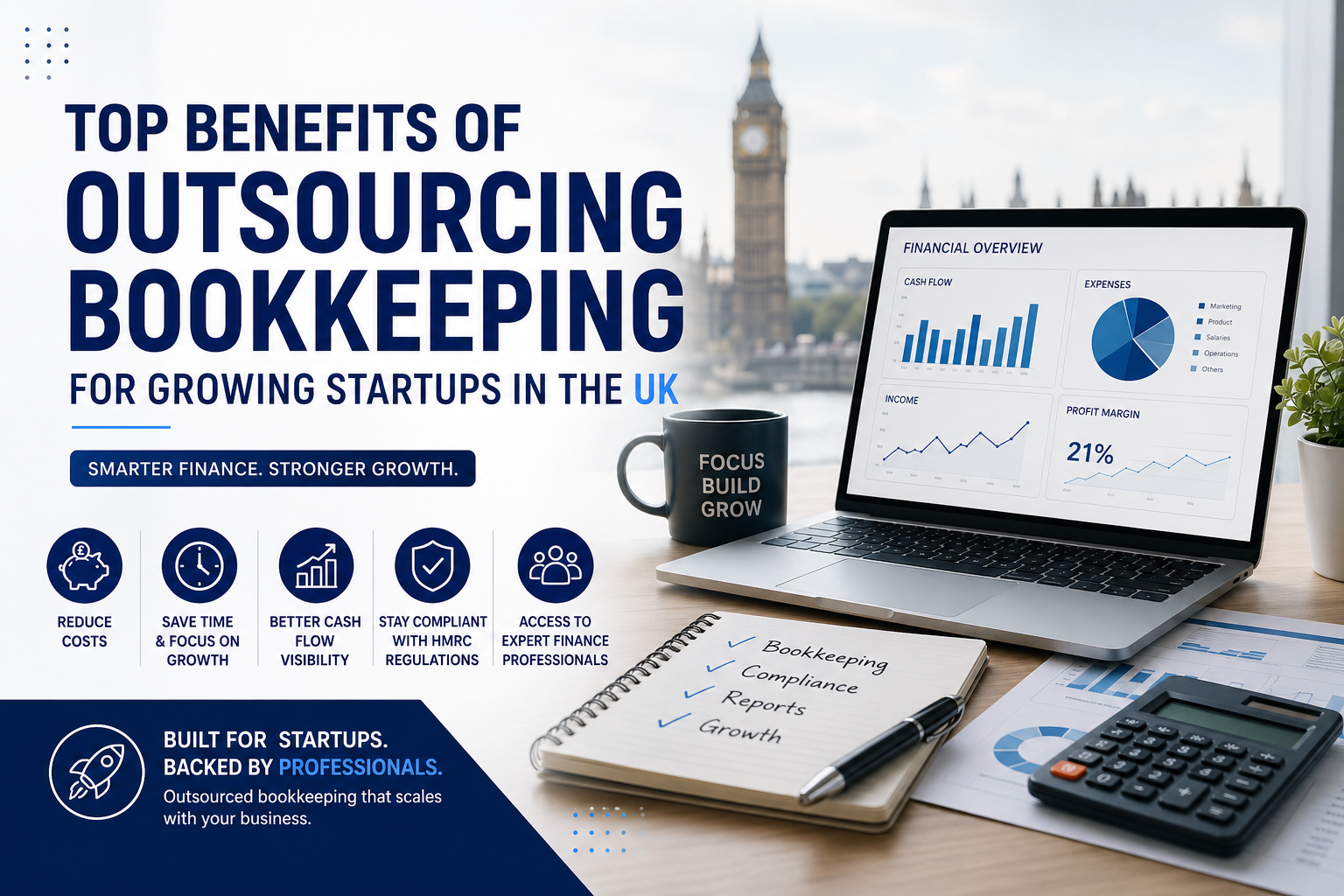
Outsourced Bookkeeping vs In-House Accounting, Which Is More Cost-Effective for UK Businesses?
Managing business finances efficiently is one of the most important responsibilities for any growing company. For UK businesses, especially SMEs, choosing between Outsourced Bookkeeping and in-house accounting can directly affect profitability, compliance, and long-term scalability.
At first glance, hiring an in-house accountant may seem like the safer option. You have someone on-site, accessible, and fully immersed in your day-to-day operations. However, once salaries, software, compliance obligations, and overhead costs are considered, the financial reality often looks very different.
This is where Outsourced Bookkeeping has become an increasingly attractive option for UK businesses seeking cost control, professional support, and operational flexibility.
Understanding the Difference Between Outsourced and In-House Finance Support
Before comparing costs, it is important to understand what each model actually offers.
What Is Outsourced Bookkeeping?
Outsourced Bookkeeping means partnering with external bookkeeping consultants or accounting professionals who manage your financial records remotely. These services often include:
- Transaction recording
- Bank reconciliations
- Accounts payable and receivable
- VAT submissions
- Payroll support
- Financial reporting
- Cloud accounting software management
Rather than hiring internally, businesses pay a fixed monthly fee or service-based cost for expert financial support.
What Is In-House Accounting?
In-house accounting involves employing a bookkeeper or accountant directly within your business. This person works as part of your internal team and is responsible for managing day-to-day financial operations.
While this offers direct oversight, it also means taking on the full cost of employment, training, software, and infrastructure.
The Real Cost of In-House Accounting in the UK
Many UK businesses underestimate the true cost of hiring internally. Salary is only one part of the equation.
A full-time in-house bookkeeper in the UK typically earns between £28,000 and £35,000 per year, depending on experience and location.
However, the real cost goes far beyond base salary.
Hidden Costs of In-House Accounting
When hiring in-house, businesses must also cover:
- Employer National Insurance contributions
- Pension contributions
- Recruitment costs
- Training and upskilling
- Paid annual leave
- Sick leave cover
- Accounting software subscriptions
- Equipment and office space
- Management oversight
In practice, a £30,000 salary can easily become £40,000 to £45,000 annually once all overheads are included.
For many SMEs, this creates a significant financial burden, especially when accounting needs do not justify a full-time salary.
Why Outsourced Bookkeeping Is Often More Cost-Effective
For growing UK businesses, Outsourced Bookkeeping often delivers the same core financial support at a significantly lower cost.
Instead of paying for a full-time employee, businesses pay only for the services they need.
Typical outsourced bookkeeping costs in the UK range from £50 to £300 per month for smaller businesses, with more advanced support available through scalable service packages.
That means even at £500 per month, the annual cost is only £6,000, a fraction of the cost of maintaining an internal hire.
Key Cost Advantages of Outsourcing
1. Lower Operational Costs
Outsourcing removes the expense of salaries, pensions, office costs, and employee benefits.
2. No Recruitment or Training Costs
There is no need to spend time or money hiring, onboarding, or replacing staff.
3. Access to Skilled Professionals
You gain access to experienced bookkeeping consultants and finance professionals without paying senior-level salaries.
4. Scalable Service Model
As your business grows, outsourced support can scale with your needs. You only pay for what you use.
5. Better Technology Without Extra Spend
Most providers already use cloud accounting systems like Xero and QuickBooks, reducing your software and infrastructure burden.
Cost Is Not the Only Factor, Efficiency Matters Too
Although cost is a major factor, efficiency often matters just as much.
Many businesses choose Outsourced Bookkeeping not only because it is cheaper, but because it improves workflow, reporting accuracy, and financial visibility.
With outsourced finance support, businesses often benefit from:
- Faster month-end close
- Better financial reporting
- Reduced compliance risk
- Improved accuracy
- Less internal admin
- More time to focus on growth
For business owners, this means fewer hours spent managing receipts, reconciling transactions, or fixing reporting errors.
Instead, internal teams can focus on revenue, operations, and strategic decisions.
When In-House Accounting Makes More Sense
Despite the cost benefits of outsourcing, in-house accounting still has value in certain cases.
It may be the better option if your business:
- Handles high daily transaction volume
- Requires constant on-site finance support
- Operates in a highly regulated sector
- Needs immediate internal collaboration across departments
- Has complex multi-entity financial operations
For larger businesses with consistent accounting demands, an in-house finance team may offer stronger operational control.
That said, many UK companies now adopt a hybrid model, combining outsourced bookkeeping support with internal financial oversight for the best of both worlds.
What UK SMEs Are Choosing in 2026
For most UK startups and SMEs, outsourcing is becoming the preferred option because it offers:
- Lower fixed costs
- Greater flexibility
- Easier scalability
- Better access to specialists
- Reduced compliance pressure
Recent UK industry analysis shows that outsourced bookkeeping is often 40 to 60 percent more cost-effective than maintaining equivalent in-house support.
That is a major advantage for businesses trying to remain lean while maintaining financial accuracy.
Final Verdict, Which Is More Cost-Effective?
For most small and mid-sized UK businesses, Outsourced Bookkeeping is the more cost-effective choice.
It reduces overhead, improves flexibility, and gives businesses access to experienced accounting professionals without the financial burden of full-time hiring.
In-house accounting still has its place, particularly for larger organisations with complex daily finance needs. But for SMEs focused on efficiency, compliance, and sustainable growth, outsourcing is usually the smarter financial decision.
By working with experienced bookkeeping consultants and finance professionals, UK businesses can gain expert support, reduce costs, and build a stronger financial foundation for long-term growth.