Bare Conductor: Reliable Backbone of Modern Power Transmission Systems
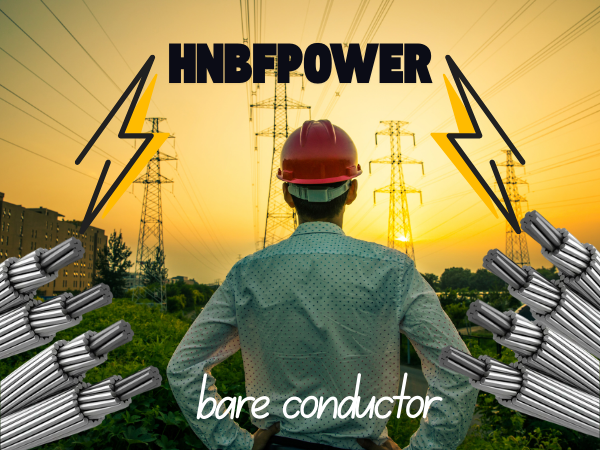
In modern electrical power infrastructure, efficiency, safety, and long-distance transmission capability are critical requirements. Among the most essential components enabling this performance is the bare conductor, widely used in overhead power transmission and distribution networks. Unlike insulated cables, bare conductors are designed without a protective outer sheath, allowing direct exposure to air for effective heat dissipation and economical bulk power transfer.
For utilities, EPC contractors, and industrial buyers, selecting the right conductor is not just a technical decision but a long-term investment in grid stability and operational efficiency. HNBF Power, a global manufacturer of overhead conductors and power cables, delivers high-performance solutions designed to meet international standards and demanding field conditions.
What is a Bare Conductor?
A bare conductor is an electrical conductor made of stranded or solid metal wires without any insulation covering. It is primarily used in overhead transmission and distribution lines where air acts as the natural insulating medium.
The most common materials used include aluminum and aluminum alloys, sometimes reinforced with steel cores for enhanced mechanical strength. The absence of insulation makes bare conductors highly efficient in heat dissipation, reducing power losses and improving current-carrying capacity.
These conductors are widely adopted in high-voltage transmission systems due to their cost-effectiveness, durability, and ease of installation over long distances.
Types of Bare Conductors
Different grid requirements demand different conductor configurations. The most widely used types include:
AAC (All Aluminum Conductor)
AAC conductors are composed entirely of aluminum strands. They offer excellent conductivity and are commonly used in urban distribution systems where shorter spans are required.
AAAC (All Aluminum Alloy Conductor)
AAAC conductors use aluminum alloy instead of pure aluminum, providing higher mechanical strength and better corrosion resistance, especially in coastal or industrial environments.
ACSR (Aluminum Conductor Steel Reinforced)
ACSR conductors combine aluminum strands with a steel core for superior tensile strength. They are ideal for long-span transmission lines where mechanical stress is high.
Other Variants
Modern grid systems may also utilize advanced designs such as heat-resistant or high-capacity conductors to meet evolving load demands and environmental conditions.
Each type is selected based on load requirements, span length, environmental conditions, and mechanical stress factors.
Key Properties and Performance Standards
For engineers and procurement teams, understanding performance characteristics is essential before selecting a bare conductor:
- High Electrical Conductivity: Ensures minimal transmission losses over long distances
- Mechanical Strength: Especially important for overhead line stability under wind and ice loads
- Corrosion Resistance: Critical for outdoor and coastal installations
- Thermal Performance: Efficient heat dissipation under heavy electrical load
- Compliance with International Standards: Ensures safety, reliability, and interoperability
HNBF Power manufactures conductors that comply with globally recognized standards, ensuring consistent performance across diverse grid environments.
Applications of Bare Conductors in Power Systems
Bare conductors are widely used across multiple segments of the power industry:
- High-voltage overhead transmission lines
- Medium and low-voltage distribution networks
- Rural electrification projects
- Industrial power supply systems
- Substation interconnections
- Renewable energy integration (solar and wind evacuation lines)
Their versatility makes them a preferred choice for utilities aiming to expand or modernize power infrastructure efficiently.
Why Choose HNBF Power for Bare Conductors?
As a trusted global manufacturer, HNBF Power specializes in designing and producing high-quality overhead conductors tailored for modern energy demands.
Key advantages include:
- Advanced Manufacturing Technology: Precision-controlled production ensures consistent conductor quality
- Wide Product Range: AAC, AAAC, ACSR, and custom-engineered conductor solutions
- Strict Quality Control: Each batch undergoes rigorous electrical and mechanical testing
- Project-Oriented Solutions: Designed for EPC contractors and utility-scale projects
- Long Service Life: Optimized for durability under harsh environmental conditions
HNBF Power focuses on delivering not just products, but complete engineering solutions that improve grid reliability and reduce lifecycle costs.
Key Factors to Consider When Selecting Bare Conductors
For procurement engineers and system designers, choosing the right conductor involves evaluating multiple technical and operational parameters:
- Load Current Requirements: Determines conductor size and material
- Span Length and Terrain: Impacts mechanical strength selection
- Environmental Conditions: Coastal, industrial, or high-temperature regions require specialized materials
- Cost vs Performance Balance: Optimizing capital and operational expenditure
- Future Load Expansion: Ensuring scalability for grid upgrades
Proper selection ensures system efficiency, minimizes maintenance costs, and enhances overall network stability.
FAQs About Bare Conductors
1. What is the main advantage of using bare conductors?
Bare conductors offer efficient heat dissipation, lower transmission losses, and cost-effective installation for overhead power lines.
2. Where are bare conductors commonly used?
They are widely used in transmission networks, distribution systems, rural electrification, and industrial power infrastructure.
3. What is the difference between AAC, AAAC, and ACSR conductors?
AAC is pure aluminum, AAAC is aluminum alloy for better strength and corrosion resistance, while ACSR combines aluminum with a steel core for high mechanical strength.
4. How do I choose the right bare conductor for my project?
Selection depends on voltage level, span distance, environmental conditions, and mechanical load requirements.
5. Does HNBF Power provide customized conductor solutions?
Yes, HNBF Power offers tailored conductor designs based on specific project and utility requirements.
Conclusion
Bare conductors remain a fundamental component of global power transmission infrastructure, ensuring efficient and reliable electricity delivery across vast networks. As energy demand continues to rise, the need for high-performance, durable, and standards-compliant conductors becomes even more critical.
HNBF Power stands as a trusted partner for utilities and EPC contractors worldwide, delivering advanced conductor solutions engineered for performance, safety, and long-term value.
For customized bare conductor solutions or technical consultation for your next project, contact HNBF Power today and build stronger, more efficient power networks for the future.
Categorie
Leggi tutto
随着社群营销竞争越来越激烈,越来越多品牌开始重视LINE OpenChat社群经营。相比传统粉丝专页,LINE社群拥有更高互动率与更直接的用户连接能力,因此已经成为许多企业、直播主、电商品牌与营销团队的重要流量渠道。 不过,很多人在经营LINE OpenChat时,都会遇到相同问题,那就是社群初期人数太少,导致整体互动氛围不足,也很难吸引新成员主动加入。 因此,现在越来越多人开始寻找Line社群人数购买服务,希望能够快速提升LINE社群规模,让整个OpenChat看起来更活跃、更具人气。 前言|为什么LINE OpenChat人数会影响社群发展? 在社群经营中,人数本身就是一种“信任指标”。当用户进入一个LINE社群时,如果看到里面已经拥有大量成员,通常会更愿意留下来参与互动。...

A new growth forecast report titled Agriculture Analytics Market Size, Share, Trends, Industry Analysis Report: By Offering (Solutions and Services), Agriculture Type, Farm Size, Technology, End Users, and Region (North America, Europe, Asia Pacific, Latin America, and Middle East & Africa) – Market Forecast, 2025–2034 introduced by Polaris Market Research represents...
Market Size and Growth Prospects The Specialty Chemicals Market Size is valued at USD 1,008.36 Billion in 2025 and is projected to reach USD 1,717.53 Billion by 2035, growing at a CAGR of 5.47% during the forecast period 2026–2035. The specialty chemicals industry is witnessing steady growth as manufacturers increasingly focus on high-performance chemical formulations designed...

The vector facelift has emerged as one of the most sophisticated and effective procedures for facial rejuvenation. Its unique approach to lifting and repositioning facial tissues sets it apart from traditional facelifts and other rejuvenation techniques. For patients seeking a natural, long-lasting improvement in their appearance, the vector facelift offers a range of features that make it an...
Jennifer Lopez Returns to Romantic Comedy Genre with Spicy New Project The beloved actress Jennifer Lopez is embracing her romantic comedy talents once again in an upcoming film that promises to push boundaries beyond typical workplace relationships. Production has officially begun on the steamy new project co-starring Emmy winner Brett Goldstein, who expressed disbelief about his casting...