How to Create an Effective Paid Advertising Strategy
Businesses today rely heavily on PPC advertising, Google Ads campaigns, and social media advertising to reach their ideal audience quickly. These methods provide immediate visibility and measurable results, making them a key part of modern marketing. However, simply running ads is not enough. You need a structured approach to make them profitable.
This is where Paid Advertising becomes essential. A well-planned Paid Advertising strategy helps you target the right audience, control your budget, and maximize returns. Whether you are a beginner or looking to improve your campaigns, understanding how to create an effective strategy can significantly impact your business growth.
What Is Paid Advertising and Why Is It Important?
Paid Advertising refers to promoting your business through paid channels like search engines, social media platforms, and display networks. You pay to show your ads to a specific audience.
It is important because it delivers faster results compared to organic methods and allows precise targeting.
Key Benefits of Paid Advertising
-
Immediate visibility on search engines and platforms
-
Targeted audience reach
-
Measurable performance
-
Scalable campaigns
How It Supports Business Growth
Paid ads help businesses:
-
Generate leads quickly
-
Increase website traffic
-
Boost brand awareness
-
Drive sales
How Do You Set Clear Goals for Your Paid Advertising Strategy?
Setting clear goals is the foundation of a successful strategy. Without defined objectives, it is difficult to measure success.
Your goals should guide every decision you make in your campaigns.
Define Your Objective
Common goals include:
-
Lead generation
-
Website traffic
-
Sales conversions
-
Brand awareness
Use SMART Goals
Make your goals:
-
Specific
-
Measurable
-
Achievable
-
Relevant
-
Time-bound
Example: Increase conversions by 20% in 60 days using Google Ads.
Who Is Your Target Audience and How Do You Reach Them?
Understanding your audience is crucial for creating effective ads. If your ads are shown to the wrong people, your budget will be wasted.
A targeted approach improves both engagement and conversions.
Identify Your Ideal Audience
Consider:
-
Age and gender
-
Location
-
Interests
-
Buying behavior
Use Audience Targeting Tools
Platforms like Google Ads and Facebook Ads allow:
-
Demographic targeting
-
Interest-based targeting
-
Remarketing
This ensures your ads reach people who are most likely to convert.
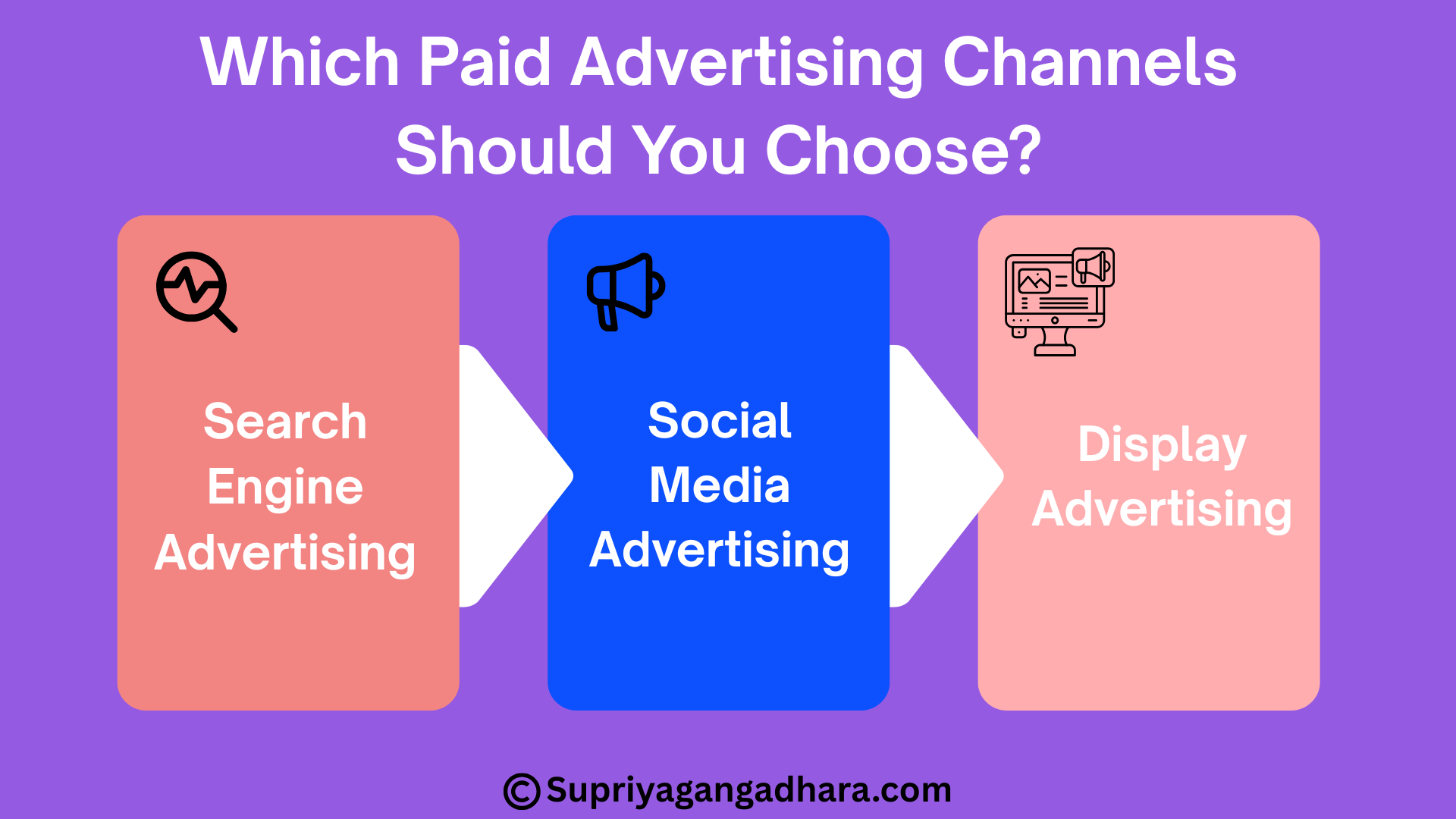
Which Paid Advertising Channels Should You Choose?
Choosing the right platform is essential for success. Different channels serve different purposes.
Your choice should depend on your business type and goals.
Search Engine Advertising
Google Ads
Best for:
-
High-intent users
-
Lead generation
-
Local businesses
Users searching on Google are already interested in your product or service.
Social Media Advertising
Facebook and Instagram Ads
Ideal for:
-
Brand awareness
-
Engagement
-
Visual promotions
LinkedIn Ads
Best for:
-
B2B marketing
-
Professional targeting
Display Advertising
Display ads appear on websites and apps.
Useful for:
-
Retargeting
-
Brand visibility
How Do You Create High-Converting Ad Campaigns?
Creating effective ads requires more than just writing a few lines. You need a strong message and clear structure.
Your ads should attract attention and encourage action.
Write Compelling Ad Copy
Focus on:
-
Clear value proposition
-
Strong headlines
-
Call-to-action (CTA)
Example CTAs:
-
Buy Now
-
Learn More
-
Get Started
Use Eye-Catching Visuals
For social media ads:
-
Use high-quality images
-
Keep design simple
-
Highlight key benefits
Match Ads With Landing Pages
Ensure your landing page:
-
Matches the ad message
-
Loads quickly
-
Has a clear CTA
How Do You Manage Budget and Bidding Effectively?
Budget management is critical in Paid Advertising. Without proper control, costs can increase quickly.
A smart approach ensures better ROI.
Set a Realistic Budget
Start small and scale based on performance.
Divide your budget based on:
-
Campaign type
-
Platform
-
Audience
Choose the Right Bidding Strategy
Common options:
-
Cost per click (CPC)
-
Cost per impression (CPM)
-
Cost per acquisition (CPA)
Monitor Spending
Track your daily and monthly spending to avoid overspending.
How Can You Use Keyword Research in Paid Advertising?
Keywords play a major role in search advertising. They determine when your ads appear.
Using the right keywords increases relevance and conversions.
Find High-Intent Keywords
Focus on keywords that show buying intent.
Examples:
-
“buy now”
-
“best price”
-
“near me”
Use Keyword Types
-
Broad match
-
Phrase match
-
Exact match
Avoid Negative Keywords
Negative keywords prevent your ads from showing for irrelevant searches.
This helps save budget.
How Do You Track and Measure Campaign Performance?
Tracking performance helps you understand what is working and what needs improvement.
Without data, you cannot optimize your campaigns.
Key Metrics to Monitor
-
Click-through rate (CTR)
-
Conversion rate
-
Cost per click (CPC)
-
Return on ad spend (ROAS)
Use Analytics Tools
Platforms like Google Ads and analytics tools provide detailed insights.
Optimize Based on Data
-
Pause low-performing ads
-
Improve high-performing campaigns
-
Adjust targeting
How Can You Improve and Optimize Your Campaigns?
Optimization is an ongoing process. Even successful campaigns need regular updates.
Continuous improvement leads to better results over time.
A/B Testing
Test different:
-
Headlines
-
Images
-
CTAs
This helps identify what works best.
Improve Targeting
Refine your audience based on performance data.
Update Ad Creatives
Refresh your ads regularly to avoid ad fatigue.
What Are Common Mistakes to Avoid in Paid Advertising?
Avoiding mistakes can save money and improve campaign performance.
Many businesses lose budget due to simple errors.
Common Mistakes
-
Not defining clear goals
-
Poor audience targeting
-
Ignoring data analysis
-
Weak ad copy
-
Not optimizing campaigns
How to Avoid Them
-
Plan before launching
-
Monitor regularly
-
Focus on quality
How Can You Build a Long-Term Paid Advertising Strategy?
A successful strategy is not just about short-term results. It should support long-term growth.
Consistency and planning are key.
Focus on ROI
Always measure how much return you are getting from your ads.
Build Brand Awareness
Even if users do not convert immediately, repeated exposure builds trust.
Scale Gradually
Increase budget only when campaigns are profitable.
Conclusion
Creating an effective Paid Advertising strategy requires careful planning, execution, and continuous optimization. By using PPC advertising, Google Ads campaigns, and social media advertising, businesses can reach their target audience quickly and efficiently.
The key to success lies in understanding your goals, targeting the right audience, and using data to improve performance. Start with a clear strategy, test different approaches, and refine your campaigns over time.
With the right approach, Paid Advertising can become one of the most powerful tools for driving growth, increasing conversions, and achieving long-term success.
Categories
Read More
Reusable Cold Chain Packaging Market Size, Share and Growth Report (2025–2034) The reusable cold chain packaging market is experiencing strong growth as industries increasingly adopt sustainable and temperature-controlled packaging solutions for pharmaceuticals, food products, and biotechnology applications. According to Packaging Market Insights, the global reusable cold chain packaging...

Rapid Hotfix for Duplication Exploit In just over three hours following the release of Arc Raiders patch 1.15.0, Embark swiftly deployed a hotfix aimed at addressing the duplication exploit. Community lead Ossen shared an update on the official Discord server, emphasizing that the team continues to monitor the situation closely to ensure all potential cases are identified and resolved. Players...

The Mirantis and Supermicro sovereign AI partnership marks a significant step toward helping organizations deploy secure and scalable artificial intelligence infrastructure. By combining Mirantis’ cloud-native software capabilities with Supermicro’s high-performance server technology, the collaboration aims to simplify the deployment of sovereign AI and hybrid cloud environments....

Making Cisco 300-410 Exam Study Simple and Stress-Free Preparing for the Cisco 300-410 exam does not have to feel stressful or confusing. Many students struggle because they study too much without a clear plan. They read many resources but still feel unsure about what really matters for the exam. Choosing clear and trusted Cisco 300-410 study material makes preparation simple, focused, and more...

The global lighting control ecosystem is experiencing a significant transformation, driven by the increasing adoption of energy-efficient technologies and intelligent lighting systems. Rising awareness about sustainability and the need to reduce electricity consumption are encouraging both consumers and businesses to shift toward advanced lighting control solutions. This transition is...