


Sulfuric Acid Storage Tanks for Large Scale Industries
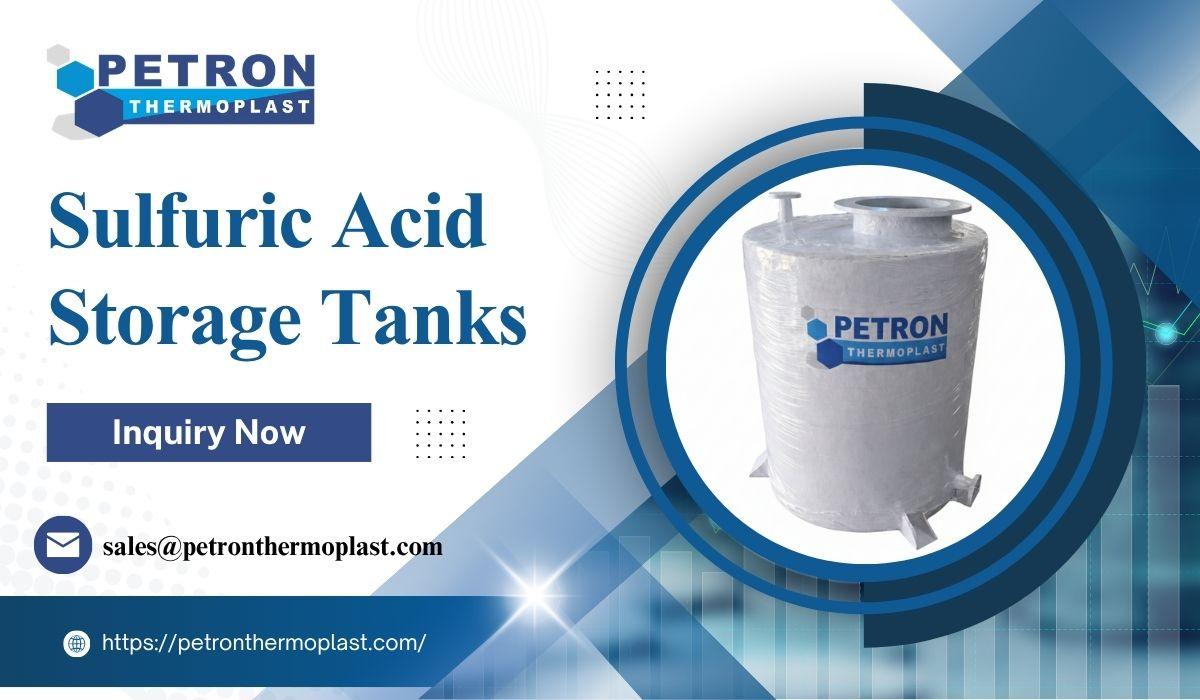
Sulfuric acid (H₂SO₄) is one of the most widely used industrial chemicals, playing a critical role in sectors such as fertilizers, chemical processing, petroleum refining, metal treatment, and wastewater management. Due to its highly corrosive nature and strong oxidizing properties, the safe storage of sulfuric acid requires specialized storage systems engineered for durability, chemical resistance, and operational safety. Sulfuric acid storage tanks designed for large scale industries provide high-capacity, robust, and corrosion-resistant solutions to ensure uninterrupted operations and regulatory compliance.
Characteristics of Sulfuric Acid
Understanding the chemical properties of sulfuric acid is essential for selecting appropriate storage systems.
Key Properties
- Highly corrosive and reactive
- Strong dehydrating agent
- Density: ~1.84 g/cm³ (concentrated)
- Boiling Point: ~337°C
- Exothermic reaction with water
- Aggressive towards metals and organic materials
These properties demand storage tanks that can withstand chemical attack, temperature variations, and mechanical stress.
Importance of Specialized Storage Tanks
Standard storage tanks are not suitable for sulfuric acid due to:
- Rapid corrosion of metal surfaces
- Risk of leakage and structural failure
- Safety hazards due to chemical exposure
Specialized sulfuric acid storage tanks are designed to:
- Prevent chemical degradation
- Ensure leak-proof containment
- Maintain structural integrity under load
- Provide long-term reliability
Materials Used in Sulfuric Acid Storage Tanks
FRP (Fiber Reinforced Plastic)
- Excellent corrosion resistance
- Lightweight yet strong
- Customizable design
- Suitable for large capacities
HDPE (High-Density Polyethylene)
- High chemical resistance
- Impact-resistant
- Suitable for medium to large storage
Rubber-Lined Steel
- Combines strength of steel with chemical resistance of rubber
- Suitable for high-pressure applications
PVDF Lining
- High resistance to aggressive chemicals
- Suitable for high-temperature applications
Design Considerations for Large Scale Tanks
Capacity Requirements
Large industries require tanks ranging from:
- 10,000 liters to over 500,000 liters
Design must accommodate process demand and storage cycles.
Structural Strength
- Reinforced walls for high load-bearing capacity
- Resistance to hydrostatic pressure
- Stability under environmental conditions
Corrosion Protection
- Multi-layer linings (FRP, rubber, or thermoplastics)
- Barrier layers to prevent chemical penetration
Safety Features
- Venting systems to release pressure
- Overflow protection
- Leak detection systems
- Secondary containment
Temperature Control
- Insulation for temperature-sensitive storage
- Heating systems for maintaining fluid properties
Types of Sulfuric Acid Storage Tanks
Vertical Storage Tanks
- Ideal for large capacities
- Space-efficient design
- Common in industrial plants
Horizontal Storage Tanks
- Suitable for transportation and low-height installations
- Easy access for maintenance
Underground Tanks
- Used where space is limited
- Protected from environmental exposure
Double-Walled Tanks
- Additional safety layer
- Prevents leakage into the environment
Manufacturing Process
Material Selection
- Based on acid concentration and temperature
- Selection of resin systems for FRP tanks
Fabrication Techniques
- Filament winding for uniform strength
- Hand lay-up for custom designs
- Thermoplastic welding for HDPE tanks
Quality Control
- Hydrostatic testing
- Spark testing for lining integrity
- Dimensional inspection
- Load testing
Key Features of Sulfuric Acid Storage Tanks
High Corrosion Resistance
- Resistant to concentrated and diluted sulfuric acid
- Prevents material degradation
Leak-Proof Construction
- Seamless joints and high-quality linings
- Ensures safe containment
Long Service Life
- Designed for extended industrial use
- Minimal degradation over time
Low Maintenance
- No rust or scaling
- Reduced need for repairs
Custom Design Flexibility
- Tailored sizes and configurations
- Integration with piping and process systems
Industrial Applications
Fertilizer Industry
Used for storing sulfuric acid in phosphate fertilizer production.
Chemical Manufacturing
Handles raw materials and intermediates.
Petroleum Refineries
Used in alkylation and refining processes.
Metal Processing
Used in pickling and surface treatment operations.
Water Treatment Plants
Used for pH control and chemical dosing.
Advantages Over Conventional Storage Systems
|
Parameter |
Specialized Acid Tank |
Standard Tank |
|
Corrosion Resistance |
Excellent |
Poor |
|
Safety |
High |
Low |
|
Maintenance |
Low |
High |
|
Service Life |
Long |
Short |
Installation Guidelines
- Ensure proper foundation and support
- Provide secondary containment
- Install ventilation and safety systems
- Follow industry standards and regulations
Maintenance and Inspection
Routine Maintenance
- Visual inspection for damage
- Checking seals and joints
- Monitoring for leaks
Periodic Testing
- Thickness measurement
- Integrity testing of lining
- Pressure testing
Maintenance Benefits
- Prevents unexpected failures
- Extends service life
- Ensures safe operation
Safety and Compliance
Sulfuric acid storage systems must comply with:
- ISO and ASTM standards
- Environmental and safety regulations
- Industry-specific guidelines
Safety Measures
- Proper labeling and signage
- Emergency response systems
- Personnel training
Environmental Considerations
- Prevention of chemical leakage
- Safe disposal and handling
- Use of recyclable materials
- Reduced environmental impact
Role in Large Scale Industrial Operations
Sulfuric acid storage tanks are critical for:
- Continuous production processes
- Bulk chemical storage
- Efficient material handling
- Operational safety
Their reliability directly impacts productivity and cost efficiency.
Conclusion
Sulfuric acid storage tanks for large scale industries are engineered to handle one of the most aggressive industrial chemicals safely and efficiently. With advanced materials, robust design, and strict quality control, these tanks provide superior corrosion resistance, structural strength, and long-term durability.
By ensuring safe storage, minimizing maintenance, and supporting large-scale operations, these tanks play a vital role in industries such as fertilizers, chemical processing, petroleum refining, and water treatment. Their ability to be customized according to capacity and operational requirements makes them an essential component of modern industrial infrastructure.
الأقسام
إقرأ المزيد
The global Medium Density Fiberboard (MDF) Market is poised for substantial expansion over the next decade, driven by increasing demand for cost-effective, durable, and sustainable wood-based materials. According to recent market insights, the MDF market size is valued at USD 44.39 billion in 2025 and is projected to reach USD 90.90 billion by 2035, growing at a robust compound annual...

Ear health is an important part of overall wellness, yet it is often overlooked until discomfort, ringing, reduced hearing, or ear-related concerns begin to affect daily life. Healthy ears support communication, balance, awareness, and overall quality of life. From conversations with loved ones to enjoying music, working productively, and staying aware of surroundings, hearing plays an...

Internet slit activities will be among the most preferred styles of electric fun now. Together with the business expansion with access to the internet plus mob Poker88 Online ile phone know-how, game enthusiasts everywhere can now love slit activities each time plus just about anywhere. All these activities put together bright colored pictures, joining sound effects, plus very simple game...

Online cricket and gaming platforms are becoming increasingly popular among sports enthusiasts who want a smooth and engaging digital experience. One such platform gaining attention is Cricbet99, known for its user-friendly interface and convenient accessibility. To access the features of this platform, users first need a Cricbet99 ID, which acts as their personal account on the system....

The Fermented Food and Drinks Market is experiencing a remarkable renaissance, driven by a growing global awareness of the link between diet, gut health, and overall wellness. From traditional staples like yogurt, kimchi, and sauerkraut to modern innovations like kombucha and kefir, fermented products are celebrated for their probiotic content and digestive benefits. This market represents a...
