Credit Score for Conventional Loan Mastery: What Every Borrower Needs to Know

Walking into a bank to ask for a mortgage can feel like an audition for a role you haven't quite memorized yet. The stakes are high because your home is more than just an asset; it is your sanctuary. One of the most significant factors that determines whether the curtain rises or falls is your credit score for conventional loan eligibility. Unlike other types of financing that might lean on government safety nets, traditional lenders rely heavily on your past financial behavior to predict your future reliability. This makes your three-digit rating the most powerful tool in your belt when negotiating for a piece of the American dream.
The Financial Benchmarks for Traditional Borrowing
Lenders use your history to calculate risk, and they have very specific tiers that dictate how much you will pay for the privilege of borrowing. While you do not need a perfect 850, staying above the basement level is non-negotiable. The table below outlines how most institutions view your standing during the application process.
|
Rating Category |
Typical Range |
Impact on Mortgage |
|
Exceptional |
760 - 850 |
Lowest interest rates and smallest insurance costs. |
|
Very Good |
700 - 759 |
Strong approval odds and competitive terms. |
|
Good |
660 - 699 |
Standard rates; may require higher insurance. |
|
Fair |
620 - 659 |
Minimum threshold; expect higher costs. |
Strategies for Optimizing Your Financial Profile
If your numbers are not quite where you want them to be, you have more control than you might realize. The key is to look at your finances through the eyes of an underwriter. They want to see that you have plenty of breathing room every month. A major part of this puzzle is learning how to lower your debt to income ratio so that your new house payment doesn't stretch your wallet to the breaking point. This often involves a mix of aggressive debt reduction and careful management of your recurring monthly obligations.
Actionable Methods for Debt Management
-
Review all current credit card balances and target those with the highest utilization first.
-
Avoid taking on any new installment loans, such as for a car or heavy machinery, while house hunting.
-
Request a credit limit increase on existing cards to lower your utilization percentage, provided you do not spend the new cushion.
-
Ensure all utility and subscription payments are made on time to prevent any sudden collections from appearing.
The Reality of Your Initial Investment
There is a common misconception that you need a mountain of gold to secure a traditional mortgage. In reality, the minimum down payment for conventional loan options has become much more inclusive over the last decade. For many, the entry point is far lower than the traditional twenty percent, which opens doors for younger buyers or those who prefer to keep their liquidity for other investments.
Comparing Initial Outlay Scenarios
-
The 3 Percent Option: Ideal for first-time buyers who have strong earnings but limited liquid savings.
-
The 5 to 10 Percent Range: Often results in slightly better interest rates and lower monthly insurance premiums.
-
The 20 Percent Gold Standard: This removes the requirement for mortgage insurance entirely and provides immediate significant equity.
-
Lender Credits: Sometimes you can opt for a slightly higher rate in exchange for the lender covering a portion of your closing costs.
Contrasting Different Lending Vehicles
As you shop around, you will likely find yourself choosing between a conventional mortgage vs fha loan. This is a pivotal decision that affects not just your closing day, but the next thirty years of your life. While one offers a lower barrier for those with bruised histories, the other rewards those who have maintained a cleaner financial slate with long-term savings and more flexibility in property types.
Key Differences at a Glance
|
Feature |
Traditional Loan |
FHA Loan |
|
Mortgage Insurance |
Can be cancelled at 20% equity. |
Usually lasts for the life of the loan. |
|
Property Standards |
Standard appraisal requirements. |
Strict safety and health inspections. |
|
Loan Limits |
Varies by county; generally higher. |
Strict limits based on local averages. |
Refining Your Approach to Homeownership
The process of buying a home is a lesson in patience and precision. It requires you to be honest about your current standing while being ambitious about your goals. By keeping a close eye on your reports and staying disciplined with your spending, you can navigate the complexities of the market with confidence. Remember that every small adjustment you make today—whether it is paying off a small balance or correcting a clerical error on a report—puts you one step closer to the front door of your new home. Stay the course, keep your documents organized, and do not be afraid to ask your lender tough questions about how to improve your standing.
Ultimately, the best borrower is an informed one. When you understand the mechanics of how interest rates are set and how your behavior influences your costs, you are no longer just a passive participant in the process. You become a savvy investor in your own future, ensuring that the home you buy is a source of joy and stability rather than a financial burden. Keep your eyes on the prize and your finances in check, and the results will speak for themselves.
الأقسام
إقرأ المزيد
Polaris Market Research has introduced the latest market research report titled U.S. Distributed Antenna Systems Market Size, Share, Trends, Industry Analysis Report By Offering, By DAS Type, By Coverage, By Ownership, By Technology, By User Facility, By Vertical, and By Region – Market Forecast, 2025–2034 that highlights the major revenue stream for the forecast period....

Executive Summary Agritourism Market: Growth Trends and Share Breakdown CAGR Value The global agritourism market was valued at USD 6.66 billion in 2024 and is expected to reach USD 10.00 billion by 2032During the forecast period of 2025 to 2032 the market is likely to grow at a CAGR of 5.20% While preparing this professional and exhaustive Agritourism Market research report, customer...

Global Mushroom Market Expected to Witness Strong Growth Driven by Health-Conscious Consumers and Expanding Functional Food Demand The global mushroom market is witnessing substantial growth as rising health awareness, growing demand for plant-based nutrition, and increasing use of mushrooms in food processing continue to reshape consumer preferences worldwide. According to...

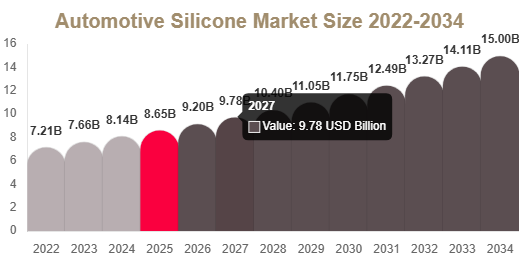
Automotive Silicone Market Overview The automotive silicone market is a key segment of the advanced automotive materials industry, focusing on the use of silicone-based products in vehicle manufacturing and components. Automotive silicones are widely used due to their excellent thermal stability, flexibility, durability, electrical insulation properties, and resistance to extreme environmental...
The 360-degree camera market faces several challenges that could hinder its growth, including fierce competition from traditional cameras and the technical limitations of current 360-degree models. Addressing these challenges is crucial for companies seeking to expand their market share and innovate. While the potential for growth in the 360-degree camera market is significant, understanding...