


What to Do If Your Smart Car Key Stops Working
A Smart Car Key is designed to make vehicle access seamless, secure, and intelligent. But when it suddenly stops working, the issue is rarely as simple as it seems. Unlike traditional keys, modern systems rely on encrypted communication, digital authentication, and sometimes even app-based control. This means the problem could be technical, environmental, or security-related.
Understanding how to diagnose and resolve these issues properly can save time, prevent unnecessary replacements, and even improve your vehicle’s overall security. This guide focuses on practical, advanced insights that go beyond the usual advice and help you handle Smart Car Key failures effectively.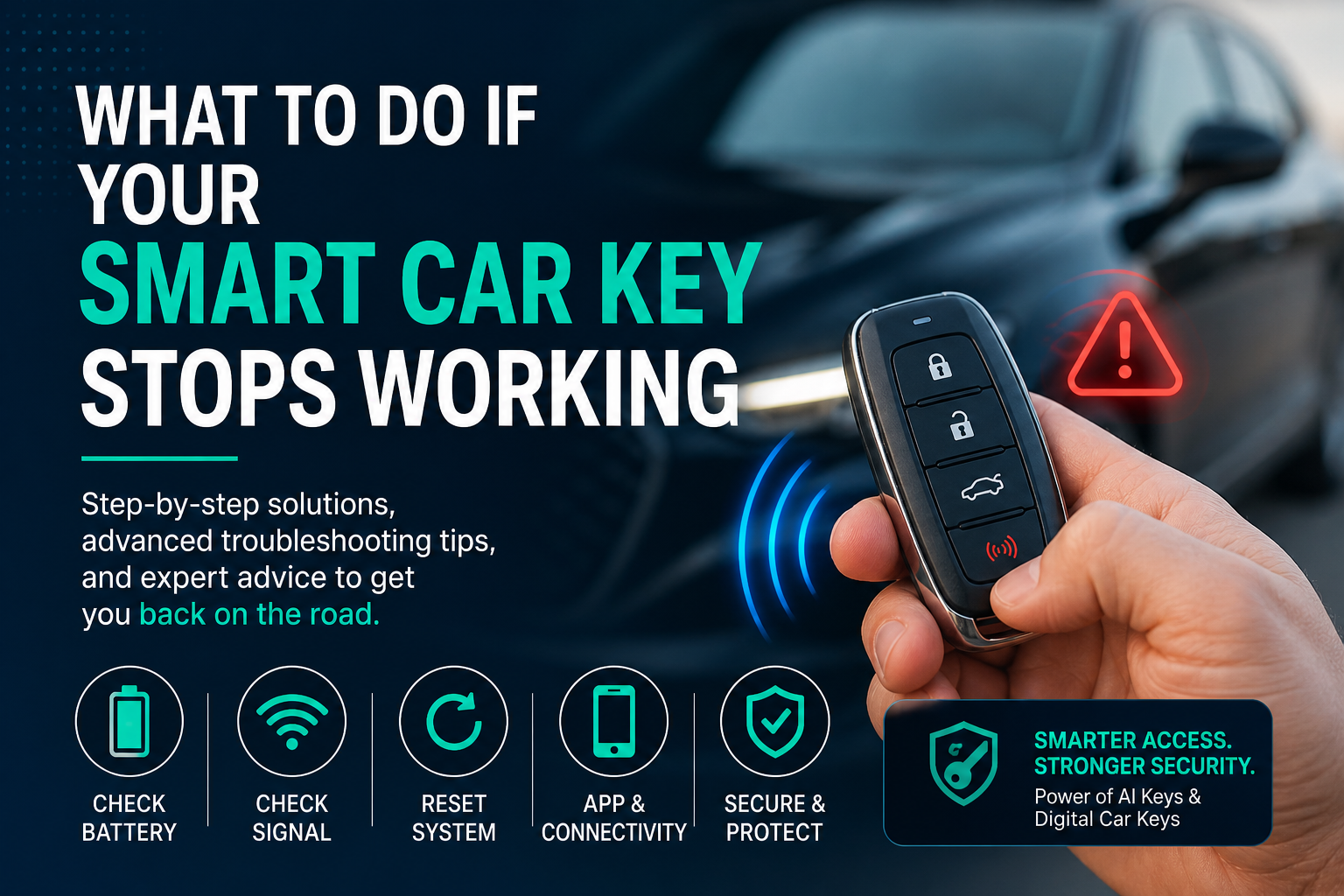
Understanding Why Smart Car Keys Fail
Most users assume that a non-working key means a dead battery, but that’s only one possibility. A Smart Car Key operates through a combination of radio signals, encrypted pairing, and software communication with the vehicle.
In many cases, failure happens due to signal desynchronization between the key and the car. This can occur after repeated failed attempts or when the system detects irregular access patterns. Environmental interference is another major factor. High-frequency zones such as parking areas with heavy electronic usage can disrupt communication between your key and the vehicle.
There are also internal factors like microchip wear, moisture exposure, or circuit degradation. In vehicles using Digital Car Keys, the issue might not even be physical-it could be related to app performance or connectivity problems.
Step One: Diagnose Signal Issues Before Anything Else
Before replacing the battery or assuming damage, it’s important to check whether the key is actually transmitting a signal. Try using the key in a different location or at a different distance from the car. If the key works intermittently, the issue is likely related to signal strength or interference rather than complete failure.
Another useful check is using a spare key. If the spare works perfectly, the problem is isolated to your primary Smart Car Key. If neither works consistently, the issue may lie within the vehicle’s receiver system.
Step Two: Reset the Vehicle-Key Communication
Smart Car Key systems rely on secure pairing, and sometimes this connection needs to be refreshed. Turning off the vehicle completely and removing the key from its range for a few minutes can help reset the system. When the key is reintroduced, the system may automatically re-establish communication.
For vehicles using Digital Car Keys, app-based resets can also resolve temporary glitches. Restarting the mobile application or reconnecting the device often fixes synchronization issues caused by software errors.
Step Three: Consider Environmental Interference
One of the least understood causes of Smart Car Key failure is environmental interference. Signals can be blocked or distorted by nearby electronic devices, telecom towers, or even unauthorized signal jammers.
If your key works in one location but fails in another, this is a strong indication of interference. In such cases, the key itself is not faulty, and replacing it would not solve the problem. Moving the vehicle or trying access from a different angle often restores functionality.
Step Four: Check for Hidden Internal Damage
Physical inspection alone is not enough to determine the condition of a Smart Car Key. Even if the outer casing looks intact, internal components may be compromised. Microchips can shift due to impact, and moisture exposure can damage circuits without leaving visible marks.
This is where a professional auto car key maker becomes essential. Using specialized diagnostic tools, they can identify internal faults that are not visible to the user and recommend the right solution.
Step Five: Reprogram the Smart Car Key
If the key has lost synchronization with the vehicle, reprogramming becomes necessary. Unlike traditional keys, Smart Car Key systems use encrypted protocols that require secure pairing.
Reprogramming ensures that the vehicle recognizes the key as an authorized device. This process should always be done using trusted car key solutions to avoid security risks. Unauthorized tools can compromise the system and create vulnerabilities.
Step Six: Evaluate Digital and App-Based Issues
In modern vehicles, Digital Car Keys are becoming increasingly common. If you are using a smartphone-based system, the issue may lie within the software rather than the key itself.
Connectivity problems such as Bluetooth or NFC failures can prevent the system from working properly. Outdated applications or incorrect permission settings can also disrupt access. Updating the app, checking connectivity, and restarting the device often resolve these issues.
Step Seven: Use AI-Based Diagnostics for Deeper Insights
Advanced Smart AI tools are now capable of analyzing key performance and identifying issues in real time. These AI powered solutions can detect weak signals, unusual access attempts, and even predict potential failures based on usage patterns.
This level of intelligence is what sets AI Keys apart from traditional systems. Instead of simply failing, they provide insights that help users understand and resolve problems more efficiently.
Step Eight: Know When Replacement Is the Better Option
Not every issue can be fixed through repair or reprogramming. If the internal circuitry is damaged or the key has been compromised, replacement is the safest option.
Repeated failures, security concerns, or unsuccessful reprogramming attempts are strong indicators that a new Smart Car Key is required. Upgrading to a more advanced system can also improve security and performance.
Preventing Future Smart Car Key Problems
Preventive care is often overlooked but plays a crucial role in maintaining performance. Keeping the key away from strong electromagnetic sources helps maintain signal stability. Regularly updating connected applications ensures compatibility with the vehicle’s system.
Handling the key carefully and avoiding exposure to moisture can prevent internal damage. Proactive battery replacement is also important, as weak power can lead to inconsistent performance rather than complete failure.
The Role of AI in Modern Car Key Solutions
The integration of AI powered solutions is redefining how Smart Car Keys function. These systems are becoming more adaptive, capable of learning user behavior and responding to potential threats instantly.
With features like behavioral authentication and real-time monitoring, AI Keys provide a level of security that traditional systems cannot match. Digital Car Keys are also evolving, allowing users to manage access remotely and securely through cloud-based platforms.
This shift toward intelligent systems is making vehicle access not only more convenient but also significantly more secure.
Frequently Asked Questions
Why does my Smart Car Key stop working suddenly
Sudden failure can be caused by signal interference, synchronization issues, internal damage, or software glitches in Digital Car Keys.
Can I fix my Smart Car Key at home
Basic troubleshooting like checking the battery or restarting the system can be done at home, but complex issues require professional car key solutions.
How do I know if reprogramming is needed
If the key has power but is not recognized by the vehicle, reprogramming is usually required to restore secure communication.
Are Digital Car Keys more reliable
They offer advanced features and flexibility, but their performance depends on software stability and connectivity.
When should I replace my Smart Car Key
Replacement is necessary when the key is internally damaged, compromised, or repeatedly fails despite troubleshooting.
Conclusion
When a Smart Car Key stops working, the solution requires more than a quick fix. By understanding the deeper causes and using the right approach, you can diagnose the issue accurately and take effective action.
From signal analysis to AI-driven diagnostics, modern car key solutions are designed to provide both convenience and security. Staying informed and proactive ensures that your vehicle remains accessible, protected, and aligned with the future of automotive technology.
Категории
Больше
NEWARK, Del., June 10, 2026 — The Europe Duckweed Protein Industry is projected to grow from USD 220.0 million in 2026 to USD 655.0 million by 2036, registering a CAGR of 11.5% during the forecast period, according to Future Market Insights (FMI). Growing demand for sustainable protein sources, increasing adoption of plant-based nutrition, and rising investment in novel food ingredients...

According to the latest report published by Data Bridge Market Research, the Acoustic Microscopy Market CAGR Value The global acoustic microscopy market size was valued at USD 1.30 billion in 2025 and is expected to reach USD 2.23 billion by 2033, at a CAGR of 7.00% during the forecast period The Acoustic Microscopy Market analysis...
A wedding ring is more than a beautiful piece of jewellery—it represents a lifelong promise and the story you share with your partner. Choosing custom wedding rings gives couples the opportunity to create something truly personal, moving beyond traditional designs to craft a ring that reflects their unique journey together. From selecting the perfect metal to choosing finishes, textures,...

Choosing the right seeds company in India is one of the most important decisions for farmers and growers. Quality seeds are the starting point of a successful harvest because they provide better germination, healthy plant growth, and improved crop production. A trusted seed company helps farmers achieve consistent results by offering reliable and high-performing seed varieties. Why Choosing the...
Riot Games has launched Valorant’s 12.00 update, introducing a fresh pistol and numerous agent and map modifications to kick off 2026 with a bang. A brand-new sidearm, the Bandit pistol, has entered the fray, priced at 600 credits. Sitting between the Ghost and Sheriff in cost, it boasts one-shot headshot potential, offering players a powerful but affordable option for light rounds....