


Mobility Sharing Market Outlook for Investors, Operators, and Mobility Technology Providers
The global mobility sharing market is undergoing a massive transformation as urbanization and digitalization reshape how people move from one point to another. Traditionally, personal vehicle ownership was the primary mode of transportation. However, the rise of shared mobility services has introduced a more flexible, cost effective, and sustainable alternative. By utilizing digital platforms to connect users with transportation providers, the industry is moving toward an integrated ecosystem that prioritizes access over ownership.
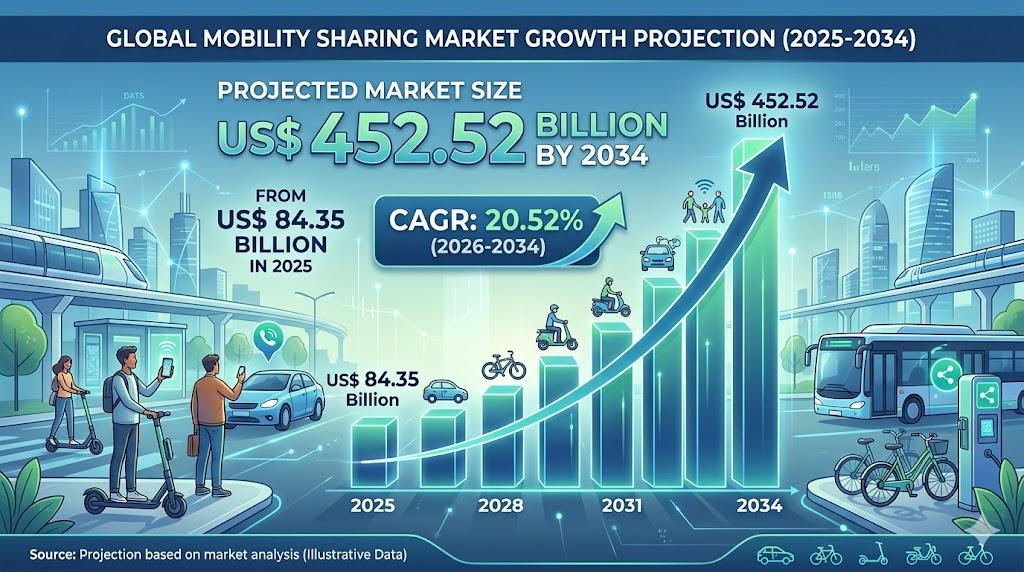
The global mobility sharing market size is projected to reach US$ 452.52 billion by 2034 from US$ 84.35 billion in 2025. The market is anticipated to register a CAGR of 20.52% during the forecast period 2026-2034. This rapid growth is driven by the increasing penetration of smartphones, high speed internet connectivity, and a shift in consumer behavior toward on demand services.
Market Drivers and Urban Influence
One of the primary catalysts for the expansion of mobility sharing is the increasing density of urban populations. As cities become more crowded, traditional transportation infrastructure struggles to keep up with the demand. Traffic congestion and limited parking spaces have made owning a private car less convenient for city dwellers. Consequently, shared mobility services such as ride hailing, car sharing, and micro mobility offer a practical solution to these urban challenges.
Furthermore, environmental concerns are playing a significant role in market adoption. Governments across the globe are implementing stricter emission regulations to combat climate change. Shared mobility helps reduce the total number of vehicles on the road, leading to lower carbon emissions and a smaller environmental footprint. The integration of electric vehicles into sharing fleets is further accelerating this green transition.
Technological Integration and the User Experience
The success of the mobility sharing market is deeply rooted in technological advancements. The development of sophisticated mobile applications allows users to book rides, track vehicles in real time, and make seamless digital payments. Data analytics and artificial intelligence are also being utilized by service providers to optimize routes, manage fleet distribution, and predict demand patterns. This level of efficiency ensures that users have reliable access to transportation whenever and wherever they need it.
Moreover, the concept of Mobility as a Service is gaining traction. This approach integrates various forms of transport services into a single mobility service accessible on demand. By combining public transit with shared bikes, scooters, and cars, cities can create a comprehensive network that reduces the reliance on private automobiles.
Download Sample Report: https://www.theinsightpartners.com/sample/TIPTE100000570
Key Players in the Global Mobility Sharing Market
The competitive landscape of the mobility sharing market is characterized by the presence of several established players and emerging startups. These companies are focusing on geographic expansion and service diversification to capture a larger market share. Key players in the industry include:
-
ANI Technologies Pvt. Ltd. (Ola)
-
Avis Budget Group, Inc.
-
BlaBlaCar
-
Europcar
-
Gett
-
Lyft, Inc.
-
Omoove s.r.l.
-
Taxify OU (Bolt)
-
The Hertz Corporation
-
Uber Technologies Inc.
Segmenting the Shared Mobility Landscape
The market is typically segmented based on the type of service provided. Ride hailing remains the largest segment, driven by the convenience of door to door service. Car sharing is also seeing significant interest, particularly for users who require a vehicle for longer trips without the costs associated with maintenance and insurance. Additionally, micro mobility, which includes shared bicycles and electric scooters, has become a popular choice for short distance "last mile" connectivity, bridging the gap between public transport hubs and final destinations.
Future Outlook
The future of the mobility sharing market looks highly promising as autonomous vehicle technology continues to mature. The potential introduction of robotaxis and self driving shuttles could drastically reduce operational costs by eliminating the need for human drivers, making shared rides even more affordable for the general public. Additionally, the continued expansion of 5G networks will provide the necessary infrastructure for vehicle to everything communication, enhancing safety and coordination within shared fleets. As smart city initiatives expand globally, mobility sharing will likely become the backbone of urban transportation, providing a seamless, interconnected, and sustainable way for populations to navigate the modern world.
Related Reports:
Oversized Cargo Transportation Market
About Us
The Insight Partners is a leading global market research and consulting firm specializing in delivering actionable insights across various industries. Our research reports combine extensive primary and secondary research to provide accurate market intelligence, helping businesses make informed strategic decisions. The company provides detailed analysis on emerging technologies, market trends, competitive landscapes, and growth opportunities across sectors including technology, healthcare, manufacturing, and energy.
Contact Us:
Contact Person: Ankit Mathur
E-mail: ankit.mathur@theinsightpartners.com
Phone: +1-646-491-9876
Κατηγορίες
Διαβάζω περισσότερα
Australia offers an incredible backdrop for top action like England Vs Wales. The international schedule features an intense matchup between powerful squads. Historic rivalries bring massive energy to modern stadiums. Players work hard for every single yard on the field. Legendary grounds host these iconic, dynamic sports battles. You can experience ultimate sports excitement down under....

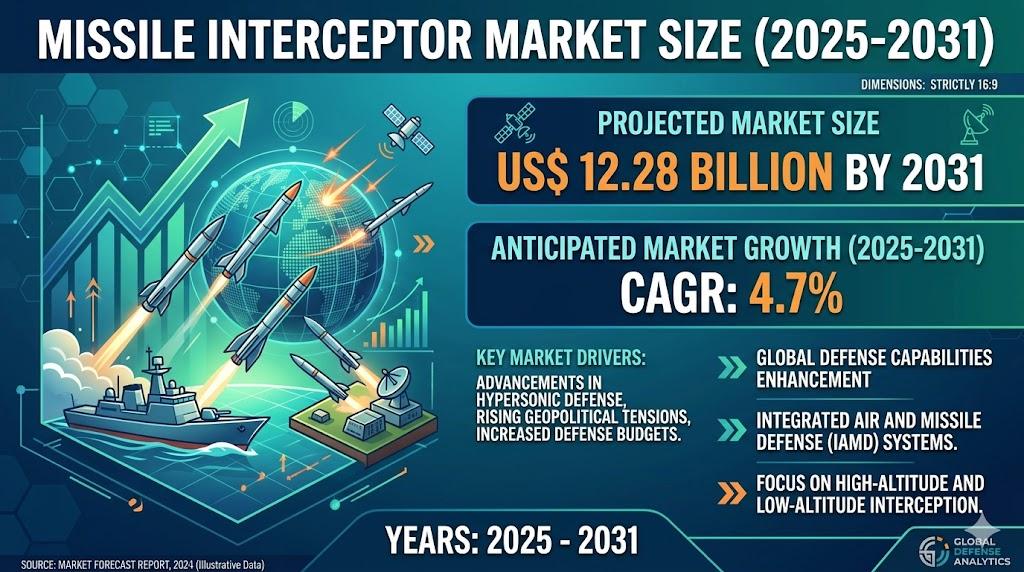
The global defense landscape is experiencing a rapid transformation driven by evolving security challenges and geopolitical instabilities. The Missile Interceptor Market size is expected to reach US$ 12.28 billion by 2031.The market is anticipated to register a CAGR of 4.7% during 2025 to 2031.The continuous proliferation of missile technology, particularly ballistic missiles and...
North Miami Beach, FL – When a loved one needs support to continue living independently at home, finding a trustworthy and compassionate care provider becomes the top priority for any family. For residents of Miami-Dade County, All County Staffing Dade, Inc. offers a professional and personalized solution to bridge the gap between hospital care and the comfort of home....

Polaris Market Research has published a new report titled Glass Mat Market Share, Size, Trends, Industry Analysis Report, By Mat Type (Chopped Strand Mat, Continuous Filament Mat); By Binder Type; By Manufacturing Process; By End-Use Industry; By Region; Segment Forecast, 2023 - 2032 that delivers up-to-date analysis with analyses of the current and future effects of the continuously changing...

Introduction Reliable CNC machines are essential for maintaining precision, productivity, and efficiency in today's manufacturing industry. To keep these machines operating at their best, businesses require high-quality replacement components that meet original equipment standards. Fanuc is a globally recognised brand known for manufacturing advanced CNC systems and genuine spare parts that...
