FRP Storage Tank Supplier for Bulk Industrial Requirements
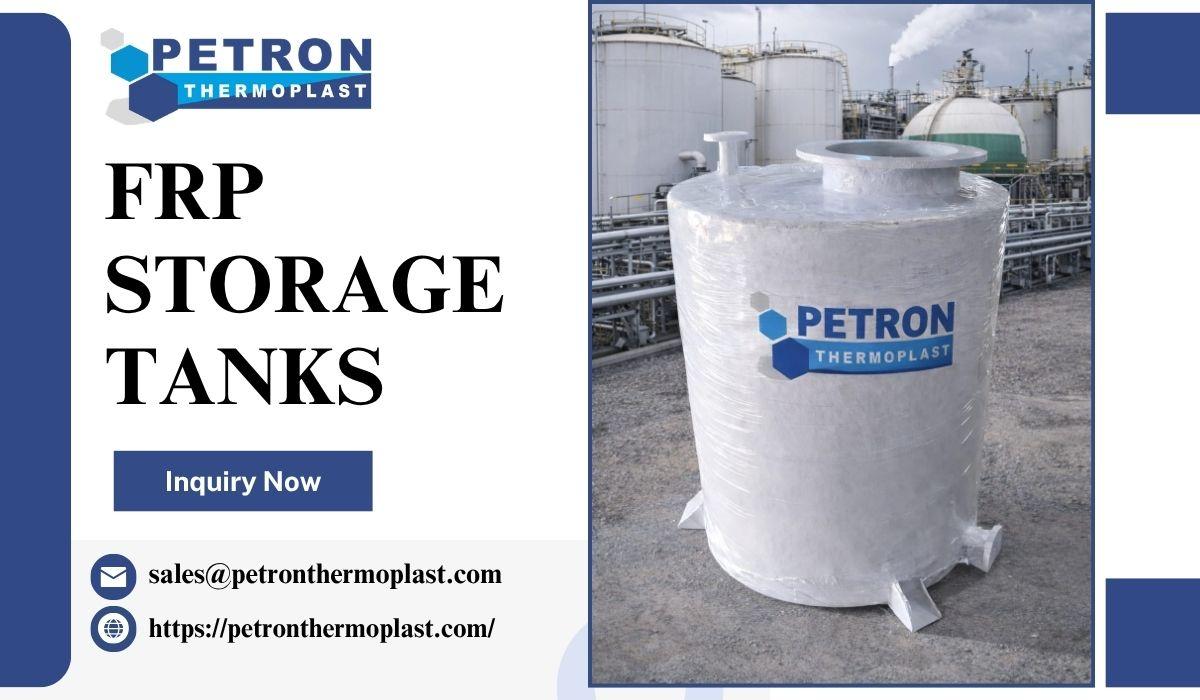
Bulk storage of chemicals, process fluids, and industrial media demands containment systems with high structural integrity, corrosion resistance, and long service life. Fiber Reinforced Plastic (FRP) storage tanks are engineered to meet these requirements through composite construction that combines high-strength fibers with chemically resistant resins. As a supplier for bulk industrial requirements, FRP storage tanks are designed for large capacities, continuous operation, and compliance with international standards, ensuring safe and efficient storage across multiple industries.
Composite Material Overview
FRP is a composite material consisting of a polymer resin matrix reinforced with glass fibers. The combination delivers mechanical strength and chemical resistance superior to conventional materials.
Constituent Materials
- Reinforcement: E-glass or C-glass fibers
- Resin Systems: Polyester, Vinyl Ester, Epoxy
- Additives: UV stabilizers, fire retardants, fillers
Key Material Properties
- Density: 1.5 – 2.0 g/cm³
- Tensile Strength: 100 – 300 MPa (laminate dependent)
- High corrosion resistance across a wide pH range
- Low thermal conductivity
- Excellent fatigue resistance
These properties enable FRP tanks to withstand aggressive chemicals and environmental exposure over extended periods.
Design Requirements for Bulk Storage
Capacity and Geometry
- Capacity Range: 1,000 liters to 500,000+ liters
- Vertical cylindrical tanks for stationary installations
- Horizontal tanks for transport and space constraints
- Custom geometries for process-specific layouts
Structural Design
- Laminate thickness designed using hoop stress calculations
- Reinforced shells and domed or flat bottoms
- External stiffeners for large-diameter tanks
- Wind and seismic load considerations for outdoor installations
Corrosion Barrier Construction
FRP tanks incorporate a multi-layer structure:
- Inner Liner (Corrosion Barrier):
- Resin-rich layer with chemical resistance
- Thickness typically 2.5–5 mm
- Glass fiber reinforcement for strength
- Designed for load-bearing capacity
- UV-resistant topcoat
- Environmental protection
Manufacturing Technologies
Filament Winding
- Continuous glass fibers wound under tension
- Controlled fiber orientation for strength optimization
- Suitable for cylindrical tanks
Hand Lay-Up / Spray-Up
- Used for complex geometries
- Layer-by-layer resin and fiber application
Quality Control
- Resin curing validation
- Barcol hardness testing
- Hydrostatic pressure testing
- Dimensional inspection
- Spark testing for liner integrity
Key Features for Industrial Applications
Corrosion Resistance
FRP tanks are compatible with:
- Acids (HCl, H₂SO₄, HNO₃ – concentration dependent)
- Alkalis and salts
- Industrial solvents and effluents
High Strength-to-Weight Ratio
- Lightweight compared to steel
- Reduced foundation and transport costs
- High mechanical stability
Leak-Proof Construction
- Monolithic structure with minimal joints
- Integrated nozzles and fittings
- Reduced risk of leakage
Thermal Stability
- Suitable for moderate temperature operations
- Low thermal expansion compared to thermoplastics
Custom Fabrication
- Nozzle orientation and sizing
- Manways, ladders, and platforms
- Level indicators and instrumentation ports
Technical Specifications
Typical FRP storage tank specifications:
- Diameter: Up to 5,000 mm or more
- Height: Up to 15,000 mm or more
- Wall Thickness: 6 mm to 50 mm (design dependent)
- Operating Temperature: Up to 120°C (resin dependent)
- Design Standards: ASTM D3299, BS 4994, ASME RTP-1
Industrial Applications
Chemical Processing Plants
- Storage of acids, alkalis, and intermediate chemicals
- Integration with dosing and transfer systems
Water and Wastewater Treatment
- Storage of treatment chemicals
- Use in ETP and STP systems
Oil and Gas Sector
- Chemical storage for upstream and downstream operations
Power Generation
- Storage of cooling water treatment chemicals
- Flue gas desulfurization systems
Fertilizer and Agrochemical Industry
- Storage of fertilizers, acids, and process chemicals
Bulk Supply Capabilities
A supplier addressing bulk industrial requirements must provide:
- Large-scale manufacturing capacity
- Standardized and customized tank designs
- Consistent quality across multiple units
- Logistics and transport management
- On-site installation support
Advantages Over Conventional Materials
|
Parameter |
FRP Storage Tank |
Steel Tank |
|
Corrosion Resistance |
Excellent |
Requires coating |
|
Weight |
Lightweight |
Heavy |
|
Maintenance |
Low |
High |
|
Service Life |
Long |
Moderate |
|
Installation |
Easy |
Complex |
Installation Considerations
Foundation Design
- RCC foundation with proper load distribution
- Level and vibration-free surface
Anchoring and Support
- Anchoring for wind and seismic stability
- Saddle supports for horizontal tanks
Piping Integration
- Flexible connections to avoid stress
- Proper alignment with nozzles
Maintenance and Inspection
Routine Inspection
- Visual inspection for surface damage
- Checking of nozzles and joints
Preventive Maintenance
- Periodic cleaning
- Inspection of external coatings
Lifecycle Performance
- Service life exceeding 20–25 years
- Minimal performance degradation
- Low operational cost
Safety and Compliance
- Designed as per international standards
- Fire-retardant resin options available
- Compliance with environmental regulations
- Safe handling of hazardous chemicals
Custom Engineering Solutions
FRP storage tanks can be customized based on:
- Chemical compatibility requirements
- Temperature and pressure conditions
- Space constraints
- Integration with automation systems
Environmental Benefits
- Reduced risk of chemical leakage
- Long lifecycle reduces material waste
- Lower energy consumption in manufacturing compared to metals
- Recyclable components
Role in Industrial Infrastructure
FRP storage tanks are critical for:
- Safe containment of bulk chemicals
- Continuous process operations
- Regulatory compliance
- Efficient plant management
Conclusion
FRP storage tanks are a reliable and technically advanced solution for bulk industrial storage requirements. Their superior corrosion resistance, structural strength, and customizable design make them suitable for handling a wide range of chemicals and process fluids.
As a supplier for bulk industrial applications, the ability to deliver consistent quality, large capacities, and tailored solutions is essential. FRP tanks meet these demands by offering long service life, low maintenance, and high operational safety.
For industries requiring durable and efficient storage systems, FRP storage tanks provide a proven solution that supports performance, safety, and sustainability in modern industrial operations.
الأقسام
إقرأ المزيد
The same DNS trick that content delivery networks and large hosts use to spread heavy traffic and avoid outages has also been adopted by criminals. Known as "fast-flux," the approach rapidly swaps the IP addresses associated with a domain so that traffic can be rerouted if a particular host fails or becomes overloaded. That flexibility makes it useful for legitimate purposes — load...

"Heel Incision Devices Market Summary: According to the latest report published by Data Bridge Market Research, the Heel Incision Devices Market CAGR Value The global heel incision devices market size was valued at USD 200.86 million in 2025 and is expected to reach USD 254.24 million by 2033, at a CAGR of 2.99% during the forecast period Heel...

Let’s face it, building a website isn’t always cheap. Businesses, especially small ones, often hold back because they think only big budgets can get professional results. The truth? You can absolutely get affordable web solutions without sacrificing quality. The trick is knowing where to look and who to trust. A website isn’t just a pretty online brochure. It’s your...
Introduction to THC Vape in Qatar In recent years, the global conversation around cannabis products has evolved rapidly, and vaping has emerged as one of the most widely discussed methods for consuming cannabis extracts. People researching thc vape qatar are often looking for information about products, convenience, and the vaping experience itself. Whether someone is a...
HBO Max is set to debut its standalone streaming service in the United Kingdom and Ireland starting March 26, marking a significant expansion into these markets. Subscribers will gain access to a diverse library that includes content from HBO, Warner Bros. Pictures, Warner Bros. Television, DC Studios, and Max Originals. The service offers four different subscription options: two with...