


Maximizing API ROI: Measuring the Financial Impact of MuleSoft Consulting
Investment in integration technology often represents a significant portion of the IT budget. Organizations choose MuleSoft to solve complex data challenges. However, technical success does not always equal financial success. To justify the cost, leaders must measure the Return on Investment (ROI) of their APIs. This explores how MuleSoft consulting transforms technical connectivity into measurable financial gain. We will also examine how these integrations support platforms like Salesforce Marketing Cloud.
The Financial Logic of API-Led Connectivity
Traditional point-to-point integration creates technical debt. Every new connection requires a custom script. This approach is expensive to maintain. MuleSoft consulting introduces the API-led connectivity model. This model treats APIs as reusable building blocks.
1. Reducing Development Costs
When you build a reusable API, you save money on the next project. For example, a "Customer System API" connects to your main database. The first project pays for its creation. The second project uses it for free. This reuse reduces labor costs significantly.
2. Decreasing Maintenance Overhead
Point-to-point code breaks easily when systems change. APIs provide a layer of abstraction. You can update the backend database without rewriting the entire integration. Consultants help design these layers to minimize future repair costs.
Measuring the Cost of Delivery
To calculate ROI, you must first understand your baseline costs. Most companies do not track the hours spent on manual data entry or fixing broken links.
1. The Speed to Market Metric
How fast can you launch a new digital service? Companies using MuleSoft consulting often see a 30% reduction in project timelines. Faster delivery means you realize revenue sooner. If a new product generates $100,000 per month, launching three months early adds $300,000 to the bottom line.
2. Labor Arbitrage and Efficiency
Consultants implement automation that reduces manual IT tasks. By using the Anypoint Platform, developers spend less time on "plumbing" and more time on "innovation." High-performing teams report a 40% increase in developer productivity.
Salesforce Marketing Cloud and Integration Value
Marketing success depends on data freshnes. Salesforce Marketing Cloud requires a steady stream of customer information to function. Without proper integration, your marketing team uses stale data.
1. Real-Time Engagement Impact
MuleSoft connects your ERP and Point of Sale (POS) systems to Salesforce Marketing Cloud. This allows for real-time triggers. A customer buys a product, and they receive a personalized email within seconds. Real-time marketing typically sees a 20% higher conversion rate than delayed batches.
2. Comprehensive Salesforce Marketing Cloud Services
Expert consultants provide specialized Salesforce Marketing Cloud Services. They ensure that data schemas in MuleSoft match the requirements of Marketing Cloud Data Extensions. This alignment prevents data loss and reduces the cost of cleaning data. Properly mapped data lowers the "Total Cost of Ownership" for your marketing stack.
Technical Components of ROI
Measuring ROI requires looking at specific technical metrics. These metrics serve as leading indicators for financial success.
1. API Reuse Ratio
This is the most critical metric for any MuleSoft implementation.
$$Reuse Ratio = \frac{Total API Calls}{Number of Unique APIs}$$
A high ratio indicates that your consulting partner built a "Composable" architecture. If your reuse ratio is above 2.5, you are likely saving 50% on integration costs for new projects.
2. Infrastructure Consolidation
Many firms run multiple legacy middleware tools. MuleSoft consulting helps consolidate these into one platform. This reduces licensing fees and hardware costs. Removing one legacy middleware system can save a large enterprise over $200,000 annually in maintenance alone.
Quantifying Risk Mitigation
Financial impact is not just about earning more. It is about losing less. Technical failures cause downtime. Downtime costs money.
Security and Governance
MuleSoft provides a centralized plane for API security. Consultants set up automated policies for encryption and authentication. This reduces the risk of a data breach. The average cost of a data breach in 2026 is over $4.5 million. Investing in secure API design is a form of financial insurance.
Reliability and Uptime
Poorly built integrations crash under high load. Professional consultants use "Circuit Breaker" patterns and "Retries." These technical strategies keep systems running during traffic spikes. For an e-commerce company, one hour of downtime during a holiday sale can cost millions in lost sales.
The Role of the Center for Enablement (C4E)
A C4E is a cross-functional team that drives API adoption. MuleSoft consulting Services often starts with building this team. The C4E ensures that the business treats APIs as products, not just projects.
-
Standardization: They create templates that speed up development.
-
Discovery: They maintain a portal where developers find existing APIs.
-
Education: They train internal staff to reduce reliance on outside firms.
By establishing a C4E, companies ensure that the ROI of MuleSoft continues to grow even after the consultants leave.
Case Study: Retail Integration ROI
A global retailer implemented MuleSoft to connect their inventory system with Salesforce Marketing Cloud.
The Challenge
The company had 50 different inventory databases. Marketing campaigns often promoted items that were out of stock. This led to a 15% order cancellation rate.
The Solution
Consultants built a "Unified Inventory API." This API aggregated data from all 50 databases. They then pushed this data into Salesforce Marketing Cloud.
The Financial Result
-
Cancellation Reduction: Order cancellations dropped by 12%. This saved $2 million in lost revenue.
-
Ad Spend Efficiency: Marketing spend was redirected to in-stock items. This increased Return on Ad Spend (ROAS) by 25%.
-
IT Savings: The company retired three legacy servers, saving $50,000 per year.
Key Statistics for 2026
The following data points reflect the current state of API ROI in the manufacturing and retail sectors:
-
Average ROI Period: Most enterprises achieve a break-even point on MuleSoft consulting within 14 to 18 months.
-
Productivity Gains: Organizations using API-led connectivity report that developers build new features 2x faster.
-
Customer Retention: Integrated customer experiences increase retention rates by 10%.
-
Operational Savings: Automated data flows reduce manual processing costs by an average of 60%.
Avoiding the "Cost Pitfall"
MuleSoft is a powerful tool, but it is expensive if used incorrectly. Some companies use it like a traditional ETL (Extract, Transform, Load) tool. This is a mistake.
The Technical Trap
If you use MuleSoft only for moving data in batches, you lose the value of reusability. Consultants prevent this by enforcing "System," "Process," and "Experience" API tiers. Without this structure, you build a "Spaghetti" mess of APIs. This mess is just as expensive to maintain as the old point-to-point code.
Managing Subscription Costs
MuleSoft charges based on "vCores" or "Base Units." Efficient coding reduces the compute power needed for each API. Professional consultants optimize the "Mule Runtime" to handle more transactions with less hardware. This directly lowers your monthly subscription bill.
Future-Proofing with AI and Data Cloud
As we move through 2026, AI is changing the ROI equation. MuleSoft now connects to Data Cloud to feed AI models.
AI Context and Accuracy
AI is only as good as its data. MuleSoft provides the real-time pipeline that gives AI its context. By integrating these systems, you improve the accuracy of AI-driven sales forecasts. Better forecasts lead to better inventory management and higher profits.
Automating the API Lifecycle
New AI tools help consultants write API documentation and unit tests. This reduces the "Technical Labor" cost of an integration project. The time saved allows teams to focus on high-value business logic.
Strategic Recommendations for Leadership
To maximize the financial impact of your integration strategy, follow these steps:
-
Audit Existing Assets: Do not build what you already have. Use the Anypoint Exchange to find reusable APIs.
-
Focus on High-Value Use Cases: Start with integrations that affect customer experience or revenue.
-
Standardize Early: Set clear coding standards to avoid rework.
-
Invest in Salesforce Marketing Cloud: Use your API foundation to personalize your outreach.
Conclusion
MuleSoft consulting is an investment in business agility. While the initial costs are significant, the long-term savings are higher. By focusing on reusability, security, and speed, companies turn their IT department from a cost center into a profit driver.
The integration of Salesforce Marketing Cloud ensures that these technical efforts lead to better customer relationships. In a world where data is the most valuable asset, the ability to move that data efficiently is the ultimate competitive advantage. Measuring the ROI of your APIs is the only way to prove that your digital transformation is working. Organizations that master this measurement will lead their industries in the years to come.
Κατηγορίες
Διαβάζω περισσότερα
According to the latest report published by Data Bridge Market Research, the Myeloproliferative Disorders Drugs Market The global myeloproliferative disorders drugs market size was valued at USD 9.75 billion in 2025and is expected to reach USD 12.83 billion by 2033, at a CAGR of 3.50% during the forecast period This global Myeloproliferative Disorders Drugs Market report is a...

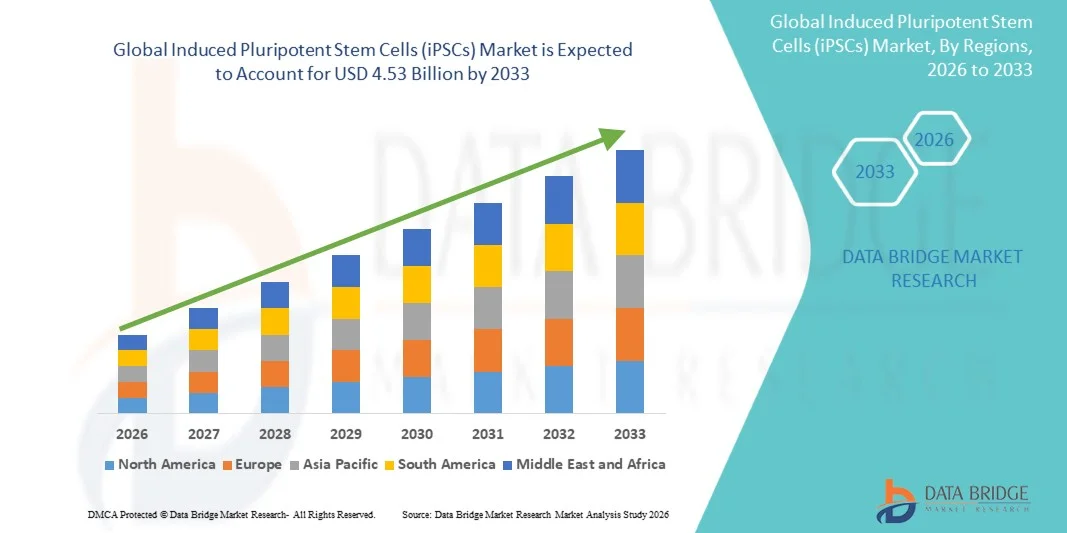
"According to the latest report published by Data Bridge Market Research, the Induced Pluripotent Stem Cells (iPSCs) Market The global induced pluripotent stem cells (iPSCs) market size was valued at USD 2.13 billion in 2025 and is expected to reach USD 4.53 billion by 2033, at a CAGR of 9.90% during the forecast period A talented team works strictly with...
Traveling to or from the airport can often become stressful, especially when dealing with traffic, luggage, flight schedules, or last-minute transportation issues. Whether you are a business traveler rushing to catch a flight or a family returning from a holiday, choosing a dependable Chelmsford Taxi service can make the entire journey easier and more comfortable. Reliable airport...

The Champions League Final is getting close now. Only thirteen days remain until the action starts. Rewa FC has entered full tournament mode today. The players moved into the training academy in Vatuwaqa. This facility belongs to the Fiji Football Association. Everyone wants to prepare in the best way possible. They want total readiness for the team before the games begin soon. Teams are...

According to the latest report published by Data Bridge Market Research, the New Energy Vehicles Market Data Bridge Market Research analyses that the global energy new energy vehicles market which was USD 432 billion in 2022, would rocket up to USD 956 billion by 2030, and is expected to undergo a CAGR of 22.55% during the forecast period. New Energy Vehicles Market research...
