Offshore Wind Technology: A Complete Guide to How Turbines Power Coastal Nations
Fixed Offshore Wind Turbines: The Backbone of Modern Offshore Wind Technology
The global race toward clean energy has elevated fixed offshore wind turbines and offshore wind technology to the forefront of the energy transition conversation. As nations accelerate their decarbonization agendas, offshore wind has emerged as one of the most powerful and scalable clean power solutions available combining the relentless strength of ocean winds with rapid engineering advancements to deliver electricity at a scale that onshore installations simply cannot match. Understanding how fixed offshore turbines work, what makes them the current industry standard, and where the sector is heading is essential for anyone tracking the future of global energy.
What Are Fixed Offshore Wind Turbines?
Fixed offshore wind turbines are structures anchored directly to the seabed through rigid substructures, typically in water depths of up to approximately 60 meters. Unlike their floating counterparts which are moored to the seabed with cables and can operate in much deeper waters fixed turbines rest on permanent foundations that include monopiles, jacket structures, tripods, and gravity-based foundations.
The monopile is by far the most widely deployed foundation type today. It involves driving a large-diameter steel cylinder deep into the ocean floor, providing a stable base for the turbine tower, nacelle, and rotating blades above. Jacket foundations lattice-like steel frames bolted to the seabed are favored in slightly deeper or more complex geological conditions, offering superior load distribution.
Fixed turbines currently dominate the global offshore wind fleet because the technology is mature, proven, and commercially optimized. Installation vessels, supply chains, and grid connection systems are all designed around this architecture, making fixed-bottom installations the most cost-efficient option in shallow and transitional water zones.
How Offshore Wind Technology Generates Power
At its core, offshore wind technology converts the kinetic energy of sea wind into electricity through rotating blades connected to a generator housed in the nacelle at the top of the tower. Modern offshore turbines are engineering marvels individual units can now exceed 15 megawatts (MW) of generating capacity, with rotor diameters stretching beyond 200 meters. The stronger and more consistent wind speeds found at sea, compared to onshore locations, allow offshore turbines to generate substantially more electricity per unit for a greater proportion of the year.
Electricity generated by each turbine flows through underwater cables to an offshore substation, where it is converted to high voltage for efficient transmission via subsea cables to onshore grid connection points. Advances in high-voltage direct current (HVDC) transmission have made it possible to transport power over increasingly long distances with minimal losses opening up deployment in more remote, high-wind ocean zones.
𝐄𝐱𝐩𝐥𝐨𝐫𝐞 𝐓𝐡𝐞 𝐂𝐨𝐦𝐩𝐥𝐞𝐭𝐞 𝐂𝐨𝐦𝐩𝐫𝐞𝐡𝐞𝐧𝐬𝐢𝐯𝐞 𝐑𝐞𝐩𝐨𝐫𝐭 𝐇𝐞𝐫𝐞:
https://www.polarismarketresearch.com/industry-analysis/offshore-wind-energy-market
The Shallow Water Advantage and the Deep Water Frontier
Fixed offshore turbines thrive in shallow water environments typically defined as depths up to 30 meters. The shallow water segment held the largest revenue share in 2024, as most energy projects are launched in shallow water. Installing offshore wind towers in shallow water is more accessible and requires less capital investment, making it the most popular offshore renewable farm development location due to ideal weather conditions and ease of maintenance.
However, as prime shallow-water sites become more occupied and technology advances, the industry is eyeing deeper waters. The deep water segment is expected to witness significant growth during the forecast period, driven by water depths that exceed 30 meters and the expansion of floating offshore wind technology, which creates growth opportunities for harnessing vast, unexplored deep-water wind sources.
A Booming Offshore Wind Energy Market
The commercial momentum behind offshore wind is extraordinary. The global Offshore Wind Energy Market was valued at USD 68.05 billion 2024 and is expected to grow at a CAGR of 12.2% during the forecast period, reaching USD 191.99 billion by 2034. This expansion is being powered by a convergence of favorable forces policy support, surging clean energy investment, and continuous turbine innovation.
Key factors driving demand include rising investment in renewable energy, increasing government initiatives, rising demand for renewable power sources, and an increased focus on lowering the global carbon footprint.
From a regional perspective, Europe accounted for the largest Offshore Wind Energy Market share in 2024, attributed to growing investments in renewable energy coupled with favorable government policies. Industry leaders such as Vestas, Siemens Gamesa, and ABB continue to anchor Europe's dominance in turbine manufacturing and project development.
Meanwhile, the Asia Pacific market is projected to witness the fastest growth during the forecast period, driven by the adoption of favorable government policies in rising nations such as China, India, and Japan. China, in particular, is installing offshore capacity at a pace that is reshaping global benchmarks.
In North America, supportive government policies, rising renewable energy targets, technological advancements in turbines, rising investments, and surging demand for sustainable large-scale clean power generation are expected to drive the offshore wind market substantially through the coming decade.
The Turbine Segment: The Heart of It All
Within the industry's component landscape, turbines remain the dominant investment category. The turbines segment dominated the global market in 2024, primarily due to their role as the power generator units in wind farms. Advances in technology have focused on the development of larger and more powerful turbines that can generate greater wind energy with improved capacity, reducing the cost of energy with maximum output per turbine.
Looking Ahead
Fixed offshore wind turbines represent the proven, commercially mature pillar of a technology sector that is evolving rapidly. As turbine sizes grow, installation vessels modernize, and grid infrastructure scales up, the cost per megawatt-hour of offshore wind power continues its downward trajectory. For coastal nations serious about clean energy, fixed offshore wind is not simply an option it is increasingly a cornerstone of national power strategy.
More Trending Latest Reports By Polaris Market Research:
Servo Motors and Drives Market
Категории
Больше
Lucky round drones are easy to understand. They offer new perspectives, innovative opportunities, and viable solutions across many industries. However, enthusiasm is not enough. Safe operation begins long before the drone leaves the ground. It starts with cognition. It grows through thoughtful education and a regulated field. People who analyze those behaviors in advance usually approach flight...

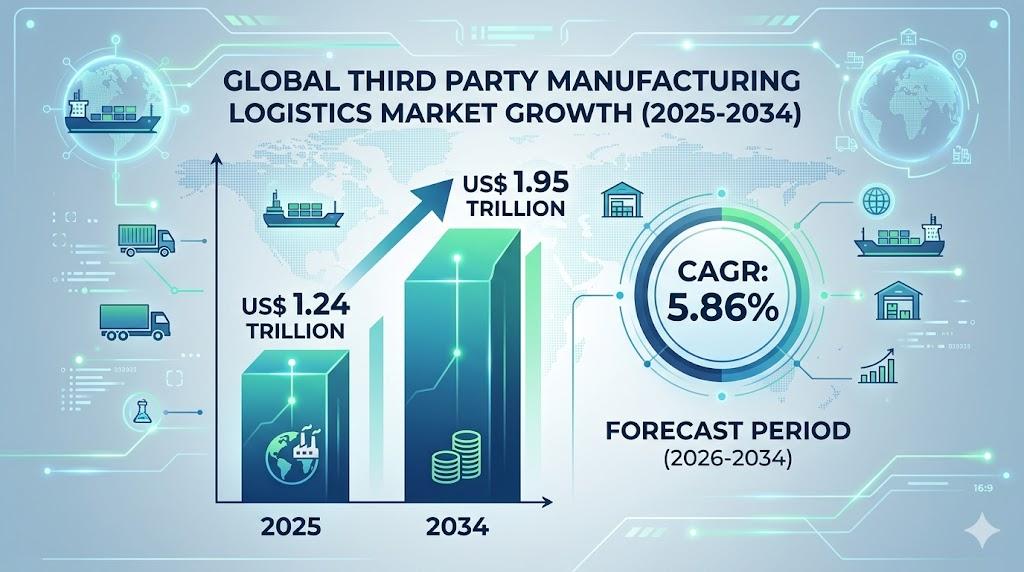
The global manufacturing landscape is undergoing a massive transformation as companies increasingly shift their focus from managing complex supply chains to prioritizing core product innovation and production. This shift has propelled the Third Party Manufacturing Logistics Market into a critical position within the global economy. As manufacturers seek to optimize their...
In the world of luxury fragrances, few things capture the senses quite like an exotic perfume. These scents stand apart from traditional blends because they are daring, complex, and rich in natural ingredients—especially floral extracts that offer depth, elegance, and identity. Among the most cherished ingredients used to create exotic aromas is rose oil, a timeless essence that...

Introduction: Dubai has established itself as a global hub for business and innovation, attracting entrepreneurs, startups, and multinational corporations alike. Its strategic location, tax incentives, and business-friendly policies make it an ideal destination for companies seeking growth opportunities. However, managing a business in Dubai comes with unique challenges. Navigating complex...
Most people don’t think much about their air conditioner until something feels off. Maybe the house takes longer to cool down than usual. Maybe one bedroom suddenly feels warmer than the rest of the home. Sometimes the first sign is simply an energy bill that looks higher than expected. At first, these problems may seem small. Many homeowners assume the AC is just working harder because...